Rotary Dryer Design
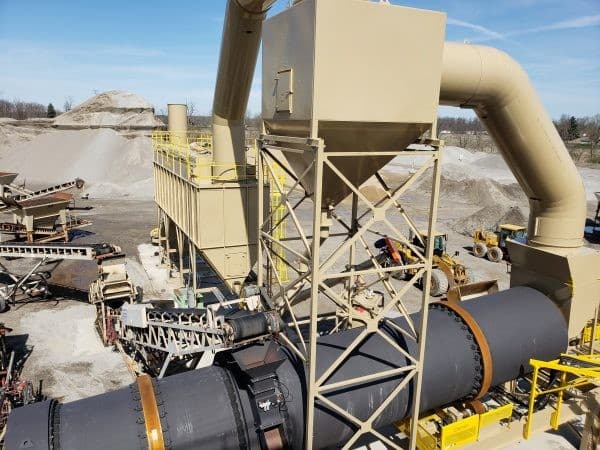
Rotary dryer design is the engineering process of sizing a rotary drum dryer according to feed capacity, inlet moisture, outlet moisture, evaporation load, heat duty, airflow, drum volume, retention time and dust collection requirements. This guide explains rotary dryer design for industrial drying applications such as fertilizer, minerals, silica sand, sludge, compost and bulk solids.
Premium Giriş
Rotary Dryer Design İçin Proses Odaklı Yaklaşım
Rotary dryer design is the engineering process of sizing a rotary drum dryer according to feed capacity, inlet moisture, outlet moisture, evaporation load, heat duty, airflow, drum volume, retention time and dust collection requirements. This guide explains rotary dryer design for industrial drying applications such as fertilizer, minerals, silica sand, sludge, compost and bulk solids.
Rotary dryer design combines moisture balance, drum sizing, airflow planning and mechanical layout into one engineering workflow. Even when the search intent is in English, field data usually comes from real plants running fertilizer, mineral or sludge drying lines.
A rotary dryer may look like a simple rotating shell, but design quality depends on how accurately feed rate, inlet moisture, outlet moisture, retention time, burner duty and dust collection are integrated into the same model.
Neden Önemlidir?
Bu başlık altında yalnız ekipman seçimini değil, proses kalitesi, enerji dengesi ve saha kararlılığını etkileyen kritik mühendislik noktalarını özetliyoruz.
Proses Dengesini Kurma
Kurutma tamburu, brülör, fan ve gaz hattı birbirinden bağımsız seçilmez. Gerçek saha performansı, bu ekipmanların birlikte dengelenmesine bağlıdır.
Enerji Verimini Yönetme
Nem yükü, sıcaklık ihtiyacı ve hava debisi doğru okunduğunda hem daha kararlı bir proses hem de daha kontrol edilebilir işletme maliyeti elde edilir.
Bakım Kolaylığını Artırma
Servis alanı, iç kanat erişimi, filtre bakımı ve yardımcı ekipman yerleşimi tasarımın başında düşünülmezse işletme zorluğu hızla artar.
Yardımcı Ekipman Uyumunu Sağlama
Besleme, eleme, silo, paketleme ve toz toplama gibi yan sistemler uyumlu değilse ana tamburun verimi tek başına hedefe ulaşamaz.
Proses Akışı ve Çalışma Mantığı
Rotary Dryer Process Flow
In rotary dryer design, drum sizing and airflow cannot be separated. The exhaust system defines drying stability as much as the drum body itself.
Wet feed
Rotary drum dryer
Burner / hot air generator
Exhaust fan
Cyclone
Bag filter / jet pulse filter
İçeriği İncele →Stack
Dried product
Rotary Dryer Process Flow
What is rotary dryer design?
Rotary dryer design means sizing the rotary drum dryer together with moisture balance, heat load, airflow, gas handling and mechanical support. In practice, this includes the drum shell, internal lifters, burner, fan, cyclone, filter and discharge behavior.
For Turkish industrial users searching 'rotary dryer design', the most useful interpretation is a detailed but readable engineering bridge between theory and field implementation.
Moisture balance
Moisture balance is the starting point of every rotary dryer design. The plant must first know how much dry solids are entering, what moisture target is required, and therefore how much water must be evaporated.
Formül Kutusu
Moisture Balance
Dry solids = Wet feed × (1 - Inlet moisture / 100)

Outlet product = Dry solids / (1 - Outlet moisture / 100)

Evaporated water = Wet feed - Outlet product
Heat load calculation
After evaporated water is calculated, the preliminary heat duty can be estimated. This step directly affects burner sizing and helps compare direct versus indirect heating concepts.
Formül Kutusu
Preliminary Heat Load
Heat load (kW) = Evaporated water (kg/h) × 0.75
Drum sizing
Drum sizing is based on required drum volume, which itself depends on material inside the drum, bulk density and filling ratio. Retention time is one of the main links between throughput and geometry.
Formül Kutusu
Drum Volume and Geometry
Drum volume = π × D² × L / 4

L = L/D × D

D = ∛[4 × V / (π × L/D)]
Formül Kutusu
Retention Time Basis
Material inside drum = Feed rate × Retention time / 60
Airflow and exhaust system
Airflow in a rotary dryer is not just a fan number. It is a process parameter tied to moisture removal, temperature profile, dust loading, duct losses, cyclone sizing and filter pressure drop.
Rotary Dryer Design Parameters
| Parameter | Unit | Design impact |
|---|---|---|
| Feed rate | t/h | Drum size |
| Inlet moisture | % | Evaporation load |
| Outlet moisture | % | Product target |
| Bulk density | kg/m³ | Drum volume |
| Retention time | min | Drum length |
| Airflow | m³/h | Fan and duct size |
| Burner capacity | kW | Heat supply |
| Dust load | low/high | Cyclone/filter size |
Formül Kutusu
Estimated Airflow
Estimated airflow = Evaporated water (kg/h) × 35 m³/h
This is a preliminary engineering assumption.
Final airflow depends on product type, temperature, dust load, fan pressure, duct losses and filter system.
Teknik Seçim Kriterleri
Aşağıdaki kriterler, tambur tipinden bağımsız olarak proses yükünü ve doğru boyutlandırmayı okumak için ön mühendislik aşamasında birlikte değerlendirilmelidir.
Rotary Dryer Design Selection Criteria
| Criterion | Why it matters |
|---|---|
| Feed rate | Defines total throughput and shell scale. |
| Inlet/outlet moisture | Controls evaporated water and heat duty. |
| Bulk density | Required for drum volume sizing. |
| Retention time | Affects drum length and drying stability. |
| Airflow | Determines fan, duct and dust collection sizing. |
| Dust load | Impacts cyclone and bag filter design. |
Temel Proje Verileri
Kesin değerler proje verisi, numune analizi veya pilot kurutma testine göre netleşir. Bu özet, ilk teknik görüşmede hangi bilgilerin birlikte okunacağını gösterir.
Feed rate
Defines total throughput and shell scale.
Inlet/outlet moisture
Controls evaporated water and heat duty.
Bulk density
Required for drum volume sizing.
Retention time
Affects drum length and drying stability.
Airflow
Determines fan, duct and dust collection sizing.
Dust load
Impacts cyclone and bag filter design.
Hava ve Toz Kontrolü
Kurutma Havası ve Toz Toplama Sistemi
Brülör kapasitesi, buharlaştırılacak su miktarı ve ürün sıcaklık limiti birlikte hesaplanmalıdır.
Fan, siklon ve jet pulse filtre hattı; hava debisi, basınç kaybı ve toz yüküne göre tek sistem olarak seçilir.
Negatif basınç dengesi, yoğuşma riski, baca koşulları ve otomasyon kontrolü sahada stabil çalışmayı belirler.
Kurutma Sonrası
Rotary Dryer Design Sonrası Proses ve Ekipmanlar
Kurutma tamburundan çıkan ürünün eleme, soğutma, silo, paketleme veya son ürün hazırlama adımları ana kurutma hesabı kadar önemlidir. Bu nedenle kurutma hattı, sonraki ekipmanlarla birlikte planlanmalıdır.
Eleme Sistemleri
Kurutulan mineral veya kumun tane sınıflarına ayrılmasını sağlar.
Ekipmanı İncele →Silo Sistemleri
Düşük ve stabil nemli ürünün kontrollü stoklanmasını sağlar.
Ekipmanı İncele →Paketleme ve Dolum
Big-bag, torbalama veya sevkiyat hazırlığını prosesle entegre eder.
Ekipmanı İncele →Taşıma Ekipmanları
Kurutma sonrası transfer hattını saha yerleşimine göre kurar.
Ekipmanı İncele →Bunker ve Hazneler
Kurutma öncesi ve sonrası tampon stok ve kontrollü besleme sağlar.
Ekipmanı İncele →Kurutma Tamburu
Ana kurutma ekipmanını mekanik tasarım odağıyla inceleyin.
Ekipmanı İncele →Sık Yapılan Tasarım Hataları
Common Rotary Dryer Design Mistakes
| Mistake | Result |
|---|---|
| Ignoring moisture balance | Wrong heat load |
| Oversizing drum filling | Poor drying |
| Ignoring fan pressure | Weak airflow |
| No cyclone/filter calculation | Dust emission |
| Using direct flame for sensitive product | Product damage |
Pro Makina Mühendislik Yaklaşımı
Pro Makina reads rotary dryer design as a whole process: wet feed behavior, moisture removal target, heat source, airflow route, dust collection and maintenance access are all reviewed together.
This approach supports both Turkish-language project development and international terminology such as 'rotary dryer design' and 'rotary dryer capacity calculation'.
- Moisture balance first
- Heat load and burner link
- Drum volume and L/D sizing
- Airflow and pressure loss control
- Cyclone and jet pulse filter integration
- Service-friendly mechanical layout
Hesaplama ve Teklif
Rotary Dryer Design İçin Ön Teknik Veri Hazırlığı
Aşağıdaki bilgiler paylaşıldığında kapasite, nem yükü, tambur geometri aralığı, fan debisi ve brülör kapasitesi daha sağlıklı ön değerlendirilebilir.
Gerekli Bilgiler
- ✓Saatlik kapasite
- ✓Giriş nemi
- ✓Hedef çıkış nemi
- ✓Ürün tane boyutu veya formu
- ✓Yakıt tipi
- ✓Kurutma sonrası proses
Sık Sorulan Sorular
Tambur seçimi, proses hesabı, yardımcı sistemler ve saha davranışı hakkında en çok sorulan soruları kısa ama teknik çerçevede yanıtladık.
Soru 1
What is rotary dryer design?
+
Soru 1
What is rotary dryer design?
It is the engineering process of sizing a rotary drum dryer together with airflow, heat duty and dust collection.
Soru 2
How do you calculate rotary dryer capacity?
+
Soru 2
How do you calculate rotary dryer capacity?
Capacity is interpreted through feed rate, moisture balance, evaporated water and retention time.
Soru 3
How is evaporated water calculated?
+
Soru 3
How is evaporated water calculated?
By subtracting outlet product mass from wet feed after dry solids are conserved.
Soru 4
How do you size a rotary dryer drum?
+
Soru 4
How do you size a rotary dryer drum?
Required drum volume is derived from material hold-up, bulk density and filling ratio.
Soru 5
What is retention time in a rotary dryer?
+
Soru 5
What is retention time in a rotary dryer?
It is the average time the product remains inside the drum.
Soru 6
Why are cyclone and bag filter required?
+
Soru 6
Why are cyclone and bag filter required?
They stabilize dust control, emission performance and fan protection.
İlgili Teknik İçerikler ve Programlar
Bu tambur konusunu destekleyen makine, hizmet, program ve tamamlayıcı makalelere aşağıdan erişebilirsiniz.
Projeniz için teklif veya teknik görüşme talep edin.
Kapasite, hammadde, nem oranı, hedef ürün ve saha yerleşiminize göre uygun kurutma tamburu, brülör, fan, siklon, filtre ve proses çözümünü birlikte netleştirebiliriz.