Compost and Organic Waste Processing Plants
Pro Makina builds controlled composting plants around rotary drum composting technology: receiving and preparation, intensive drum composting, maturation, refining — and optionally drying and granulation that turn compost into a marketable fertilizer product.
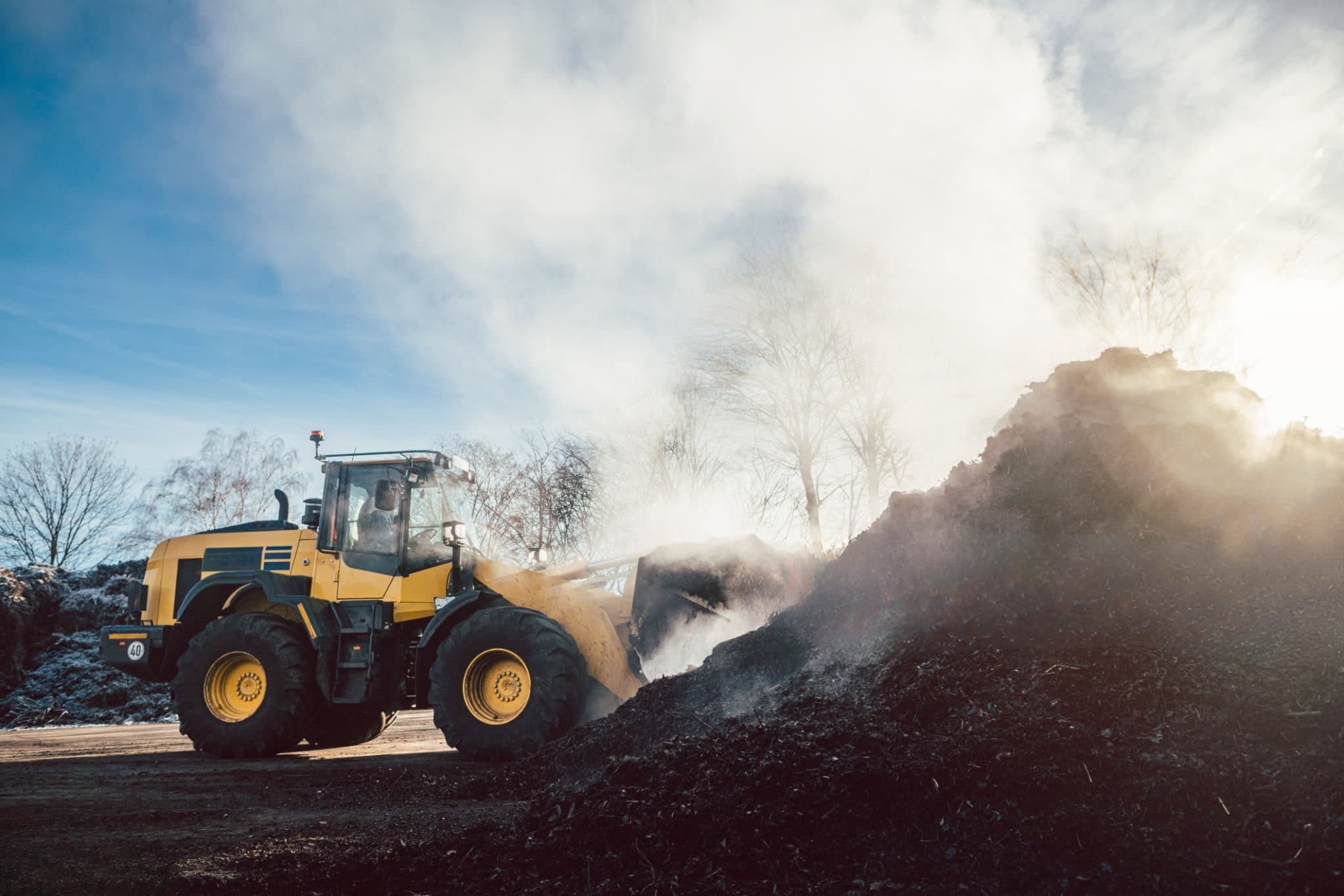
From Waste Stream to Stable Product
Composting succeeds when the recipe is right: moisture, carbon-nitrogen ratio and structure adjusted at the preparation step, then held under control through the intensive phase. Our plants therefore start with shredding, mixing and dosing equipment that conditions the incoming waste — followed by the compost drum, where rotation and controlled aeration drive fast, odour-managed thermophilic composting.
After the drum, material matures in a shorter post-rotting step, then passes trommel screening to remove contaminants and structure material. Depending on your market, the line ends there — or continues into drying and drum granulation to produce granular organic or organomineral fertilizer.
Waste Streams We Process
- Cattle and poultry manure
- Separated municipal organic waste
- Food industry and market waste
- Slaughterhouse waste with structure material
- Green and landscape waste
- Digestate from biogas plants
Plant Building Blocks
Receiving and preparation
Bunkers, shredders and mixers conditioning the input recipe.
Drum composting
Closed rotary reactor for the intensive, sanitising phase.
Maturation management
Post-rotting area design with turning and monitoring concept.
Refining
Trommel screening, contaminant separation and final product control.
Product upgrade
Optional drying and granulation into granular fertilizer.
Odour control
Enclosed air collection with biofilter or scrubber treatment.
Data Required for a Compost Plant Proposal
| Design input | Role in the design |
|---|---|
| Waste types and daily tonnages | Line capacity and reception design |
| Waste analyses (moisture, C/N) | Recipe and drum retention design |
| Structure material availability | Preparation equipment scope |
| Odour / permit constraints | Enclosure and air treatment scope |
| Final product target | Refining and granulation scope |
Retention times and equipment sizing are engineered from your specific waste analyses.
Why Pro Makina
Manufactured in Turkey
Design and fabrication are carried out in our own facility in Eskişehir, Turkey, with full in-house engineering control.
Project-based engineering
Every machine is sized around your raw material, moisture content and capacity target — not sold from a fixed catalogue.
Export experience
We prepare international technical proposals, shipping documentation and commissioning support for overseas projects.
Single point of responsibility
Process design, fabrication, automation and commissioning are managed by one engineering team.
Frequently Asked Questions
How much area does a drum composting plant need?
Significantly less than windrow-only composting, because the intensive phase happens inside the drum; the exact footprint follows from tonnage and maturation concept and is shown in the layout we prepare.
Can the plant produce sellable fertilizer instead of raw compost?
Yes — with drying, screening and drum granulation (optionally adding mineral nutrients) the line produces granular organic or organomineral fertilizer.
How is odour controlled?
The drum is a closed reactor; exhaust air is collected and treated in a biofilter or scrubber. Reception and preparation areas can also be enclosed where the site requires it.
Share Your Project Details
Send us your raw material, capacity and process data. Our engineering team will review your requirements and prepare a project-specific technical proposal.
Compost and Organic Waste Processing Plants
Final dimensions, capacity and drive power are determined per project, based on your raw material analysis, moisture content and process calculations.