Rotary Drum Granulator – Wet Granulation Drum System

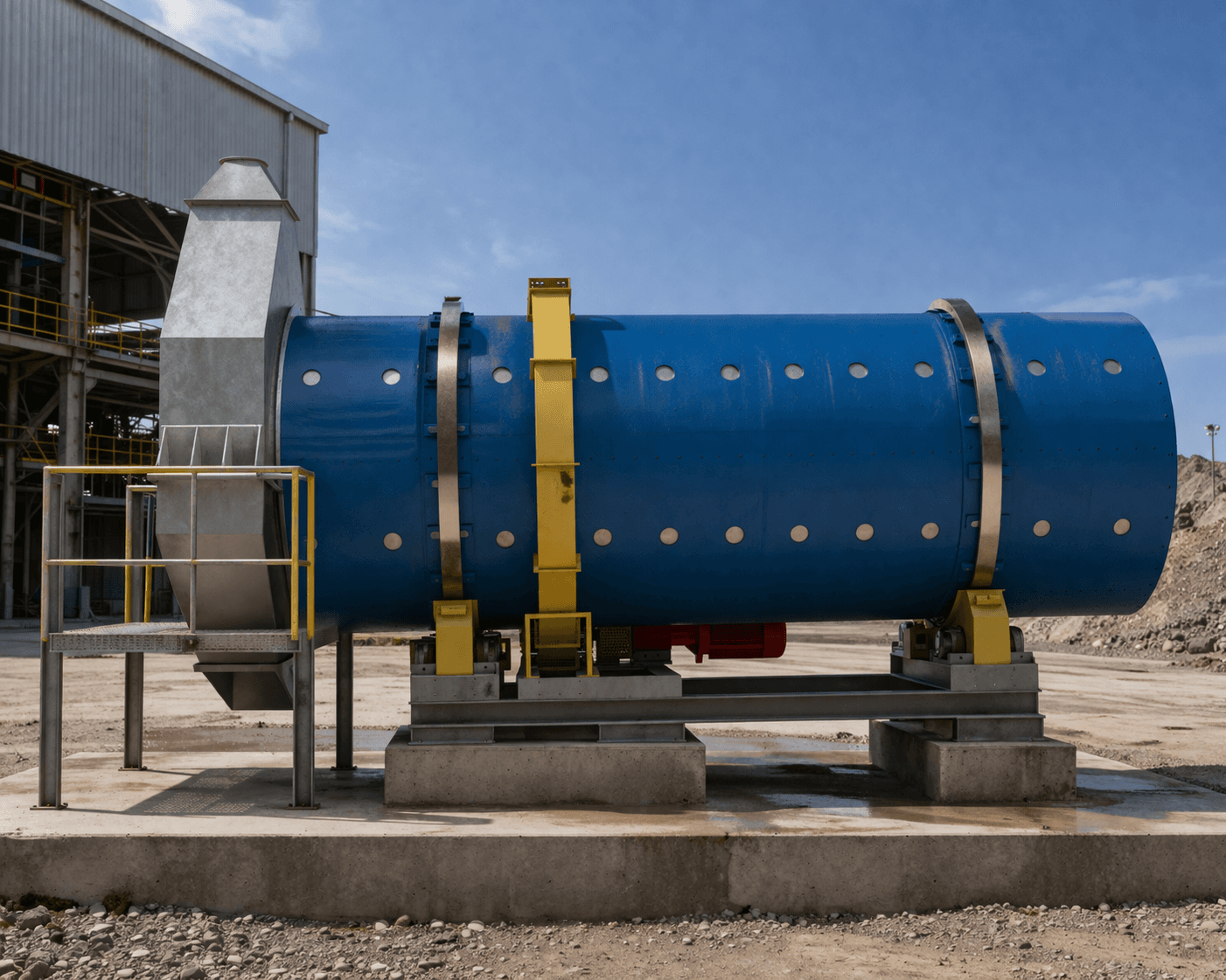
Rotary drum granulator with drive unit and support frame

PRO MAKINA

Process
Wet granulation (agglomeration)
Liquid phase
Water, steam or liquid binder
Sizing
Based on capacity and recycle ratio
Scope
Standalone drum or granulation line

Overview

Controlled Granule Formation from Powder Feed

A rotary drum granulator is process equipment in which fine or powdered raw materials are wetted with water, steam or a liquid binder and formed into granules by the rotating motion. In the tumbling bed, fines stick together, form nuclei and grow layer by layer into round granules.

Drum diameter, length, slope, speed and internal geometry are determined by the target granule size, recycle ratio, liquid-to-solid ratio and required granule strength. Where and how the liquid is distributed over the bed has a direct effect on the size distribution.

The granulator does not dry the product: granules leave the drum moist and gain their strength only after drying. The drum is therefore engineered together with the dosing, drying, cooling, screening and recycle line as one process.
01Process Flow

Granulation Line Process Flow

The diagram shows the position of the granulator in a typical wet granulation line. Drying and screening are not granulator functions; they are carried out by separate equipment.

Granulation line process flow diagramProduct line: dosing, rotary drum granulator, separate dryer, screening and recycle. Liquid line: liquid preparation and metering pump to the spray zone inside the drum.PRODUCT LINE1DosingPowder feed, recycle2DRUM GRANULATORrolling · granule growth3DryingSeparate rotary dryer4ScreeningSizing and recycleLIQUID / BINDER LINEALiquid prepWater, steam, binderBMetering pumpFlow controlspray nozzles

Scroll horizontally to view the full diagram.

Product line

  1. 1

    Dosing and feeding: Powder raw materials and returned fines are fed to the drum by weight.

  2. 2

    Wetting and nucleation: Sprayed liquid wets the bed; fines stick together and form nuclei.

  3. 3

    Granule growth: Rolling with the drum, nuclei grow layer by layer and become rounded.

  4. 4

    Moist granule discharge: Moist granules are transferred to the drying, cooling and screening line.

Liquid / binder line

  1. A

    Liquid preparation: Water, steam or binder solution is prepared according to the recipe.

  2. B

    Metering and spraying: A pump and nozzles distribute the liquid over a defined zone of the bed.

Oversize product is crushed and undersize fines are returned directly to the granulator feed. The recycle ratio is one of the key parameters governing process balance.

02Applications

Rotary Drum Granulator Applications

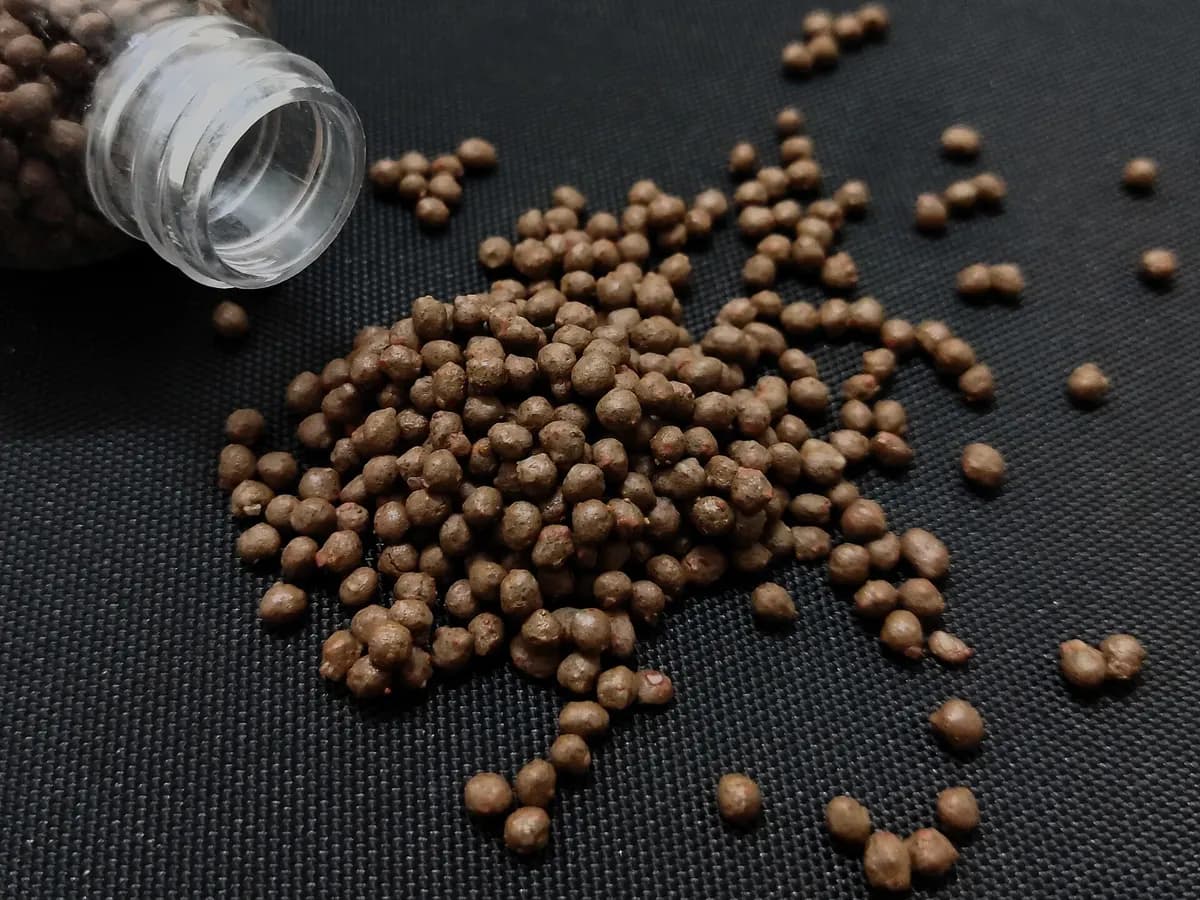
Brown, spherical compound fertilizer granules01

NPK and Compound Fertilizer Granulation

Compound fertilizer lines in which powdered components such as urea, phosphate and potash are combined in one granule. Recipe, liquid-to-solid ratio and recycle balance are set for the target size.

Fertilizer Plants
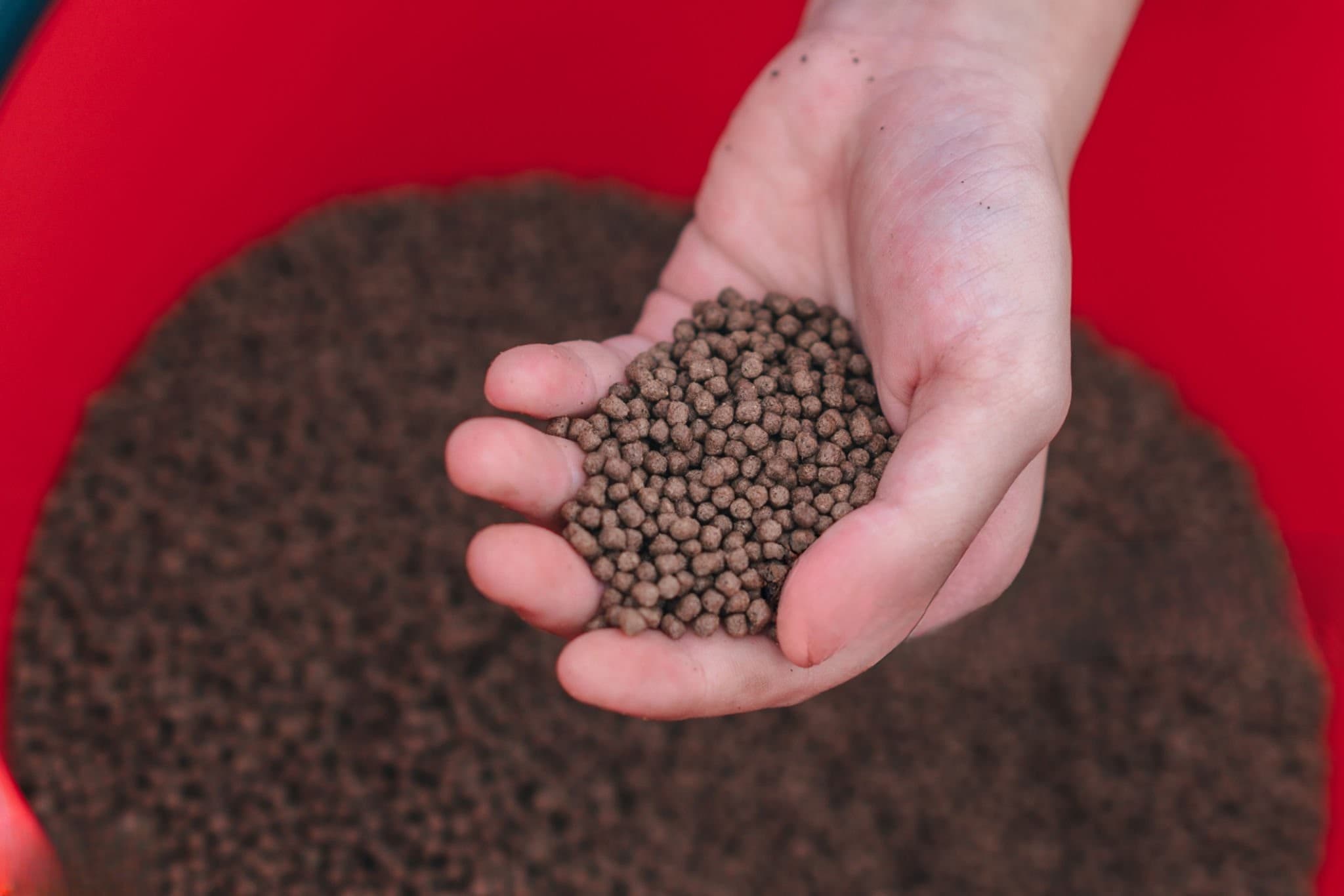
Dark organomineral fertilizer granules in a hand02

Organomineral Fertilizer Granulation

Lines in which compost or organic matter is granulated together with mineral nutrients. Moisture and fibre structure of the organic fraction determine liquid dosing and granule strength.

Organic Feedstock Sources
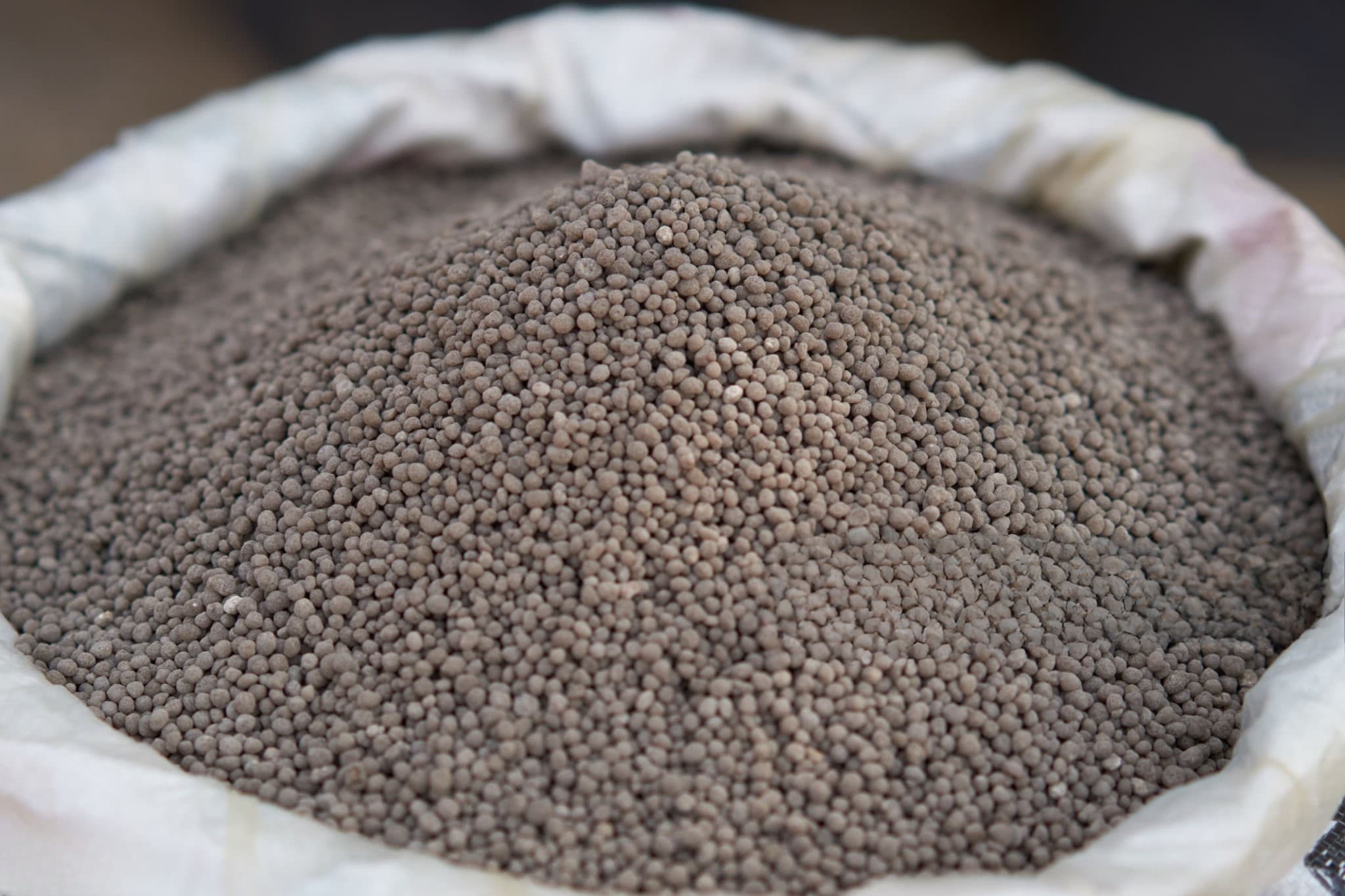
Grey granular product in a bag03

Mineral and Chemical Powder Granulation

Converting dusty mineral and chemical powders into granules that are easier to convey and meter. A suitable binder and granule size are confirmed by sample work.

Chemical Process Industry
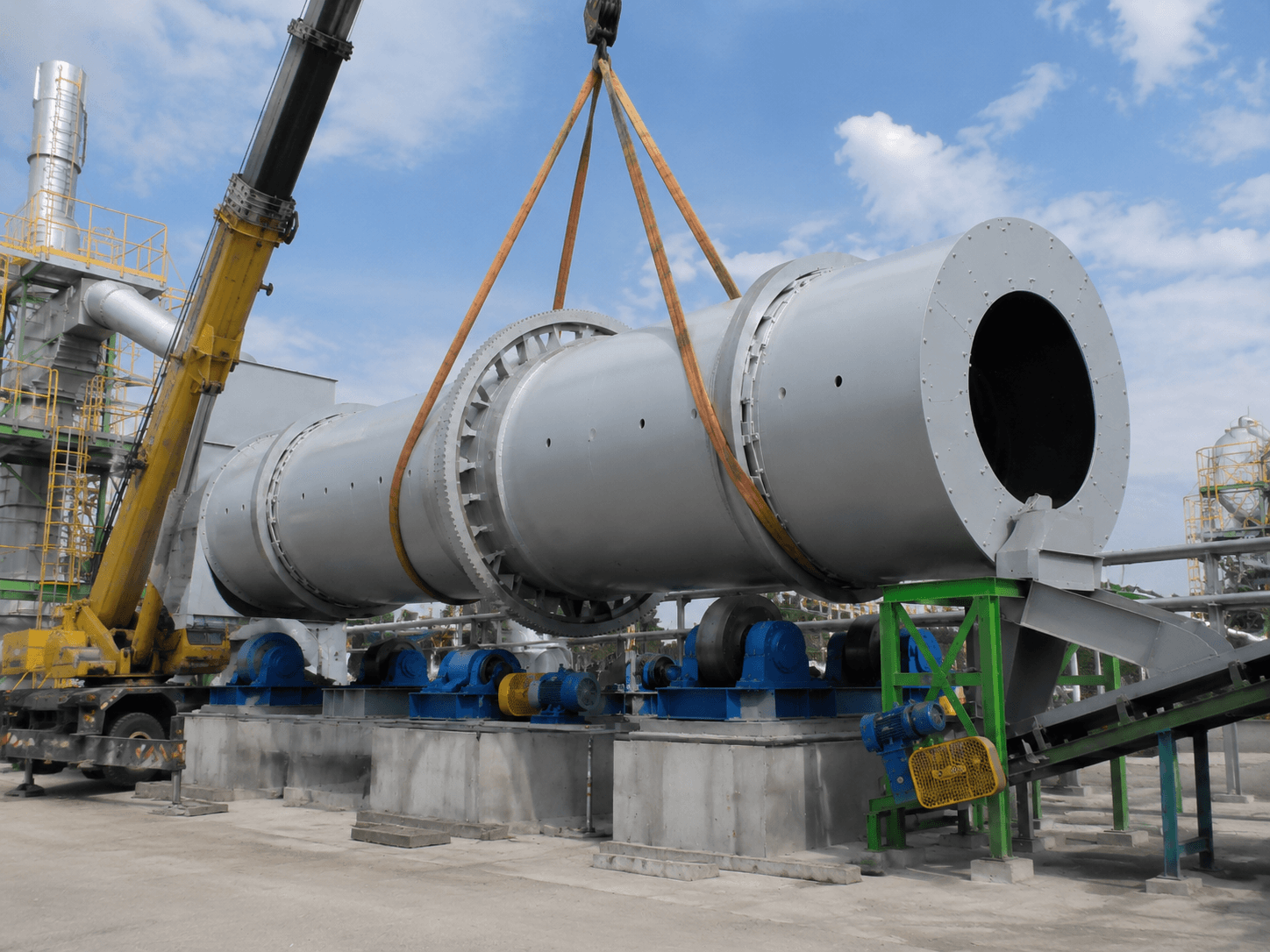
Granulator drum shell being lifted into place by crane

03Design & Manufacturing

Custom Rotary Drum Granulator Design and Manufacturing

PRO MAKINA engineers drum granulators around the raw material recipe, target capacity, granule size and recycle ratio. The drum shell, internal surface, liquid distribution system and drive unit are designed together so that they match the dryer and screening equipment in the line.

  • Project-specific diameter and length
  • Adjustable speed and slope
  • Integrated nozzles and liquid line
  • Anti-build-up internal surface options

Process Design Data

  1. 01

    Raw Material and Recipe

    Components, particle size, bulk density and initial moisture.

  2. 02

    Capacity and Recycle

    Hourly product capacity, recycle ratio and target granule size.

  3. 03

    Liquid System

    Liquid type, temperature, dosing rate and spray zone.

  4. 04

    Mechanical Design

    Drum dimensions, internal surface, drive system and supports.

  5. 05

    Line Integration

    Connections to dosing, drying, cooling, screening and crushing.

If granulation behaviour of a new recipe is uncertain, liquid demand and granule strength should be confirmed by sample work.

04FAQ

Rotary Drum Granulator FAQ

Does a drum granulator dry the product?

No. Liquid is added in the granulator and granules leave it moist. Moisture is removed in a separate rotary dryer, and product temperature is reduced in a rotary cooler.

Which liquids are used for granulation?

Depending on the recipe, water, steam or suitable liquid binder solutions can be used. The right liquid and quantity depend on how the raw material behaves; sample work is recommended for new recipes.

How is granule size controlled?

Granule size is steered by the liquid-to-solid ratio, recycle ratio, drum speed, slope and filling level. Product outside the target range is separated in screening and returned.

Why is a recycle line needed?

Returned fines act as nuclei for new granules and help set the moisture balance in the drum. The recycle ratio is one of the decisive parameters for stable granulation.

What information is needed for a quotation?

Raw material recipe, target capacity, required granule size range, liquid or binder to be used, existing drying and screening equipment and the site layout.

05Resources

Related Machines and Plants

Technical Quotation

Request a technical quotation for a drum granulator

Share your recipe, target capacity and granule size requirement, and we will define the granulator and its connections in the line together with you.

Information Needed for a Technical Quotation

  • Raw material type and recipe
  • Target product capacity (t/h)
  • Required granule size range
  • Liquid or binder to be used
  • Existing drying, cooling and screening equipment
  • Site layout and operating hours

For a new recipe, sample information helps determine the liquid demand correctly.

WWhatsApp

Cookie Preferences

This site uses cookies required to run the website securely and correctly. With your consent, additional cookies may be used for performance measurement, user experience and marketing. For details see the Cookie Policy and Privacy Policy pages.