 01
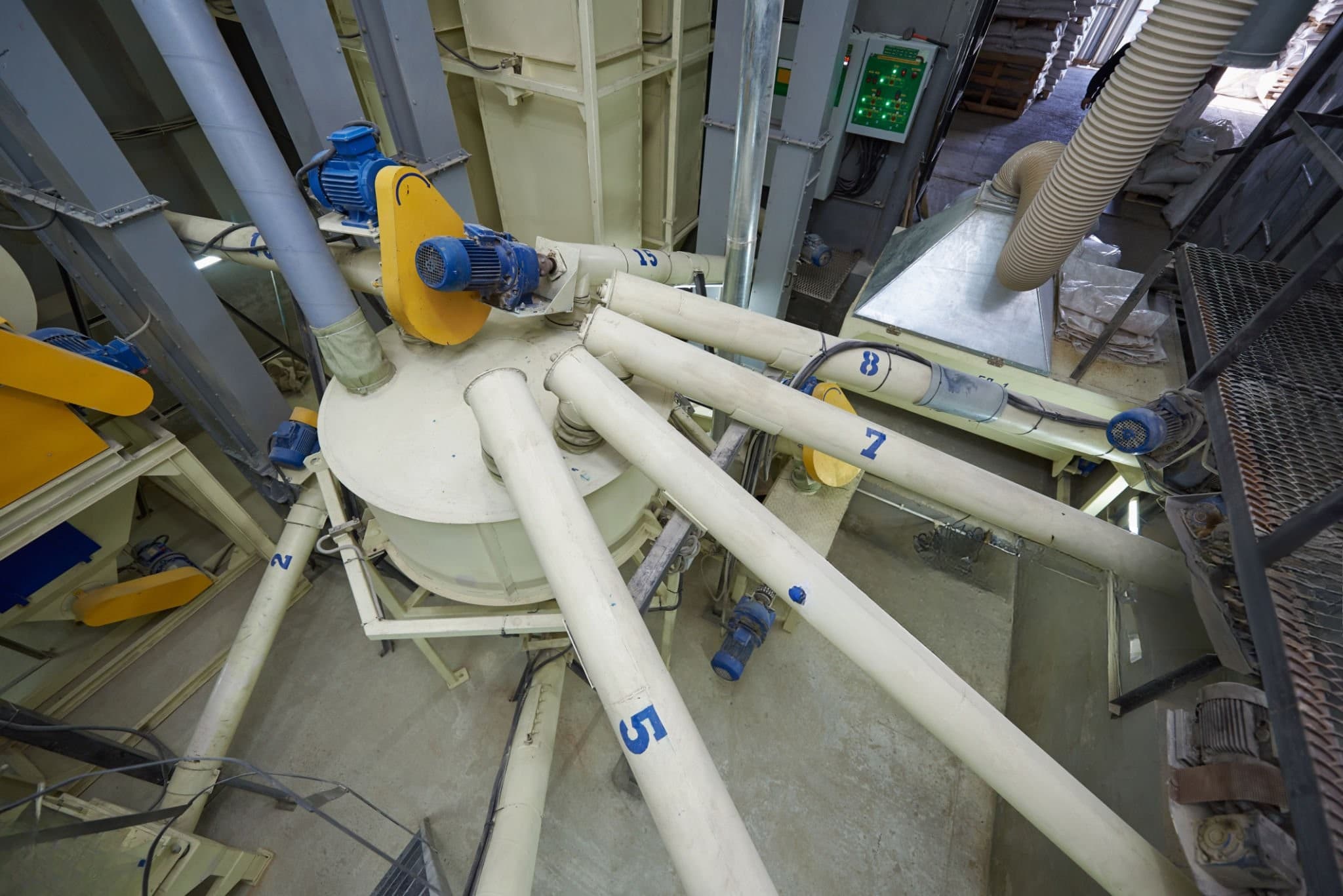
01Silo Discharge
Extracting material from below powder silos and conveying it to process points. Several silo outlets can be collected by separate screws.
Storage and Feeding SystemsIndustrial Plant Solutions
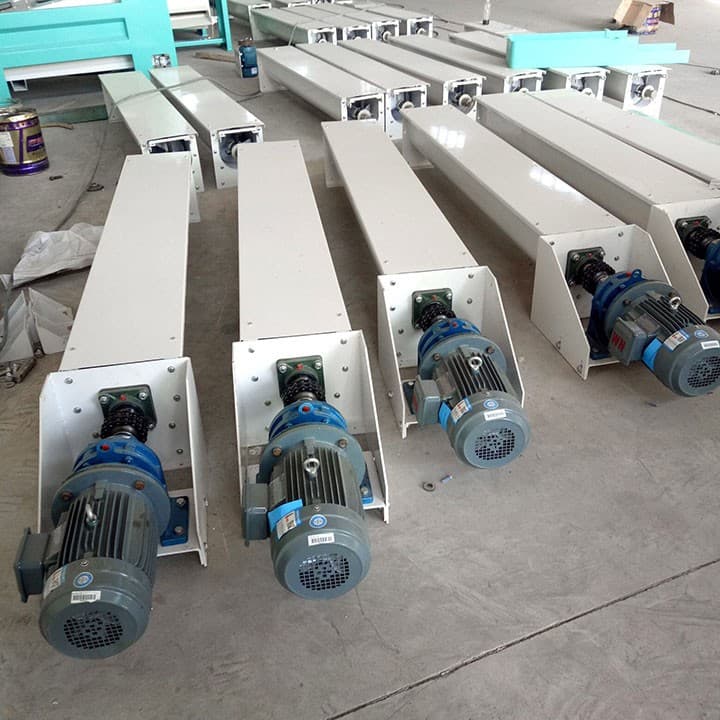
PRO MAKINA · Screw Conveyor
Overview
A screw conveyor works by rotating flights on a shaft that push the material forward inside an enclosed tubular or U-shaped trough. Material enters at the inlet and leaves at the outlet.
Conveying capacity is determined by screw diameter, pitch, rotational speed and trough loading. For powders, granules and moist products, trough loading and speed are selected according to flowability and abrasiveness; efficiency falls as inclination increases.
Screw conveyors serve two different tasks: conveying from one point to another, and controlled (volumetric) feeding from a hopper or silo. Where weighed, precise dosing is required, the screw is designed together with a weighing system.
01Process Flow
The diagram shows the typical flow in which the screw conveyor carries material from the inlet to the outlet. A screw can also be used as a feeder below a hopper or silo.
Scroll horizontally to view the full diagram.
Feeding at the inlet: Material drops into the inlet from a hopper, silo or upstream equipment.
Screw conveying: Rotating flights push the material forward inside the casing.
Discharge at the outlet: Material is discharged through the outlet to the next equipment.
Controlled flow: Volumetric flow can be adjusted to the feeding requirement by changing speed.
On long lines the screw shaft is supported by hanger bearings; material flow and wear at the hanger bearing zone are assessed separately.
02Applications
01Extracting material from below powder silos and conveying it to process points. Several silo outlets can be collected by separate screws.
Storage and Feeding Systems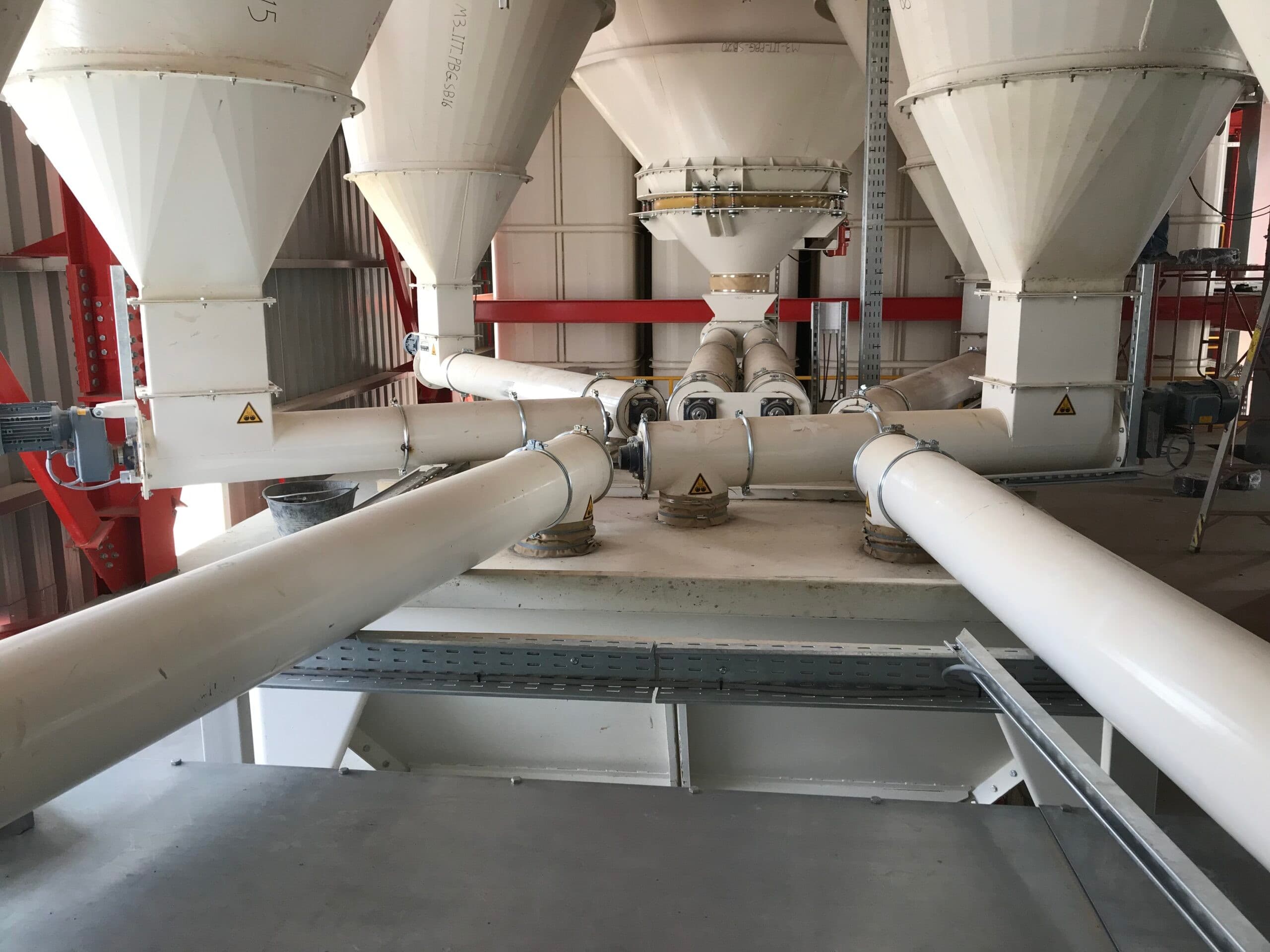 02
02Conveying chemical, mineral and additive powders between process equipment in an enclosed casing. The enclosed design helps reduce dust.
Chemical Process Industry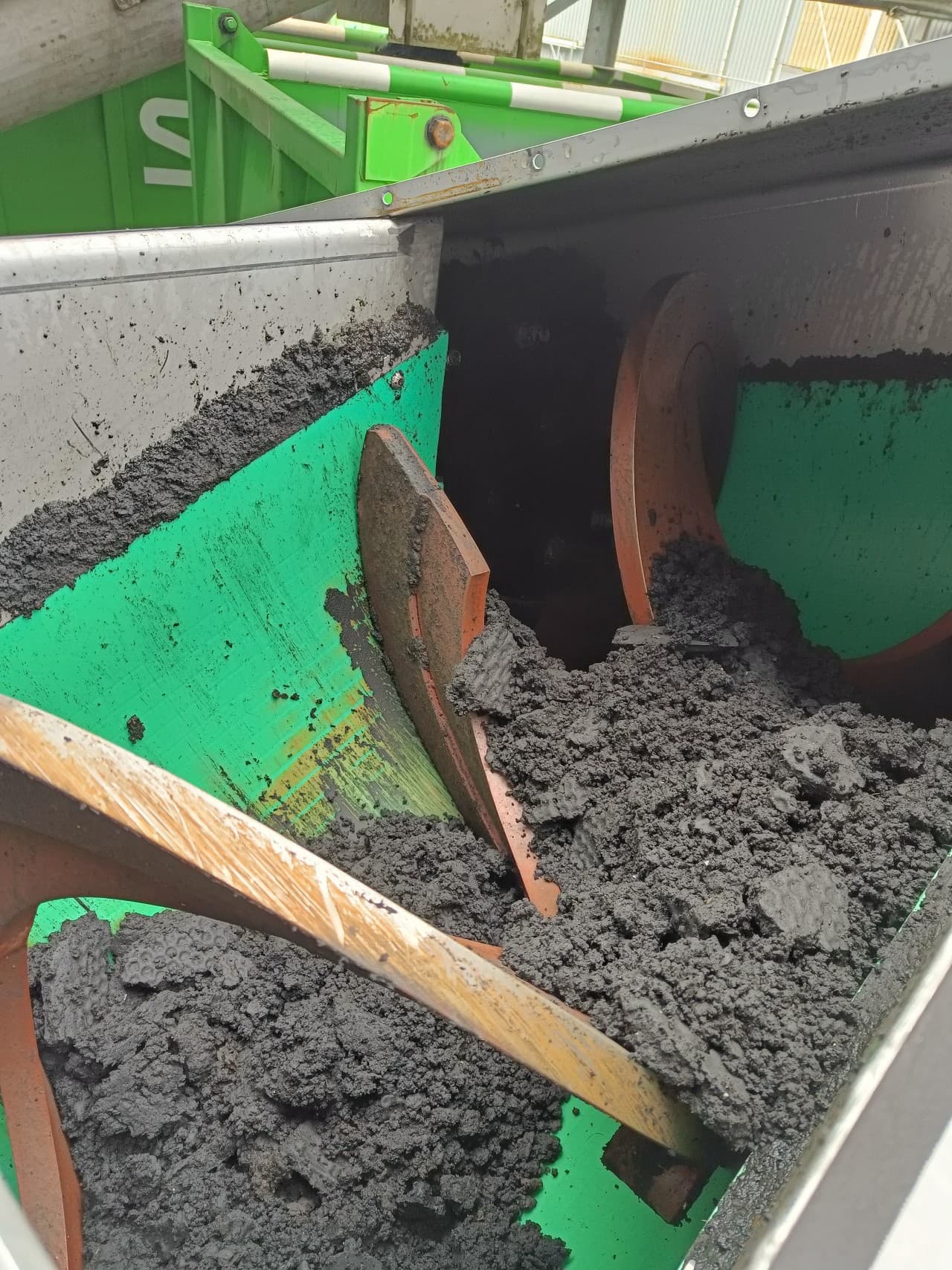 03
03Conveying dewatered sludge and similar moist products with U-trough screws. For sticky products, pitch, speed and cleaning access are selected accordingly.
Sewage Sludge and Treatment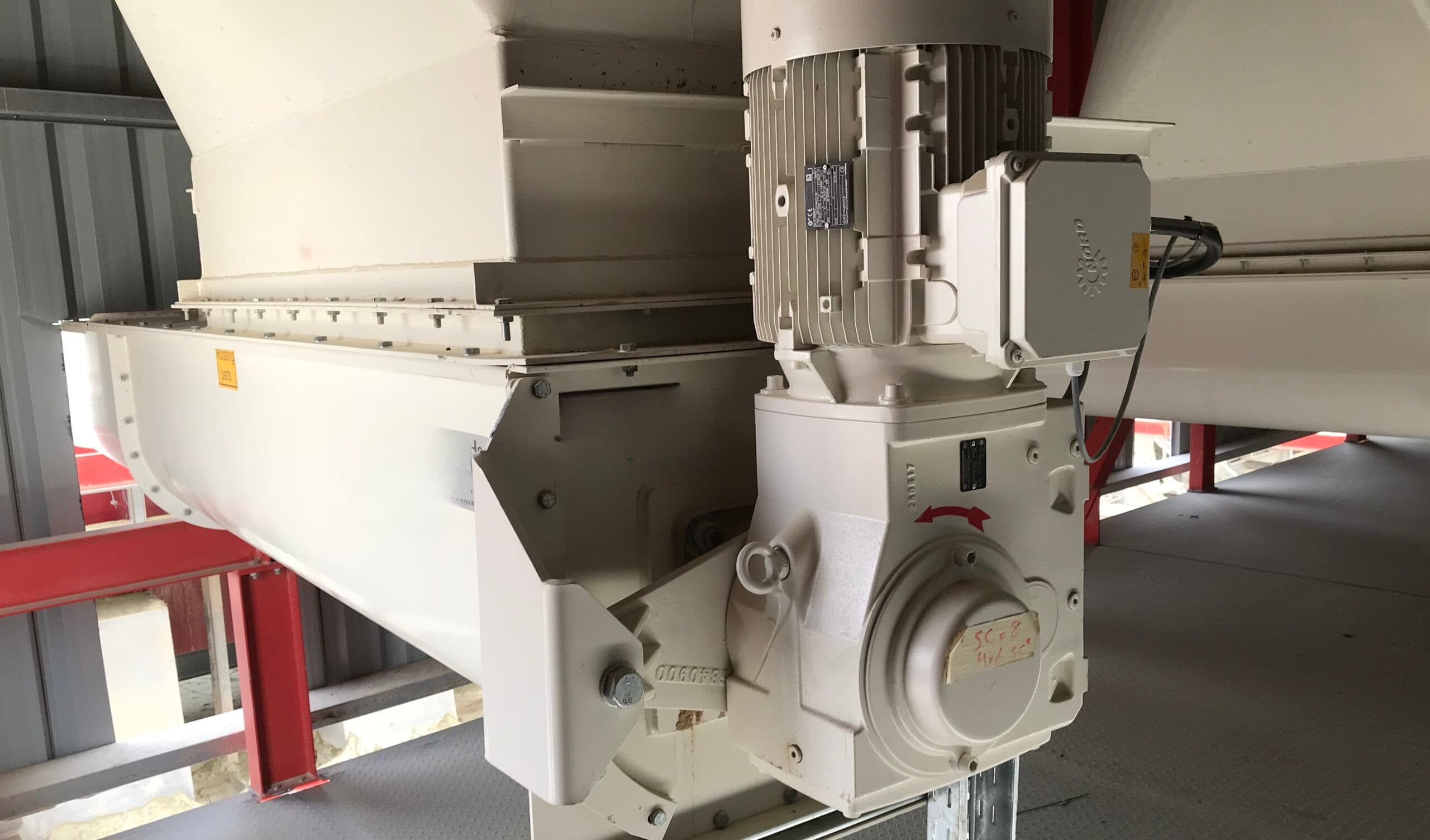 04
04Steady feeding to the next equipment with a speed-controlled screw below a hopper. Where precise mass-based dosing is required, it is designed together with a weighing system.
Dosing Systems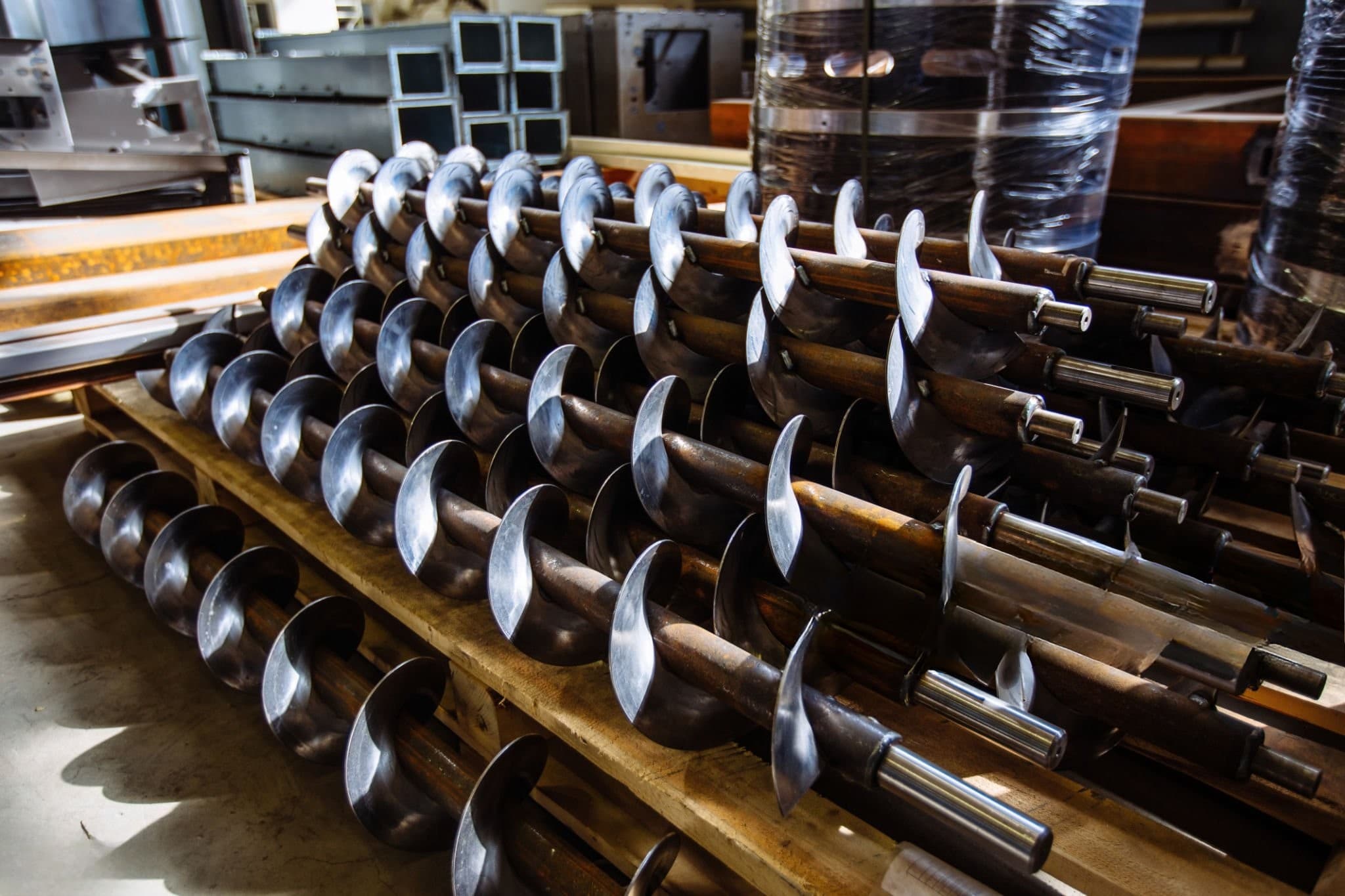
03Design & Manufacturing
PRO MAKINA engineers screw conveyors around material properties, capacity and line geometry. Screw diameter and pitch, shaft and flight thickness, casing type, bearings, sealing and drive are selected together.
Material
Material type, particle size, bulk density, flowability, moisture and temperature.
Capacity
Hourly mass or volumetric capacity; conveying or feeding duty.
Geometry
Conveying length, inclination and position of inlet and outlet.
Screw and Casing
Outside diameter, pitch, shaft and flight thickness, tube or U-trough.
Bearings and Drive
End and hanger bearings, sealing, gear motor and speed control.
Wear protection for abrasive products, and bearing and seal selection for hot products, are defined separately from project data.
04Gallery
05FAQ
Capacity depends on screw diameter, pitch, speed and trough loading. Trough loading is chosen according to flowability and abrasiveness; capacity falls as inclination increases.
With speed control a screw can feed volumetrically. If precise mass-based dosing is required, the screw is designed together with a weighing system.
A tubular casing is advantageous for sealing on inclined lines and with dusty products. A U-trough makes cleaning and maintenance easier with sticky products.
Yes, but conveying efficiency drops as inclination increases. Diameter, pitch and speed are selected accordingly.
Material type, particle size, bulk density, moisture and temperature, capacity, conveying length and inclination, and whether the screw is for conveying or feeding.
06Resources
Technical Quotation
Share your material, capacity and line geometry, and we will define the screw conveyor and its connections together with you.
This site uses cookies required to run the website securely and correctly. With your consent, additional cookies may be used for performance measurement, user experience and marketing. For details see the Cookie Policy and Privacy Policy pages.