 01
01Multi-Silo Feeding
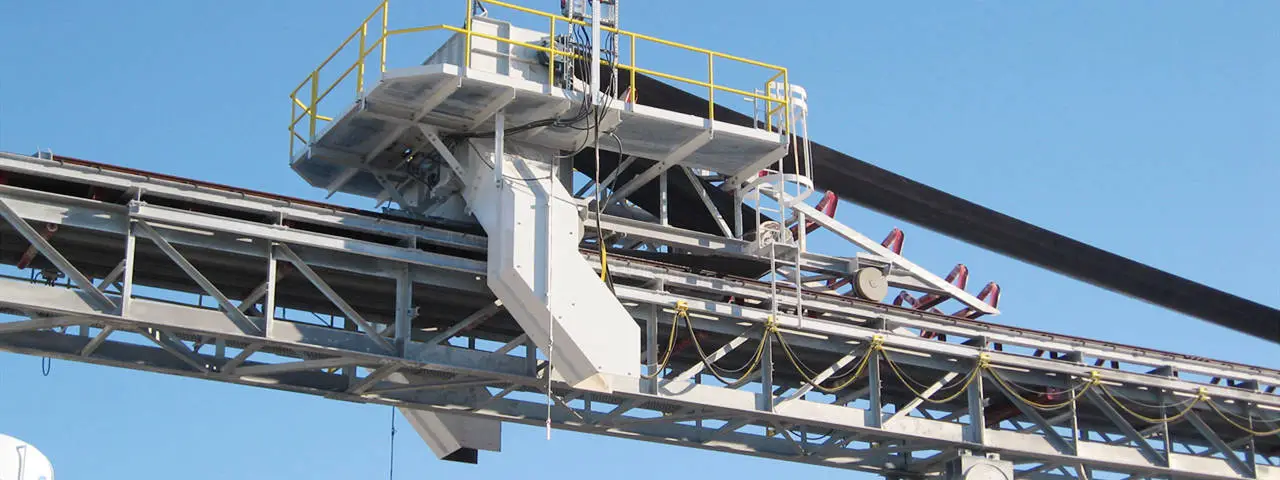
Feeding each silo in a row separately with a conveyor line running above them. The car position is set for the selected silo.
Storage and Feeding SystemsIndustrial Plant Solutions
PRO MAKINA · Belt Conveyor with Travelling Tripper
Overview
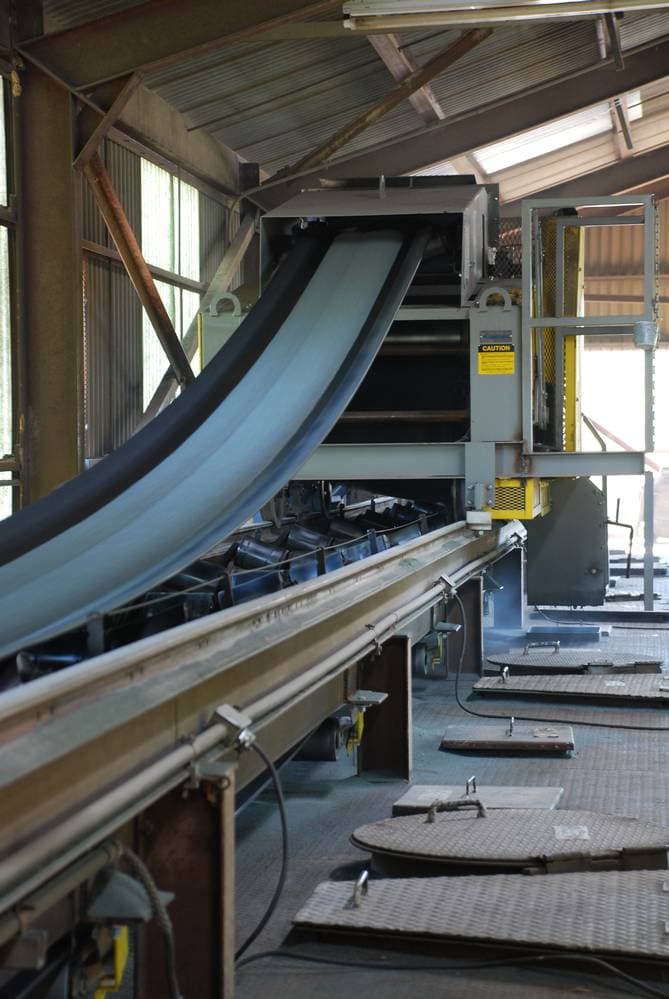
A tripper conveyor consists of a belt conveyor and a tripper car that travels on rails along the conveyor frame. The belt is lifted over pulleys on the car and turned back; at this point the material leaves the belt and is discharged downwards through the car's chute.
As the car travels along the line, the discharge point moves with it. A single conveyor line can therefore feed the silos, bins or stockpile bays arranged beneath it, in sequence or selectively.
The tripper car does not carry the material itself; conveying is done by the main belt conveyor. Belt route and pulley arrangement, car frame and travel drive, position sensing, cable handling and safety equipment are designed together.
01Process Flow
The diagram shows the typical flow in which material is carried by the main belt conveyor and distributed via the tripper car to the selected discharge point.
Scroll horizontally to view the full diagram.
Feeding from the main belt: Material is loaded onto the main belt conveyor at the feed point.
Transport on the belt: The main belt carries material along the line to the tripper car.
Discharge over the tripper: The belt rises over the car; material falls into the discharge chute.
Distribution to the selected point: Depending on car position, material drops into the chosen silo, bin or bay.
The discharge point is determined by the car position; position sensing and travel control can be connected to the automation system.
02Applications
01Feeding each silo in a row separately with a conveyor line running above them. The car position is set for the selected silo.
Storage and Feeding Systems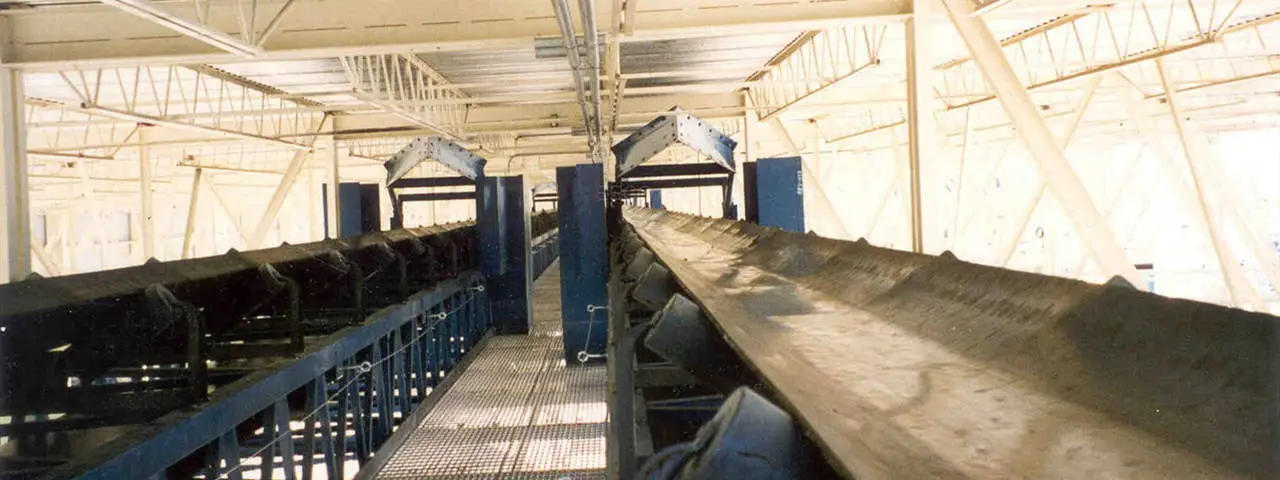 02
02Spreading granular fertilizer or similar bulk product into different bays of an enclosed storage hall. Chute and skirt design are important for spillage and dust.
Fertilizer Plants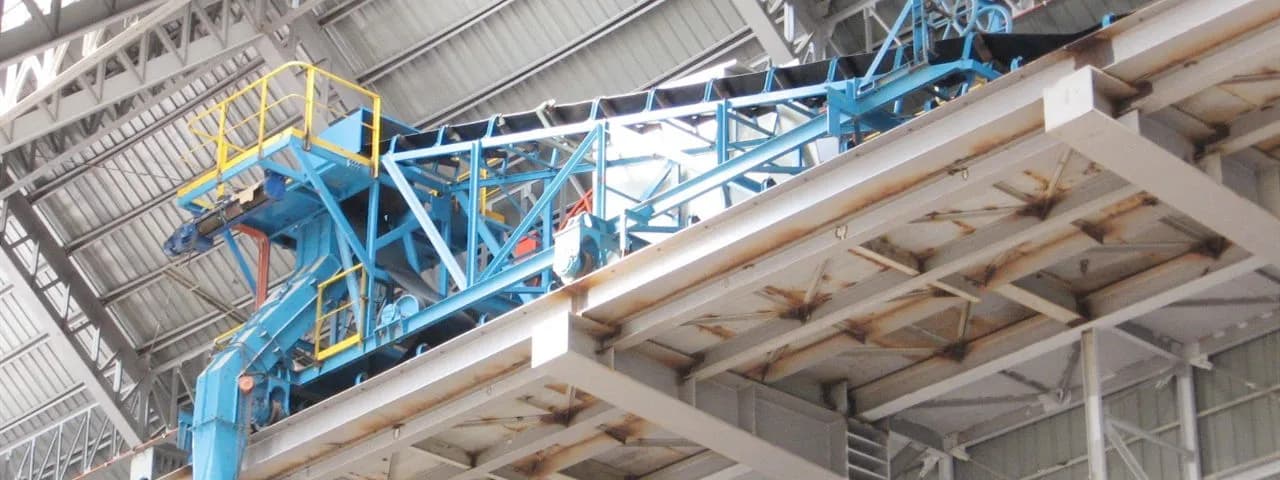 03
03Feeding a row of bins ahead of the process as required. The tripper car can be controlled to change the discharge point based on level signals.
Bunkers and Hoppers03Design & Manufacturing
PRO MAKINA engineers tripper conveyors around the number and position of discharge points, travel distance and the capacity of the main conveyor. Belt arrangement, car frame, travel drive, discharge chute and control system are designed together.
Discharge Points
Number and position of silos, bins or storage bays.
Travel Distance
Total car travel and conveyor length.
Material and Capacity
Material type, density, particle size and hourly capacity.
Belt and Car
Belt type, pulley arrangement, car frame and travel mechanism.
Automation and Safety
Position sensing, level signals, cable handling and safety devices.
Car speed, travel drive power and belt properties are defined from project data; no generic values are stated on this page.
04FAQ
The belt is lifted over pulleys on the tripper car and turned back. Material leaves the belt at this point and is discharged through the car's chute. As the car moves, the discharge point changes.
No. The main belt conveyor carries the material; the tripper car is only the moving unit that shifts the discharge point along the line.
The car can be positioned manually or by automation. With position sensing and silo level signals, the discharge point can be selected automatically.
The existing frame, belt type, pulleys and line geometry are reviewed; suitability is decided for each project.
Number and position of discharge points, conveyor length, material type and capacity, belt data and the required control method.
05Resources
Technical Quotation
Share your discharge points, conveyor length and material data, and we will define the tripper conveyor system together with you.
This site uses cookies required to run the website securely and correctly. With your consent, additional cookies may be used for performance measurement, user experience and marketing. For details see the Cookie Policy and Privacy Policy pages.