 01
01Aggregate and Sand Feeding
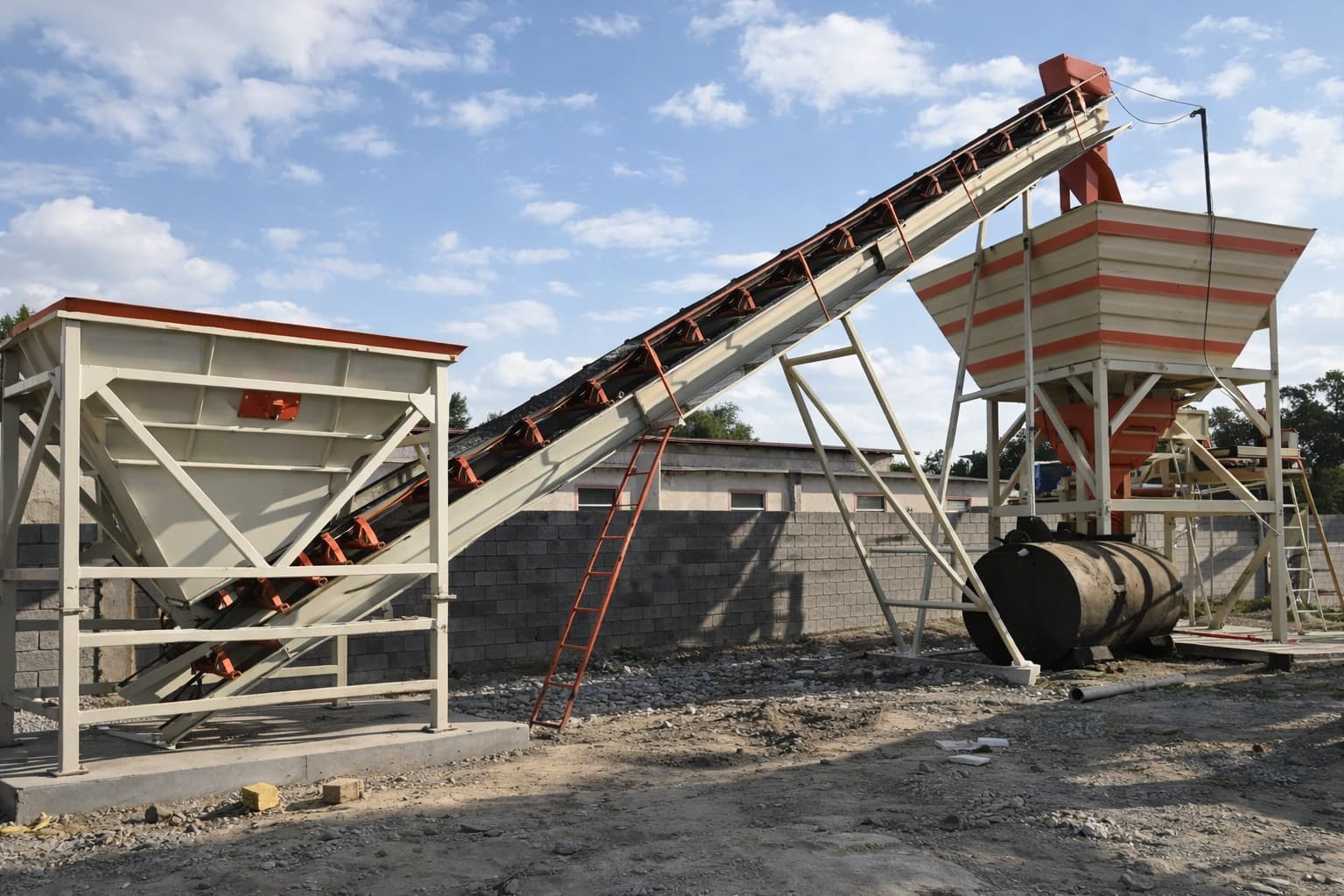
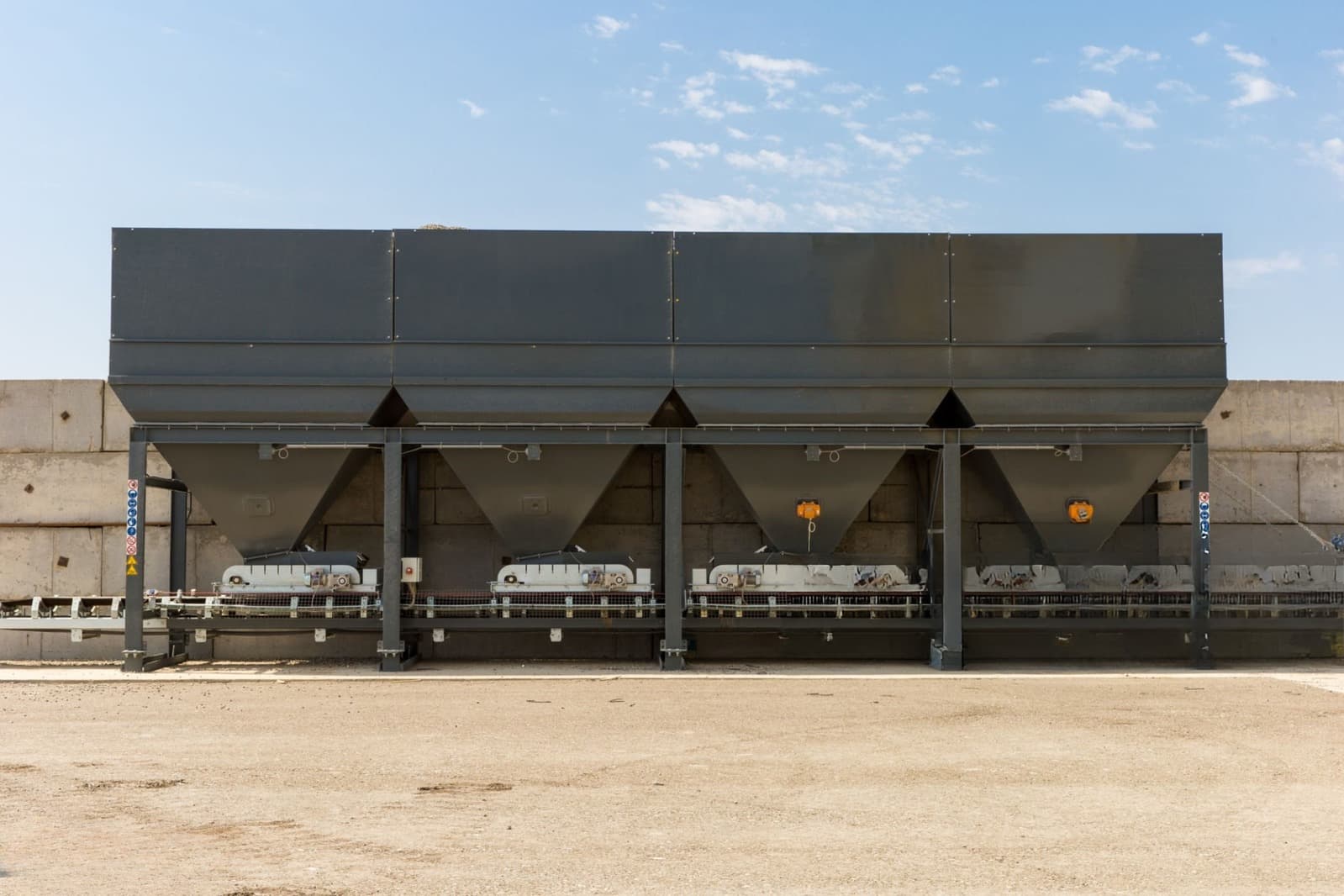
Receiving aggregate and sand into compartment bunkers and feeding it onto a belt by bottom feeders. Each compartment can hold a different fraction; wear zones are protected for the product.
Mining and Mineral ProcessingIndustrial Plant Solutions
PRO MAKINA · Bunkers and Hoppers
Overview
Bunkers and hoppers are intermediate storage bodies in which raw material is received, buffered for a short time and fed steadily to the next equipment by the feeder below. They turn the intermittent arrival of material by loader, truck or conveyor into continuous feeding of the line.
Hopper geometry is determined by the material's flow behaviour. Side wall angles and the conical or pyramidal bottom section let material descend steadily to the outlet; for moist and sticky materials, bridging risk is assessed together with wall angle and outlet size.
A belt feeder, screw or other suitable feeder is connected to the bottom outlet; a slide gate can be used to stop or shut off the flow. For abrasive materials, impact and sliding zones are protected with wear plates if required.
01Process Flow
The diagram shows the flow in which material is received into the bunker, buffered, discharged in a controlled way from the bottom outlet and transferred to the next feeding or conveying equipment. Feeder, conveyor and the next machine are separate equipment.
Scroll horizontally to view the full diagram.
Material receipt: Material is received through the bunker's top opening by loader, truck or conveyor.
Buffering: The bunker balances intermittent arrivals against the line's continuous draw-off.
Controlled bottom discharge: Material descends through the conical or pyramidal bottom to the outlet.
Transfer to next equipment: The feeder below delivers material to a conveyor, crusher or dosing equipment.
Buffer volume is determined by the difference between how material arrives and the line's draw-off rate.
02Applications
01Receiving aggregate and sand into compartment bunkers and feeding it onto a belt by bottom feeders. Each compartment can hold a different fraction; wear zones are protected for the product.
Mining and Mineral Processing 02
02A feed bunker for steady feeding of quarry material to the crusher. Impact zone and feeder are designed for the largest lump size.
Crushers and Shredders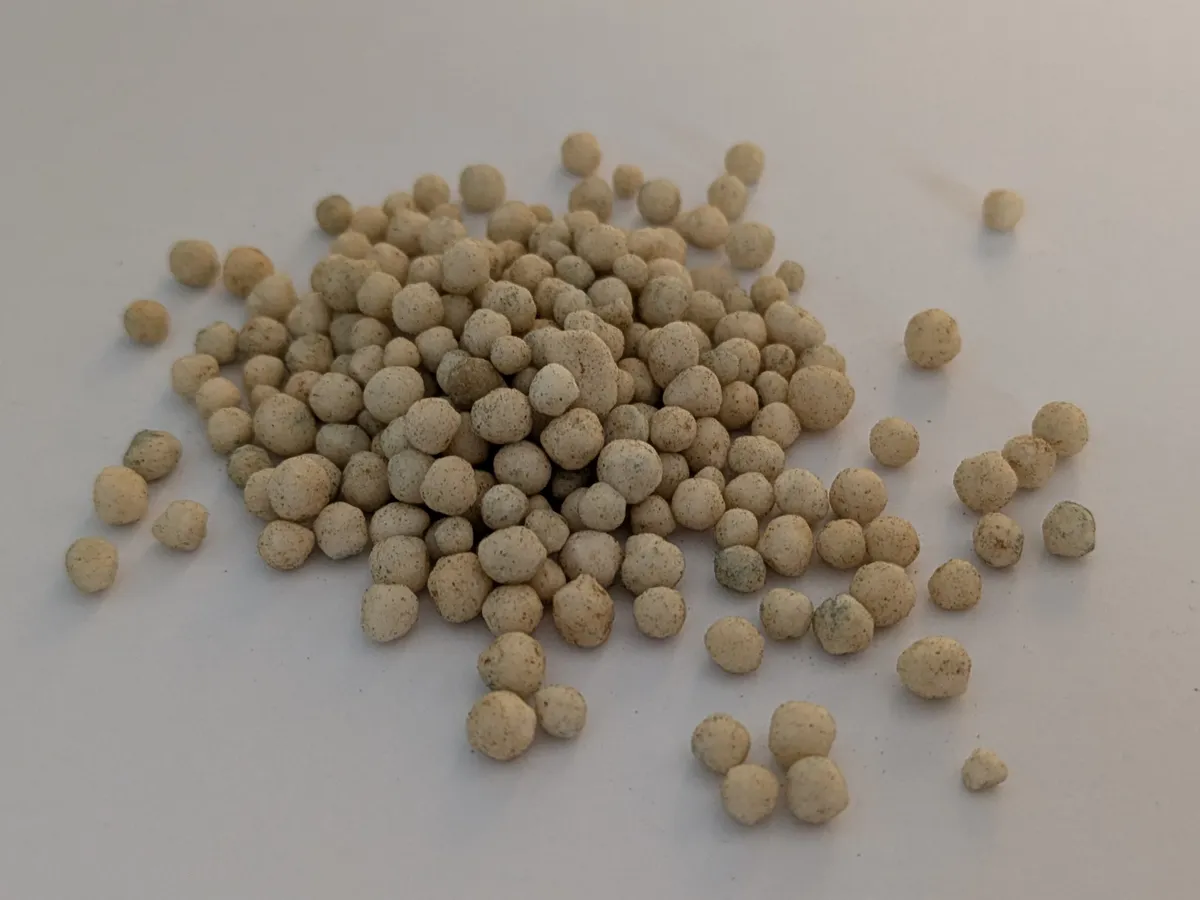 03
03Buffering fertilizer raw materials ahead of a weigh belt feeder or feeder. Steady flow directly affects dosing accuracy.
Dosing Systems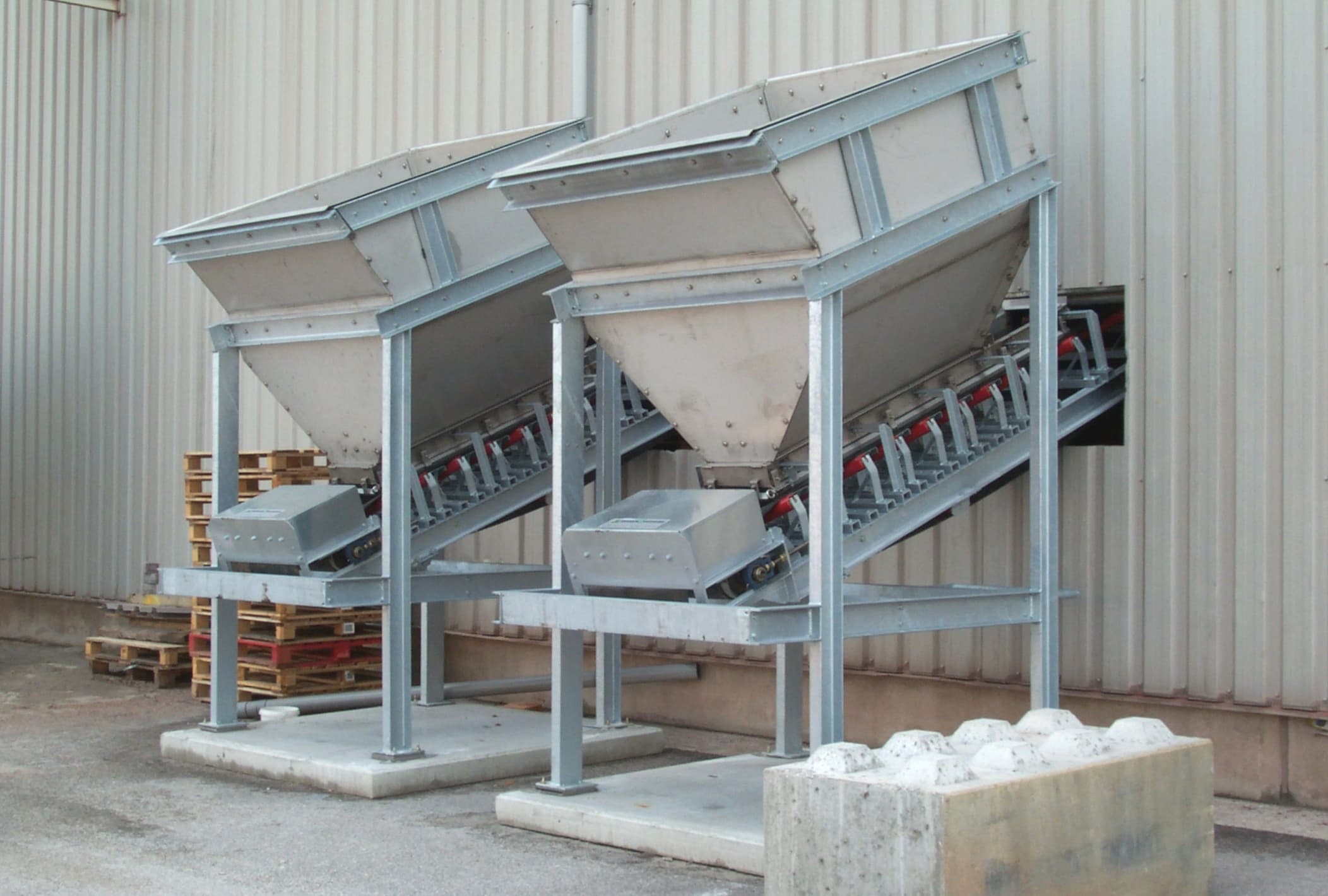
03Design & Manufacturing
PRO MAKINA engineers bunkers and hoppers around material type, bulk density, particle size, moisture and receipt method, and the line's feeding requirement. Body and bottom geometry, receipt opening, bottom outlet and feeder connection, wear zones and support frame are designed together.
Receipt Rate
How material arrives and the receipt rate.
Buffer Volume
Buffer needed between receipt and line draw-off.
Material Flow
Bulk density, particle size, moisture and stickiness.
Wall Angle and Wear
Side wall angles, outlet size and wear zones.
Bottom Feeding
Feeder type, flow control and connection to the next equipment.
Bunker volume, dimensions and plate thicknesses are defined from material and line data; no generic values are stated on this page.
04FAQ
It buffers intermittently arriving material for a short time and feeds it steadily to the line via the feeder below.
A silo is for long-term, high-volume storage; a bunker is a short-term buffer between receipt and feeding.
Wall angles and outlet size are selected for the material's flow properties; flow aids are assessed separately if needed.
A belt feeder, screw or other suitable feeder is selected for the material and line requirement.
Material type and density, particle size and moisture, receipt method and rate, required buffer volume and next equipment.
05Resources
Technical Quotation
Share your material, receipt method and feeding needs, and we will define the bunker system together with you.
This site uses cookies required to run the website securely and correctly. With your consent, additional cookies may be used for performance measurement, user experience and marketing. For details see the Cookie Policy and Privacy Policy pages.