 01
01Household Organic Waste
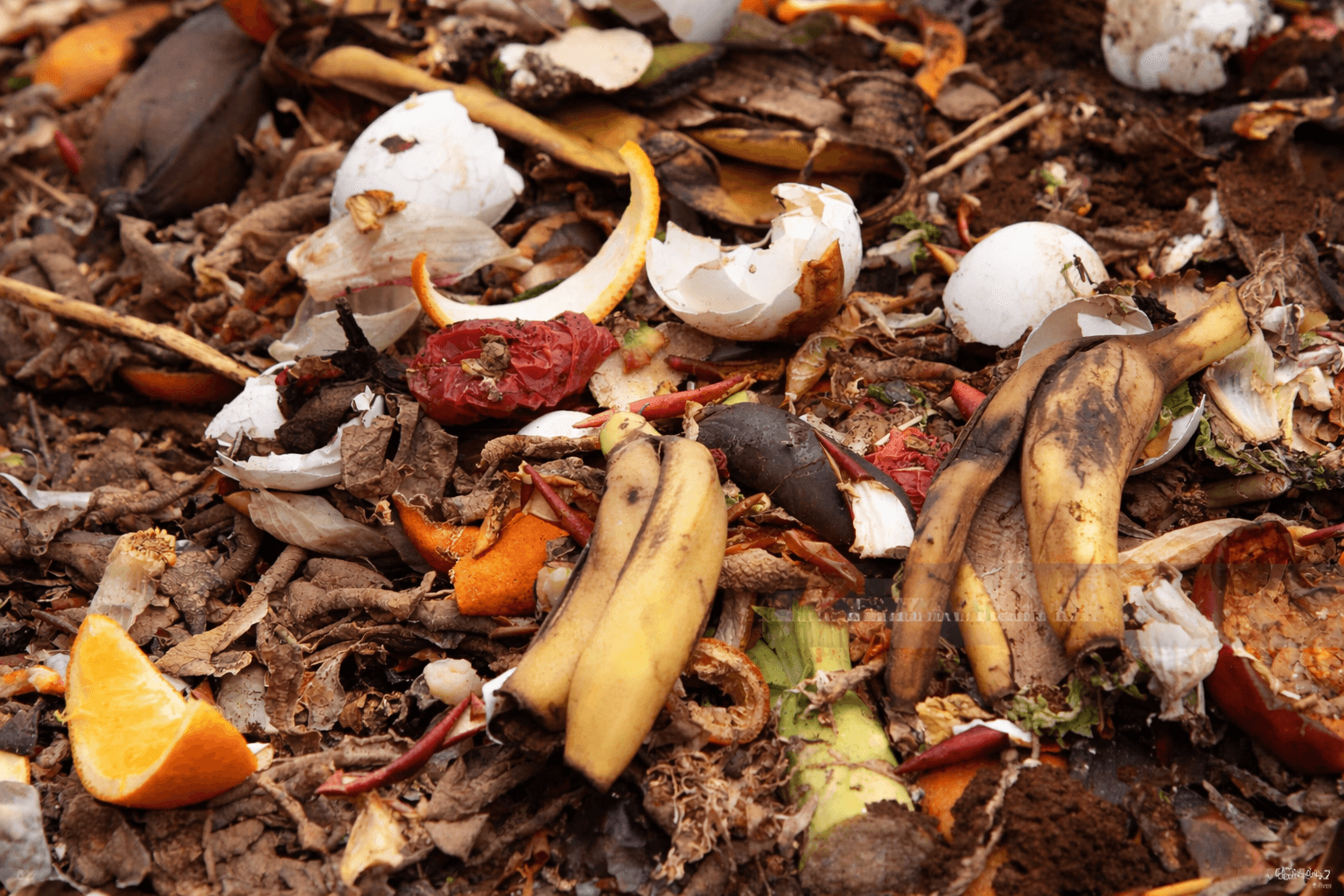
Source-separated kitchen and food waste mixed and aerated to prepare it for composting. Removing contaminants in pre-treatment is important for drum performance.
Organic Waste Processing PlantIndustrial Plant Solutions
PRO MAKINA · Rotary Composting Reactor
Overview
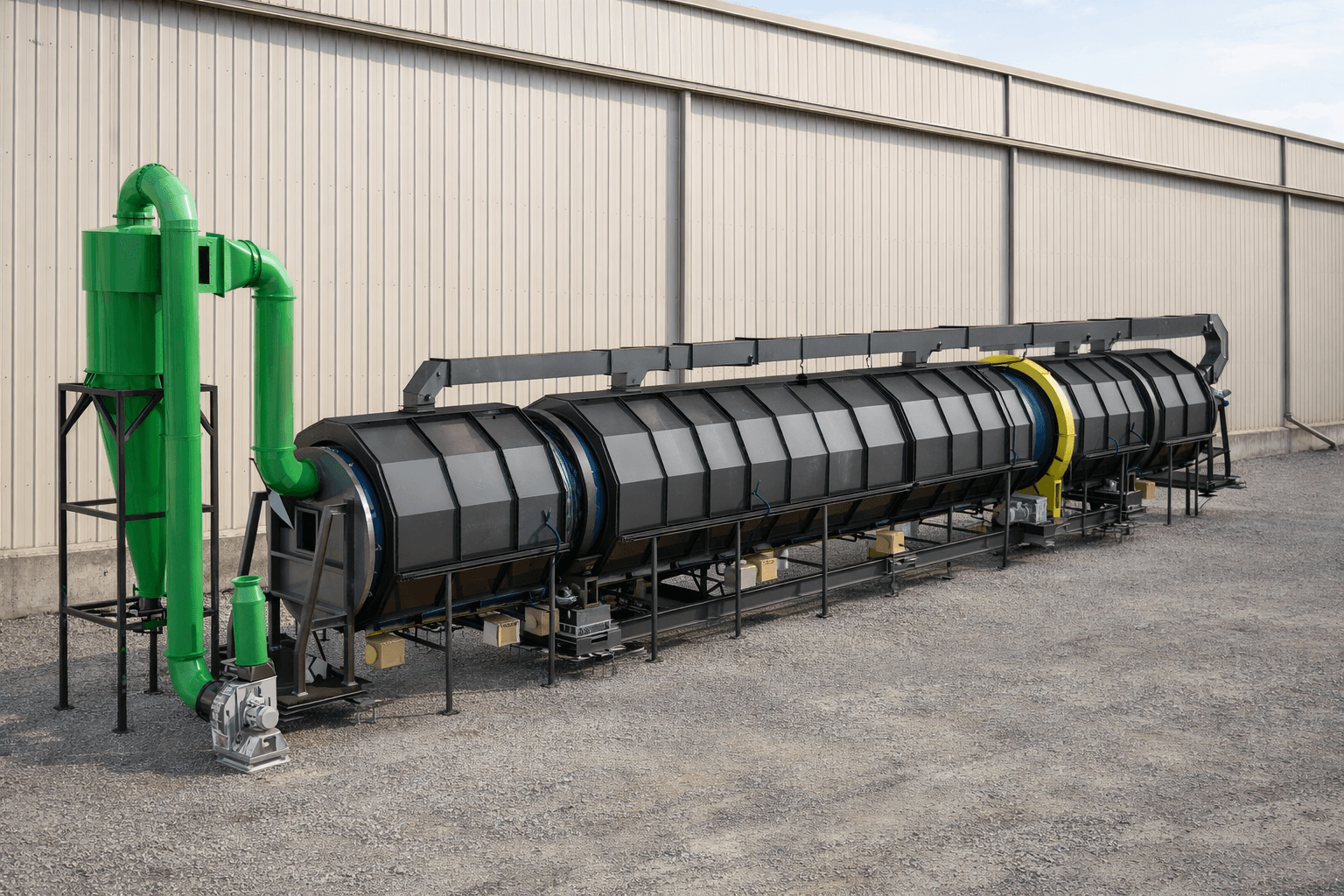
A compost drum is a rotary composting reactor in which mixtures of organic waste, digestate, sewage sludge and bulking agents are continuously mixed and aerated inside a long, slowly rotating drum. The material is homogenised, its structure is opened up and aerobic biological activity starts under controlled conditions.
The drum does not carry out the whole composting process; it is a pre-stabilisation and homogenisation step. Maturation of the material leaving the drum continues in windrows, tunnels or enclosed areas depending on the plant concept, followed by screening to prepare the final product.
Drum length and diameter are determined by daily feed, target residence time, material density and moisture, aeration approach and available site area. Treatment of the air extracted from the drum for odour management is addressed within the project scope.
01Process Flow
The diagram shows where the compost drum sits in a typical organic waste plant. Reception, pre-treatment, maturation and screening are carried out by plant equipment outside the drum.
Scroll horizontally to view the full diagram.
Reception and pre-treatment: Organic waste is weighed, shredded if required and cleared of contaminants.
Mix preparation: Different inputs and bulking agent are blended for moisture and structure balance.
Pre-stabilisation in the drum: The material is mixed by slow rotation, aerated and homogenised.
Maturation and screening: Drum output goes to the maturation area and then to screening.
Air supply: A fan supplies the air needed for biological activity to the drum.
Exhaust air treatment: Air drawn from the drum is sent to a treatment unit for odour control.
Air extracted from the drum carries moisture and odorous compounds; the treatment method (e.g. biofilter or scrubber) is chosen according to the plant permit and layout.
02Applications
01Source-separated kitchen and food waste mixed and aerated to prepare it for composting. Removing contaminants in pre-treatment is important for drum performance.
Organic Waste Processing Plant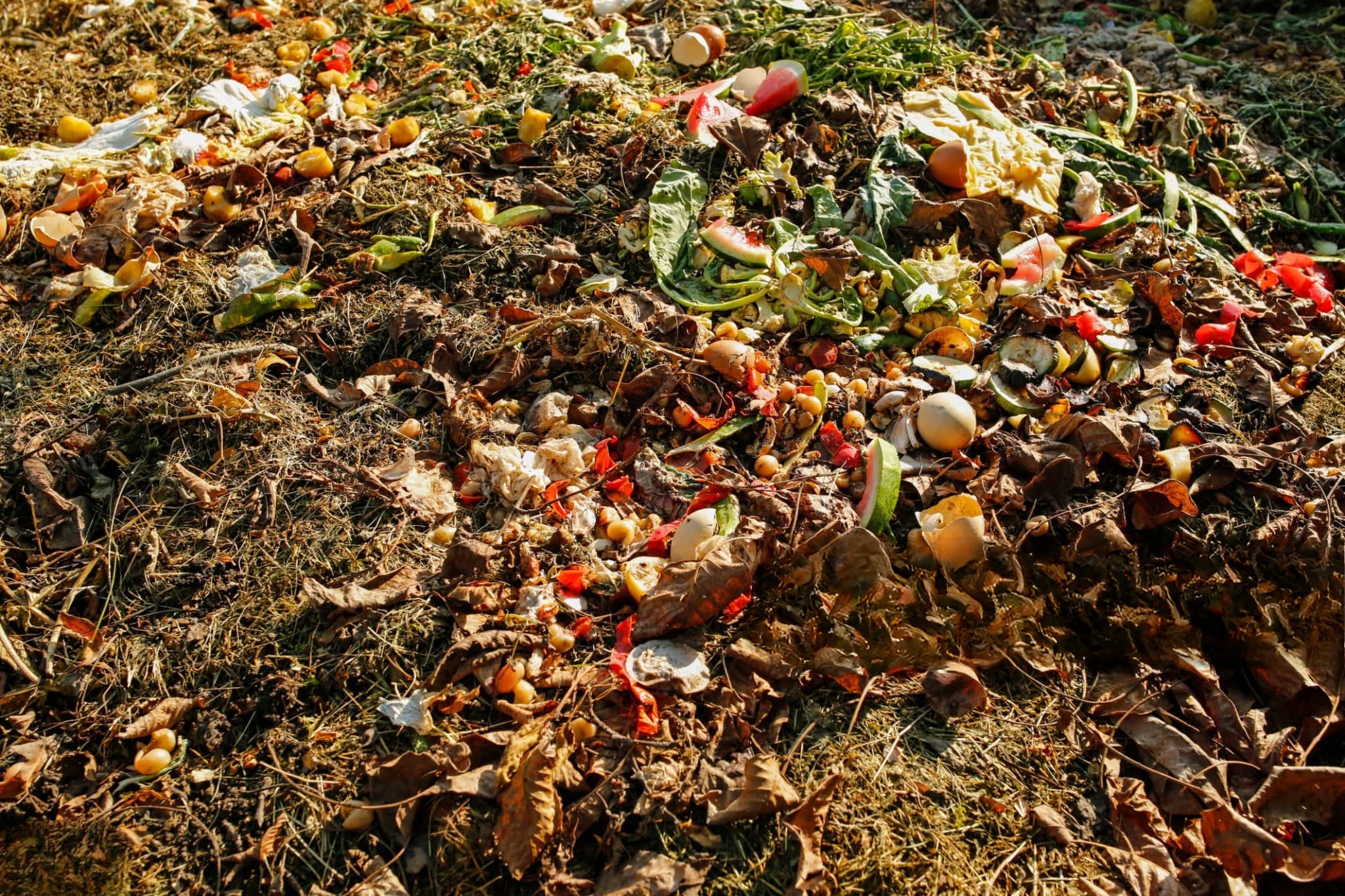 02
02Vegetable, fruit and plant residues blended with bulking agent into a homogeneous compost mix. Carbon and moisture balance is set through input ratios.
Agricultural Waste Compost Plant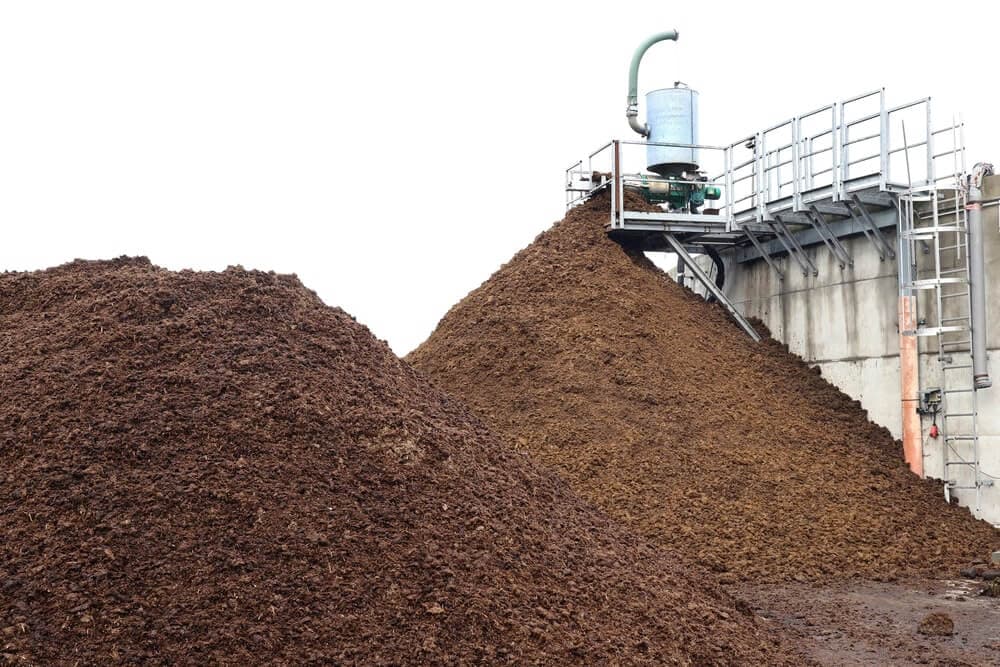 03
03Digestate from biogas plants and dewatered sewage sludge mixed with bulking agent to prepare them for composting. For wet inputs, the mix ratio is decisive.
Sludge-to-Compost Plant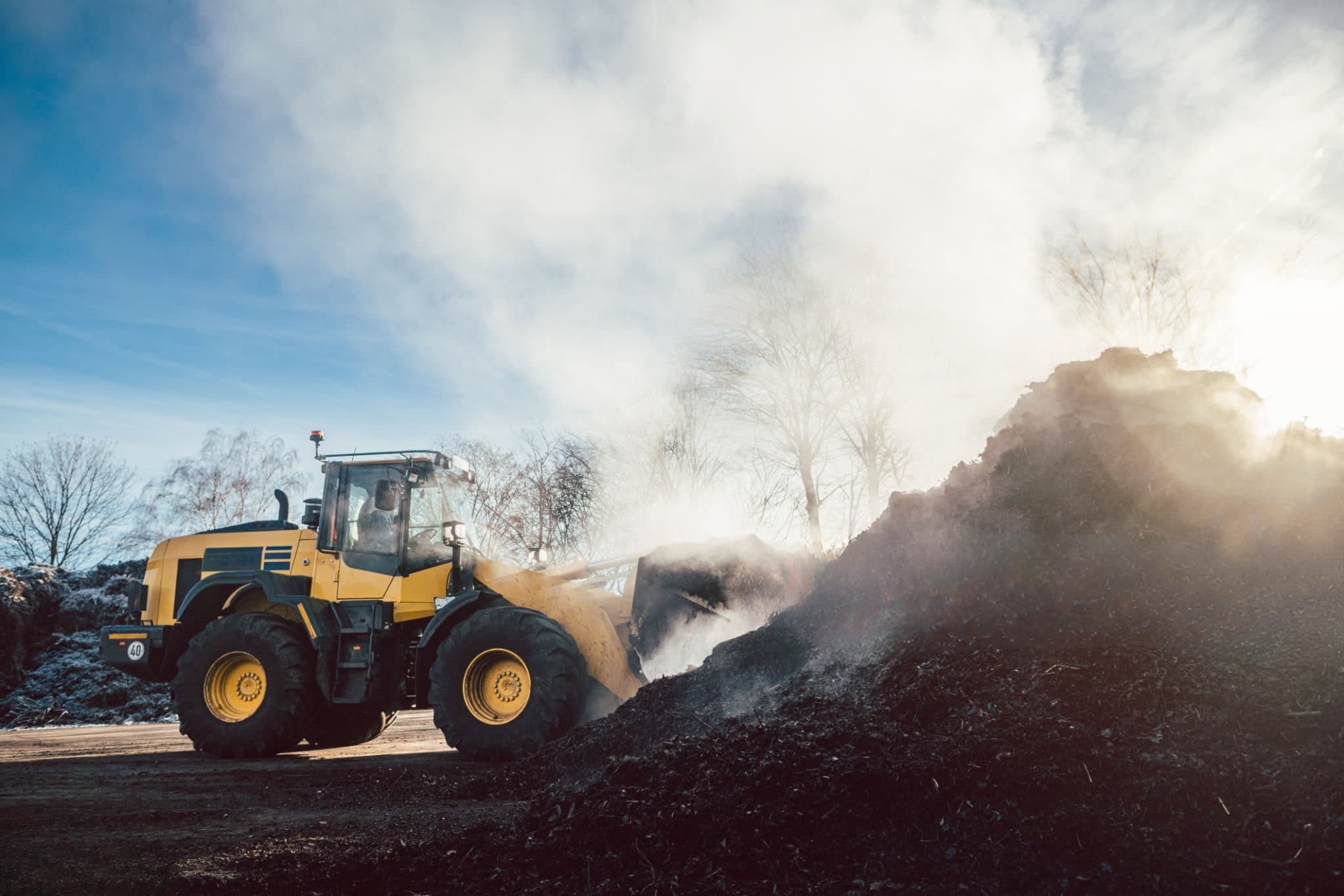 04
04Transferring pre-stabilised material from the drum to the maturation area in a homogeneous, aerated state. Maturation time is planned according to the plant concept.
Composting Plant03Design & Manufacturing
PRO MAKINA engineers compost drums around daily feed tonnage, input mix, target residence time and plant layout. The long drum shell, internal mixing elements, air connections, feeding and discharge units and the drive system are designed together.
Input Data
Waste types, mix ratios, moisture, density and contaminant content.
Capacity and Time
Daily feed tonnage, operating days and target residence time.
Air and Odour
Aeration approach, extracted air volume and treatment method.
Mechanical Design
Drum dimensions, internals, drive system and supports.
Plant Integration
Reception, pre-treatment, maturation, screening and site layout.
Product targets such as hygienisation or maturity depend on applicable regulations, the input mix and plant operation; they are assessed separately at the project stage.
04FAQ
A compost drum can be used for pre-stabilisation and homogenisation of household organic waste, sewage sludge, digestate, animal manure and agricultural waste mixtures.
The drum is the initial step of composting: it provides mixing, aeration and pre-stabilisation. Maturation continues outside the drum according to the plant concept.
Capacity is determined by daily feed, target residence time, material density, moisture level and drum filling ratio considered together.
Moisture affects biological activity, material flow behaviour and odour formation. Input mix, aeration and drum design are therefore considered together with the moisture balance.
Waste types, daily tonnage, inlet moisture, target residence time, site area, aeration and odour management approach and the final product target.
05Resources
Technical Quotation
Share your waste types, daily tonnage and site conditions, and we will define the compost drum and its place in the plant together with you.
This site uses cookies required to run the website securely and correctly. With your consent, additional cookies may be used for performance measurement, user experience and marketing. For details see the Cookie Policy and Privacy Policy pages.