 01
01Non-Standard Products and Processes
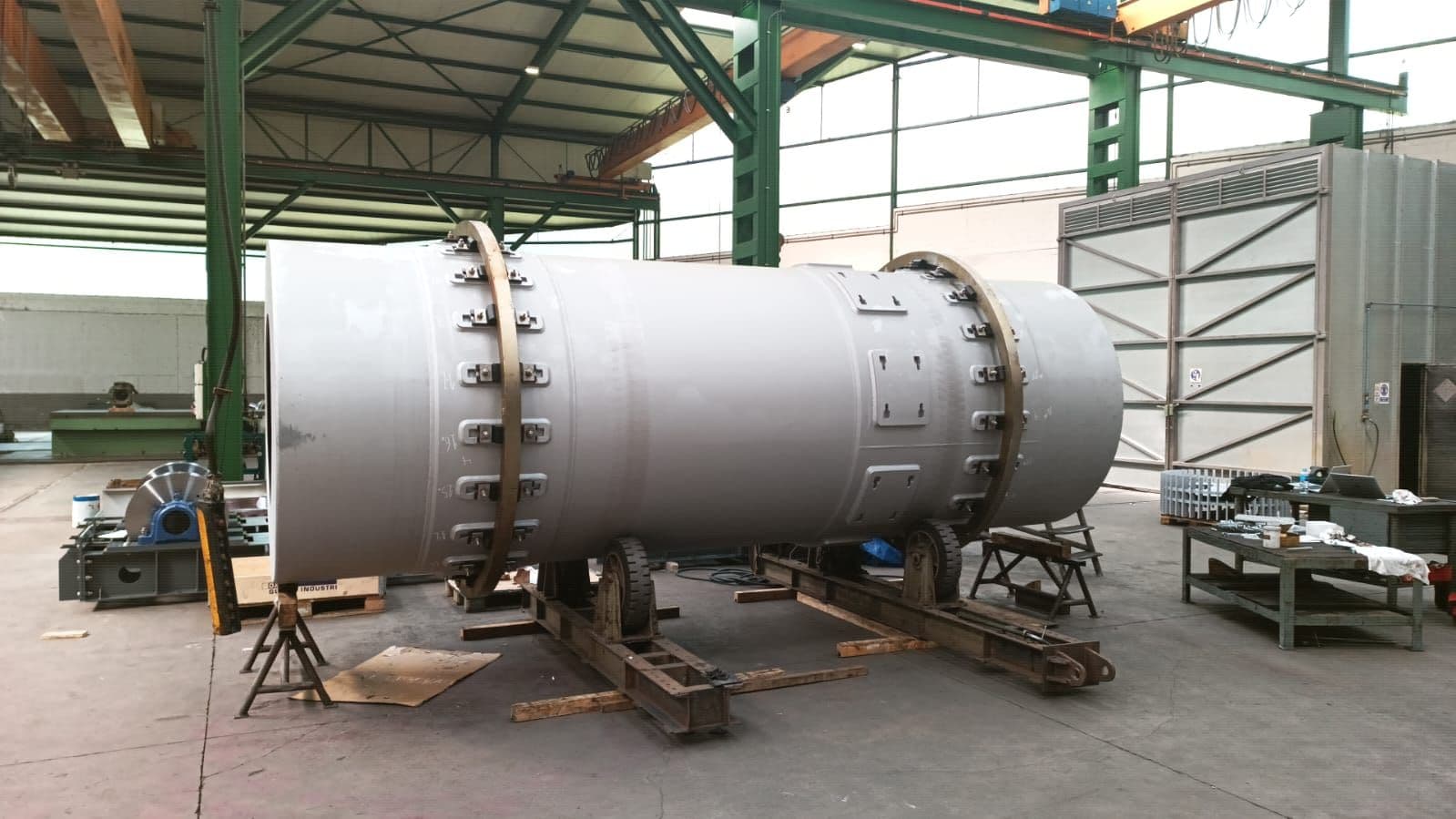
For chemical, thermal or special mixing processes that do not fit the standard drum family, shell, internal geometry and materials are selected per project.
Chemical Process IndustryIndustrial Plant Solutions
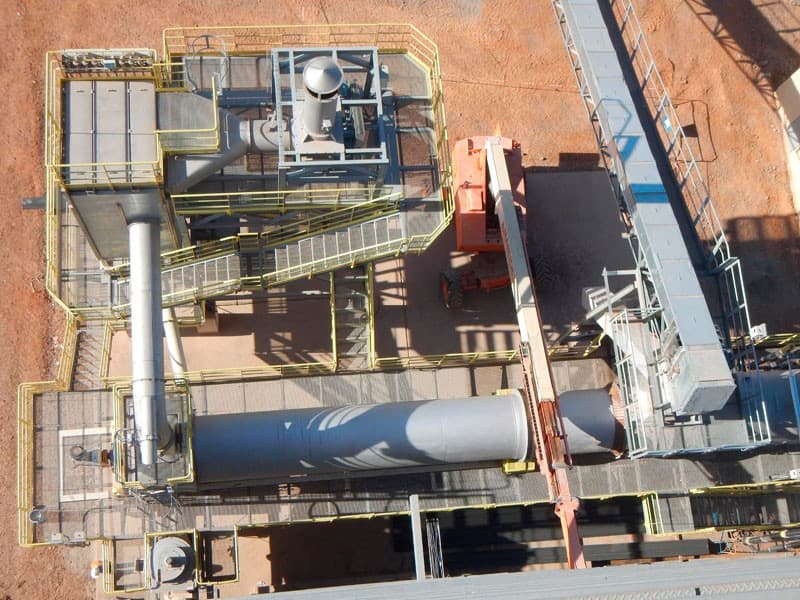
PRO MAKINA · Project-Specific Rotary Drum
Overview
Custom drum solutions are developed for product- and plant-specific requirements beyond standard granulation, drying, cooling, coating or mixing scenarios. Unusual product behaviour, high temperature, chemical compatibility, special internal geometry or limited site dimensions are typical reasons.
Design starts from the process target rather than drum dimensions: once it is defined how long the product must stay in the drum, how it must move, which medium it contacts and in what condition it must leave, the shell, internals, drive and auxiliary equipment are selected.
The clearer the project data, the more accurate the design. The engineering cards below therefore summarise the technical information that should be shared with a custom drum enquiry.
01Process Flow
The diagram shows the typical steps of a custom drum project from data collection to commissioning. The drum's position in the line and its auxiliary equipment are defined per project.
Scroll horizontally to view the full diagram.
Collecting process data: Product, capacity, target and site information are clarified technically.
Engineering and design: Drum dimensions, internal geometry and operating scenario are defined.
Manufacturing: Shell, internals, drive unit and frame are produced to the design.
Installation and commissioning: The drum is installed on site, connected and commissioned.
For integration into an existing plant, site dimensions, connection points and shutdown planning are assessed together at the start of the project.
02Applications
01For chemical, thermal or special mixing processes that do not fit the standard drum family, shell, internal geometry and materials are selected per project.
Chemical Process Industry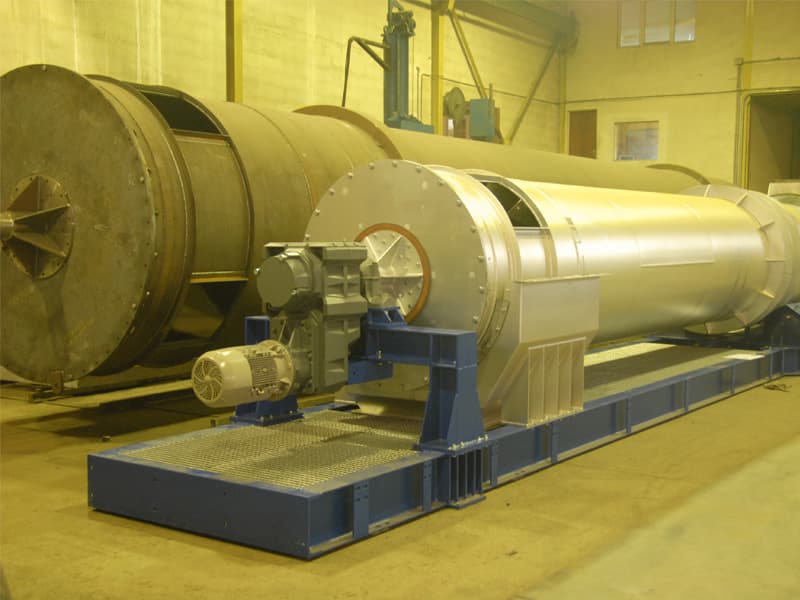 02
02For capacity increases, product changes or renewal of a worn drum, a new drum is designed while keeping existing connection points and site dimensions.
Drum Systems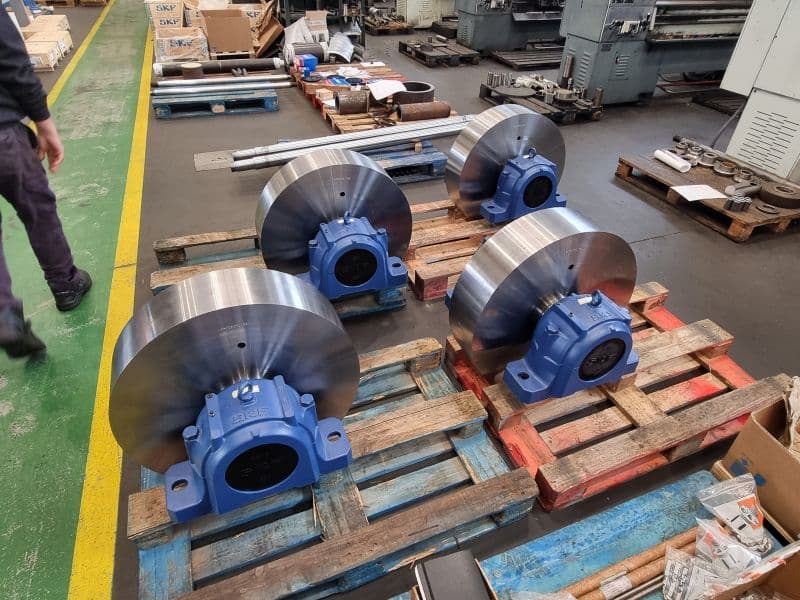 03
03Mechanical components such as riding rings, support rollers, bearings and drive units are selected for the drum load and operating conditions; special requests are clarified in a technical meeting.
Request a technical meeting03Design & Manufacturing
Custom drum design relies on accurate process data from the customer. The headings below summarise the information needed for an initial technical assessment; missing data can be completed together in a technical meeting.
Product and Material
Product type, particle size, density, moisture, stickiness and abrasiveness.
Process Target
The operation in the drum and the expected product condition at discharge.
Capacity and Operation
Hourly or daily capacity, continuous or batch operation.
Temperature and Environment
Process temperature, gas or steam contact, chemical effects.
Site and Integration
Layout dimensions, existing equipment and connection points.
When replacing an existing drum, sharing its dimensions, drawings and operating problems speeds up the assessment.
04FAQ
A custom drum is needed when product behaviour, temperature, chemical environment, internal geometry or site dimensions cannot be met by the standard drum family.
Design starts with defining the product and process target. Once capacity, temperature, residence time and site data are clear, drum dimensions and internal geometry are determined.
Yes. By reviewing existing connection points, foundation dimensions and operating problems, a new drum can be designed to match the other equipment in the line.
If product behaviour is uncertain, sample work or a review of operating data from a similar plant is recommended; design parameters are then based on that data.
Product data, process target, capacity, temperature and environmental conditions and site and integration details; missing items can be completed in a technical meeting.
05Resources
Technical Quotation
Share your product, process target and site conditions, and we will start the technical assessment for a custom drum together.
This site uses cookies required to run the website securely and correctly. With your consent, additional cookies may be used for performance measurement, user experience and marketing. For details see the Cookie Policy and Privacy Policy pages.