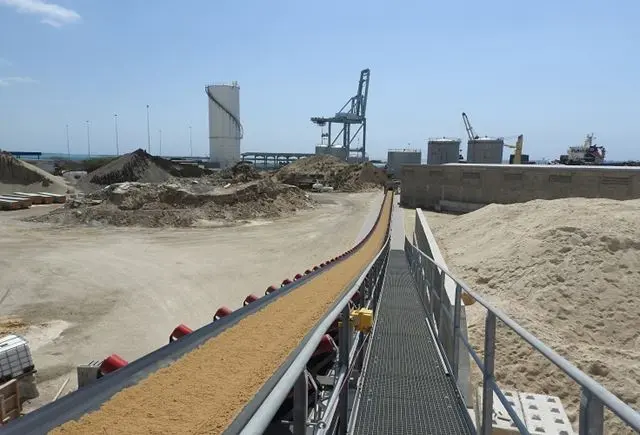
 01
01Sand and Aggregate Handling
Transporting sand, gravel and aggregates between stockyards, screening and loading points. For abrasive products, belt grade, scrapers and feed chute are selected accordingly.
Mining and Mineral ProcessingIndustrial Plant Solutions
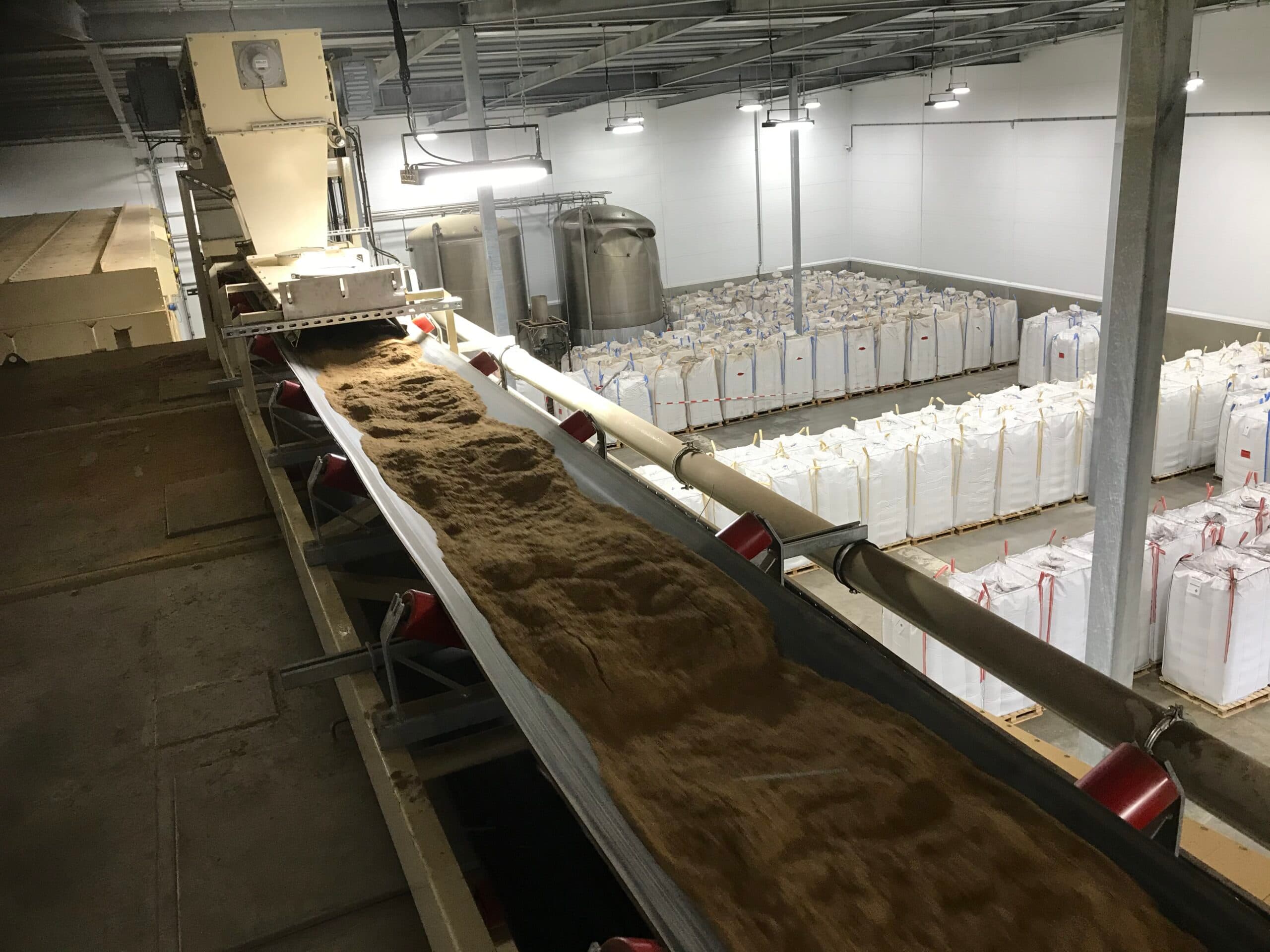
PRO MAKINA · Industrial Belt Conveyor
Overview
A belt conveyor carries bulk material, or suitable unit loads, continuously on an endless belt running between a drive pulley and a tail pulley. The belt travels on carrying idlers; material is loaded at the feed point and discharged at the head pulley.
Belt width, speed and type are selected by considering hourly capacity, particle size and bulk density of the material, conveyor length and inclination. On inclined lines the angle is limited according to the product so that material does not roll back on the belt.
Feed chute, skirt sealing, belt scrapers and dust control are part of the design to reduce spillage and wear. Pulleys, take-up and belt tracking arrangements are selected with smooth belt running and maintenance access in mind.
01Process Flow
The diagram shows the typical flow in which the belt conveyor carries material from the feed point to the discharge point. Upstream and downstream equipment depends on the plant concept.
Scroll horizontally to view the full diagram.
Material intake: Material comes from a hopper, silo outlet or upstream equipment.
Loading onto the belt: The feed chute places material centrally and steadily on the belt.
Transport on the belt: The belt runs on carrying idlers along a horizontal or inclined route.
Controlled discharge: Material leaves at the head pulley into the discharge chute and next equipment.
A belt conveyor does not change the material; it only transports it. Crushing, screening or storage take place in other equipment of the line.
02Applications
01Transporting sand, gravel and aggregates between stockyards, screening and loading points. For abrasive products, belt grade, scrapers and feed chute are selected accordingly.
Mining and Mineral Processing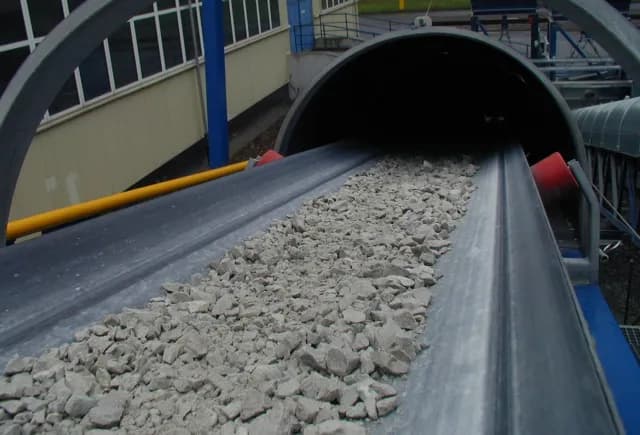 02
02Conveying stone and ore from crusher discharge to screens and stockpiles. For coarse material, impact-zone idlers and drop height at the feed point are assessed together.
Crushers and Shredders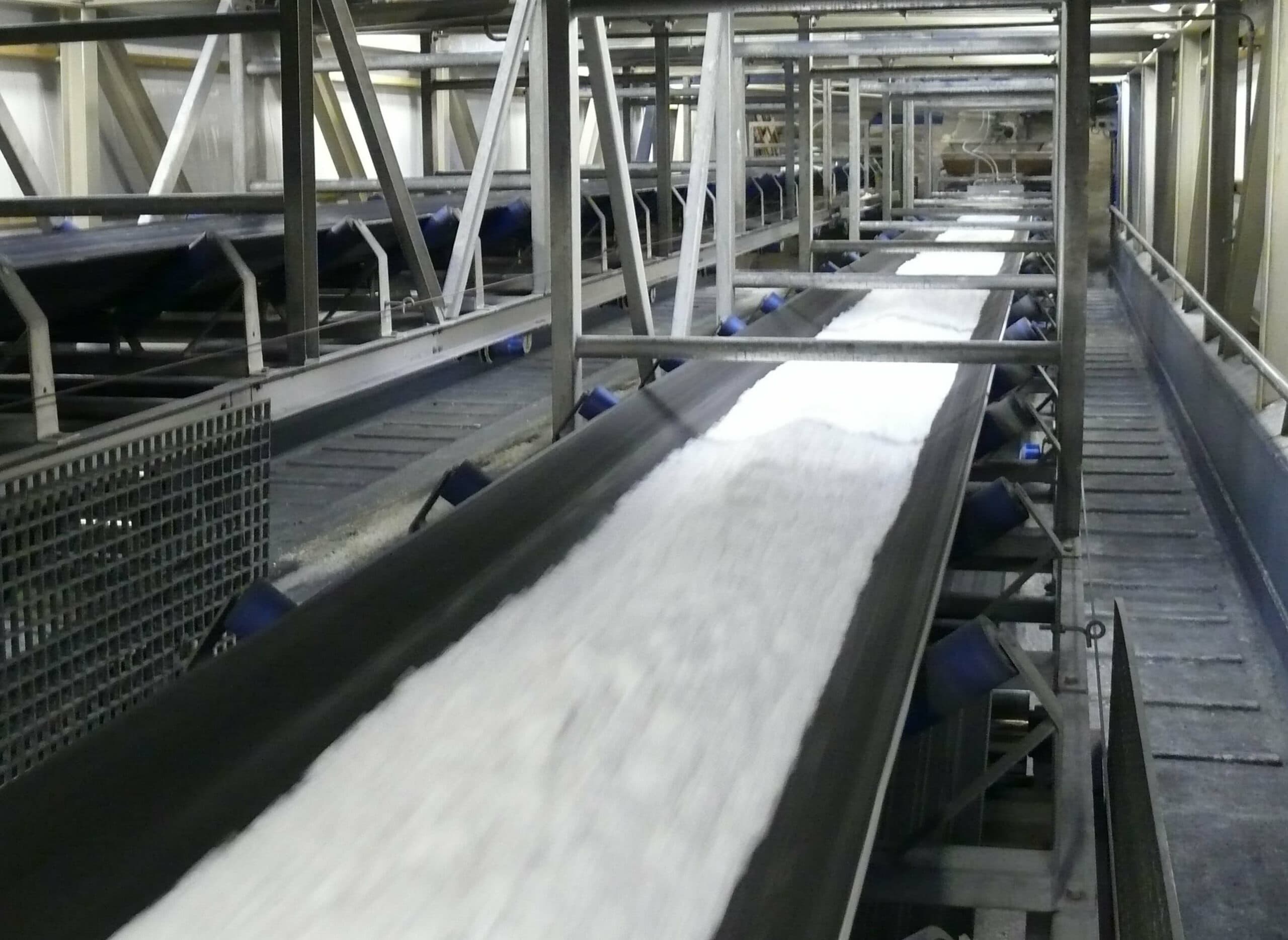 03
03Moving granular fertilizer and similar products between process equipment, silos and packing. Enclosed or covered lines can be chosen for moisture and dust control.
Fertilizer Plants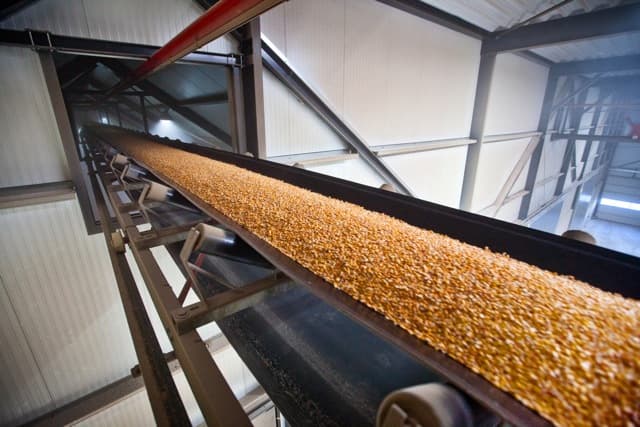 04
04Conveying grain and feed raw materials between intake, silos and process points. Feed and discharge points can be enclosed to reduce dust and spillage.
Storage and Feeding Systems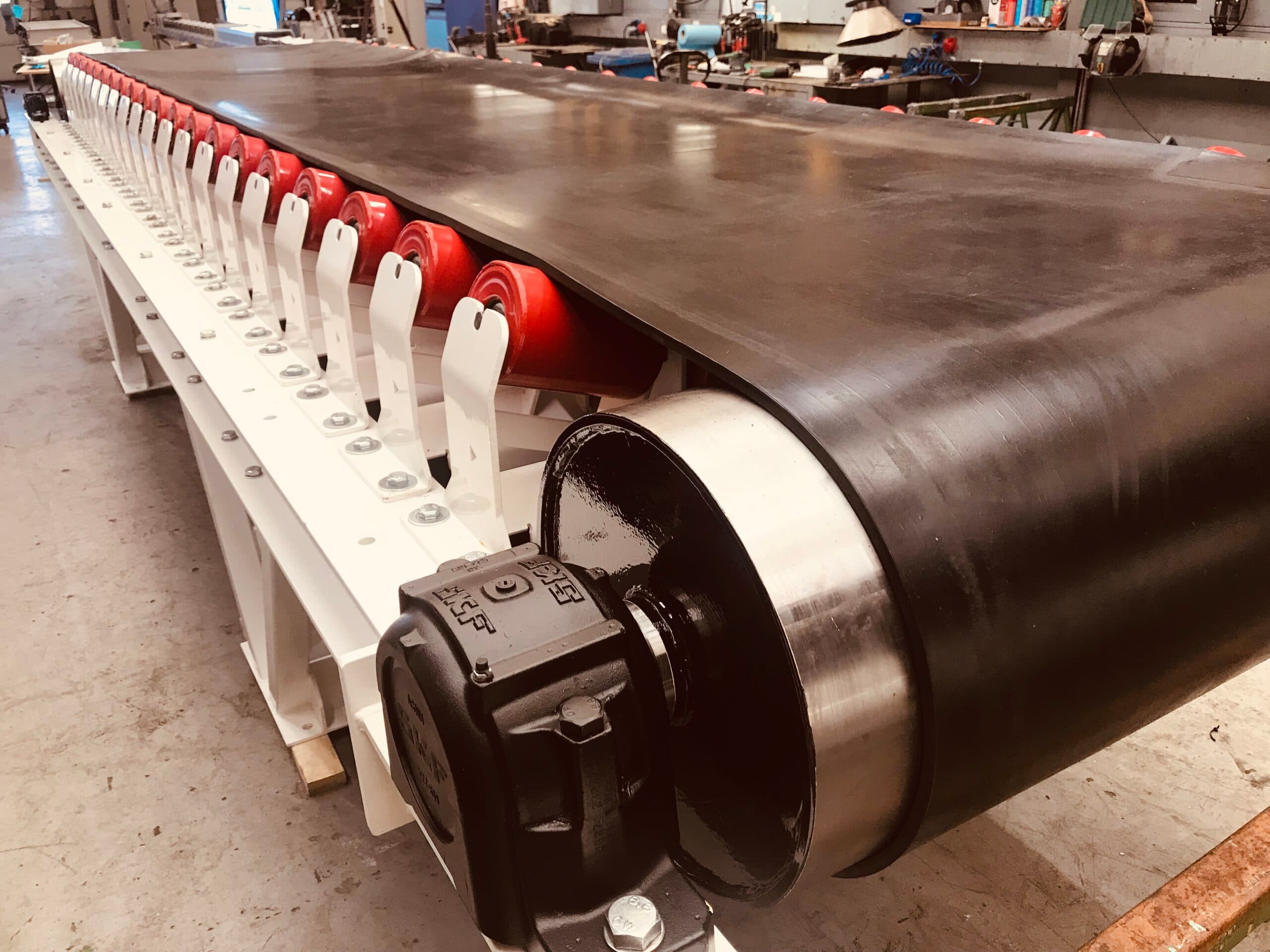
03Design & Manufacturing
PRO MAKINA engineers belt conveyors around the material, hourly capacity and line geometry. Frame, pulleys, idlers, take-up, feed and discharge chutes and guards are designed as one system.
Material
Material type, particle size, bulk density, moisture and abrasiveness.
Capacity
Hourly conveying capacity and operating hours.
Line Geometry
Conveyor length, inclination, lift and route.
Belt and Drive
Belt type and width, belt speed, pulley and gear motor selection.
Feed and Discharge
Loading and discharge points, chutes, guards and maintenance access.
Belt width, speed and drive power are calculated from these data; no generic values are stated on this page.
04Gallery
05FAQ
Capacity depends on belt width, belt speed, bulk density of the material and its cross-section on the belt. Inclination and flow behaviour of the material are also taken into account.
The suitable angle depends on the material and belt type. It is limited according to product behaviour so that material does not roll back; for steeper routes other belt types are assessed.
Central loading, correct take-up tension, training idlers, skirt sealing and belt scrapers all help reduce mistracking and spillage.
Feed and discharge points can be enclosed, the line can be covered and dust extraction can be added where required. The solution depends on how dusty the product is.
Material type, particle size, bulk density, hourly capacity, conveyor length, inclination or lift and the feed and discharge points.
06Resources
Technical Quotation
Share your material, capacity and route, and we will define the belt conveyor and its feed and discharge points together with you.
This site uses cookies required to run the website securely and correctly. With your consent, additional cookies may be used for performance measurement, user experience and marketing. For details see the Cookie Policy and Privacy Policy pages.