Sludge Drying Systems — Volume Down, Options Up
Dewatered sludge is still mostly water: transporting and disposing of it means paying for water. Thermal drying cuts the mass to a fraction, sanitises the product and opens recovery routes — from soil-related uses to co-incineration. Pro Makina builds complete sludge drying lines around rotary drum dryers adapted for sticky materials.
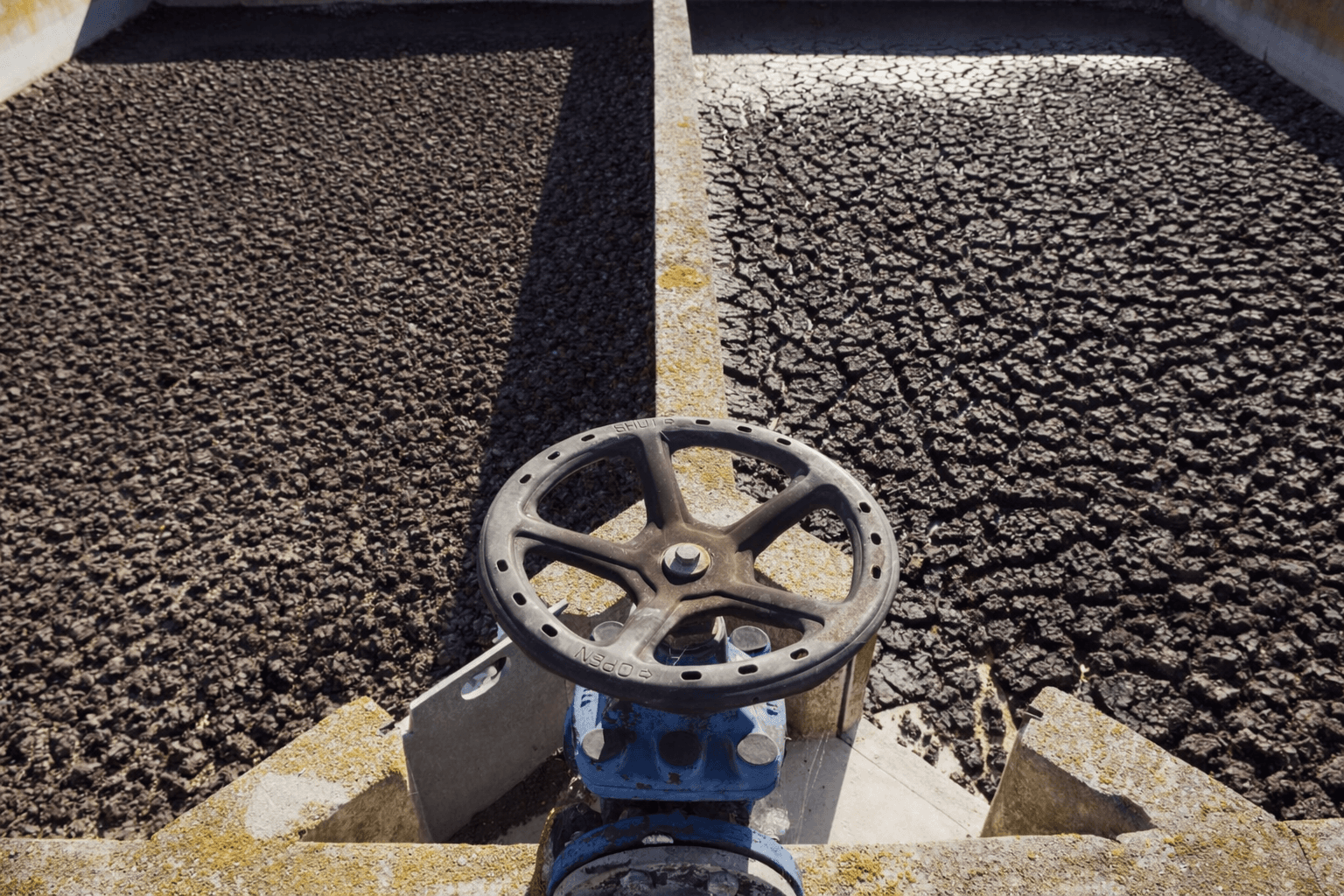
The Sticky-Phase Problem — and How We Solve It
Sludge passes through a glue-like consistency range as it dries, where it cakes on surfaces and blocks conventional dryers. Our lines manage this with back-mixing: dried product is blended into the wet feed, shifting the mixture past the sticky phase before it enters the drum. Feed screws, flight design and drum internals are specified for sludge, not adapted from sand dryers.
The air circuit is equally critical: sludge drying air carries dust, moisture and odour. Cyclones recover solids, condensation is prevented by temperature management, and exhaust air treatment — scrubber or biofilter — is included in the design where the site requires it.
Sludge Types We Process
- Municipal wastewater treatment sludge (dewatered)
- Food industry treatment sludge
- Paper and textile industry sludge
- Biogas digestate after separation
Line Building Blocks
Sludge feeding
Silos, pumps and screws designed for dewatered sludge consistency.
Back-mixing system
Dry product recycle that carries the feed past the sticky phase.
Rotary drum dryer
Sludge-specific flights, drive reserves and access for cleaning.
Air treatment
Cyclone recovery, dust filtration and odour treatment as required.
Product handling
Cooling, storage and loadout of the dried granulate.
Heat source options
Natural gas, biogas or available waste heat integrated into the balance.
Data Required for a Sludge Line Proposal
| Design input | Role in the design |
|---|---|
| Sludge origin and analysis | Corrosion, odour and safety concept |
| Dry solids content in / target | Evaporation load and back-mixing ratio |
| Daily sludge quantity | Line capacity and buffer sizing |
| Available heat source | Burner or heat-integration design |
| Dried product destination | Product handling and quality targets |
Sludge behaviour varies strongly between plants; analyses of your actual sludge are the design basis.
Why Pro Makina
Manufactured in Turkey
Design and fabrication are carried out in our own facility in Eskişehir, Turkey, with full in-house engineering control.
Project-based engineering
Every machine is sized around your raw material, moisture content and capacity target — not sold from a fixed catalogue.
Export experience
We prepare international technical proposals, shipping documentation and commissioning support for overseas projects.
Single point of responsibility
Process design, fabrication, automation and commissioning are managed by one engineering team.
Frequently Asked Questions
What dry solids content can the line reach?
The target is a design input — lines are engineered for the dryness your disposal or recovery route requires, verified during commissioning against the agreed sludge analysis.
Can biogas or waste heat be used for drying?
Yes. Biogas firing and waste heat integration are common configurations; the heat balance in the proposal shows the achievable capacity with your heat source.
How is odour handled?
Through enclosed equipment, controlled air routing and exhaust treatment (scrubber or biofilter) specified according to your site's permit conditions.
Related Machines & Solutions
Share Your Project Details
Send us your raw material, capacity and process data. Our engineering team will review your requirements and prepare a project-specific technical proposal.
Sludge Drying Systems — Volume Down, Options Up
Final dimensions, capacity and drive power are determined per project, based on your raw material analysis, moisture content and process calculations.