 01
01Silo Feeding and Distribution
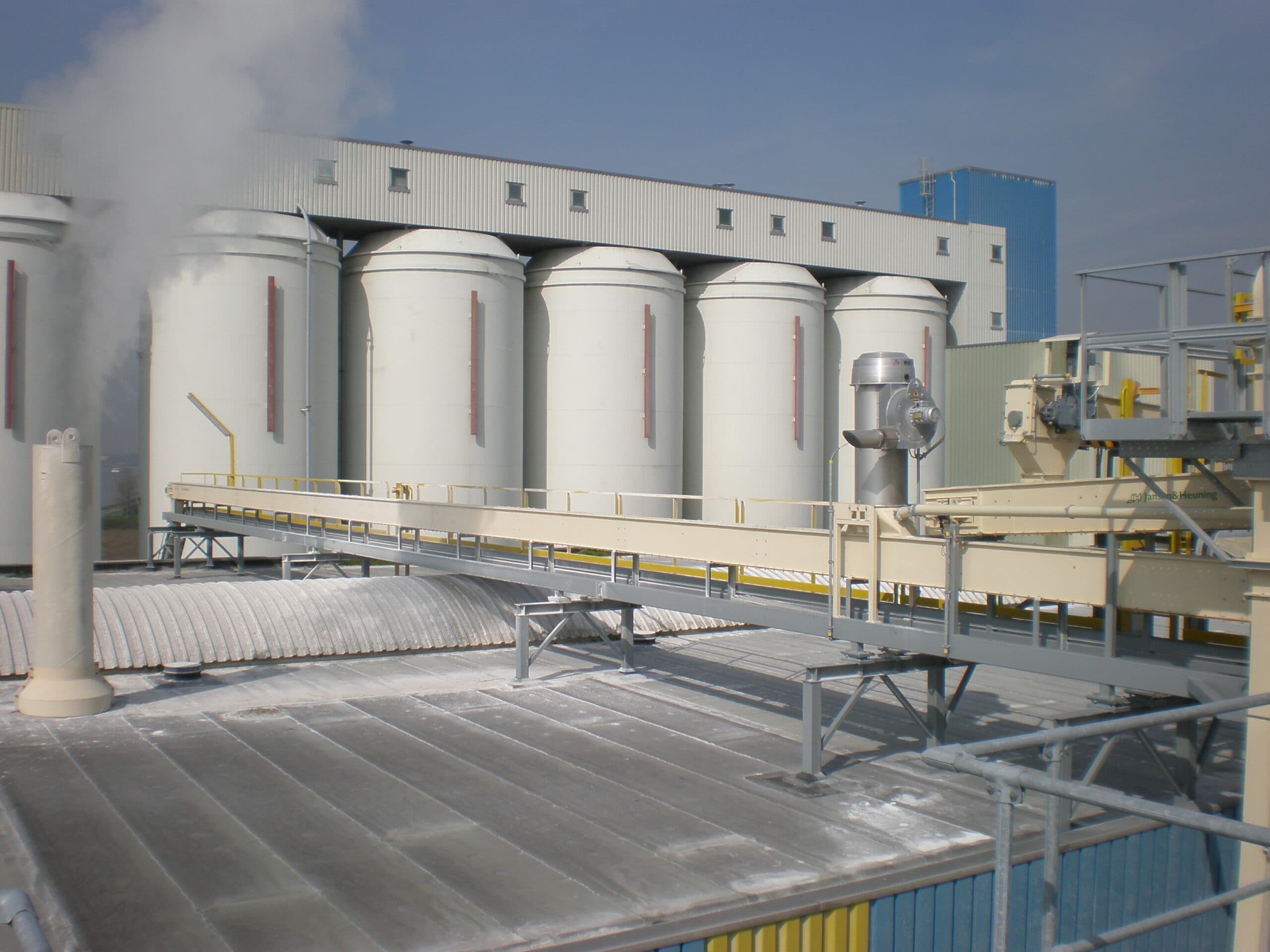
Distributing bulk product to several silos or collecting it from silos, above or below the silo row. Multiple discharge gates can be selected with slide gates.
Storage and Feeding SystemsIndustrial Plant Solutions
PRO MAKINA · Enclosed Drag Chain Conveyor
Overview
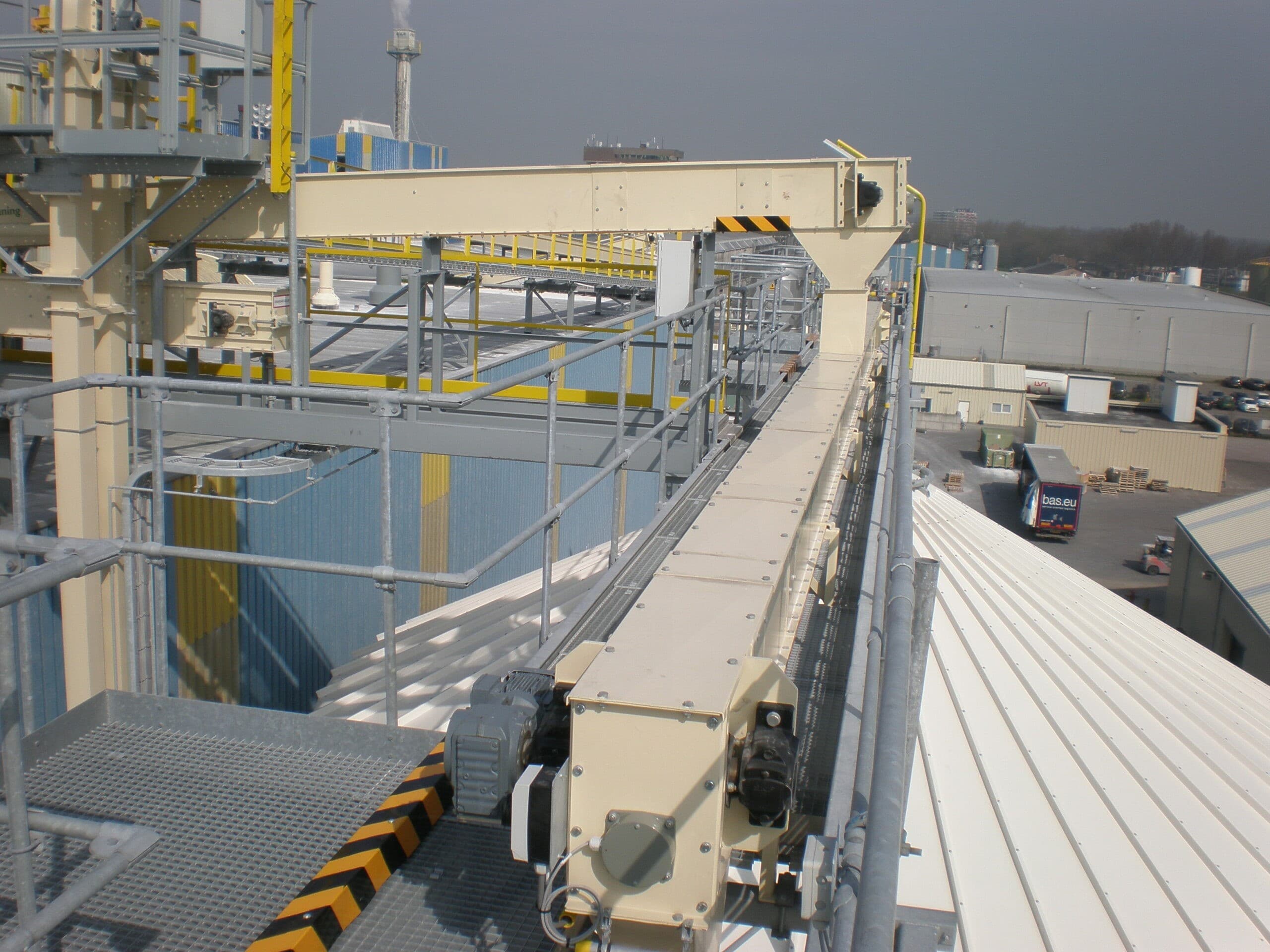
A chain conveyor moves bulk material inside an enclosed casing, dragged along by flights (scrapers) attached to the chain. The material travels as a bed along the casing floor; the chain runs between the drive sprocket at the head and the take-up sprocket at the tail.
Unlike a belt conveyor, the material does not ride on an open belt but moves within a closed trough. This makes dust sealing easier with dusty products and allows several discharge gates along the line.
Capacity is determined by casing cross-section, chain speed and bulk density. Chain type, flight material and casing wear surfaces are selected according to the abrasiveness and flow behaviour of the material.
01Process Flow
The diagram shows the typical flow in which the chain conveyor carries material from the inlet to the discharge gate inside the enclosed casing.
Scroll horizontally to view the full diagram.
Material feeding: Material enters the inlet from a hopper, silo or upstream equipment.
Transport in the casing: Flights on the chain drag the material along the casing floor.
Discharge: Material leaves through the selected discharge gate.
Chain return: The empty chain returns in the upper part of the casing to the tail sprocket.
Where the line has several discharge gates, the selected gate is opened to direct material to different silos or bins.
02Applications
01Distributing bulk product to several silos or collecting it from silos, above or below the silo row. Multiple discharge gates can be selected with slide gates.
Storage and Feeding Systems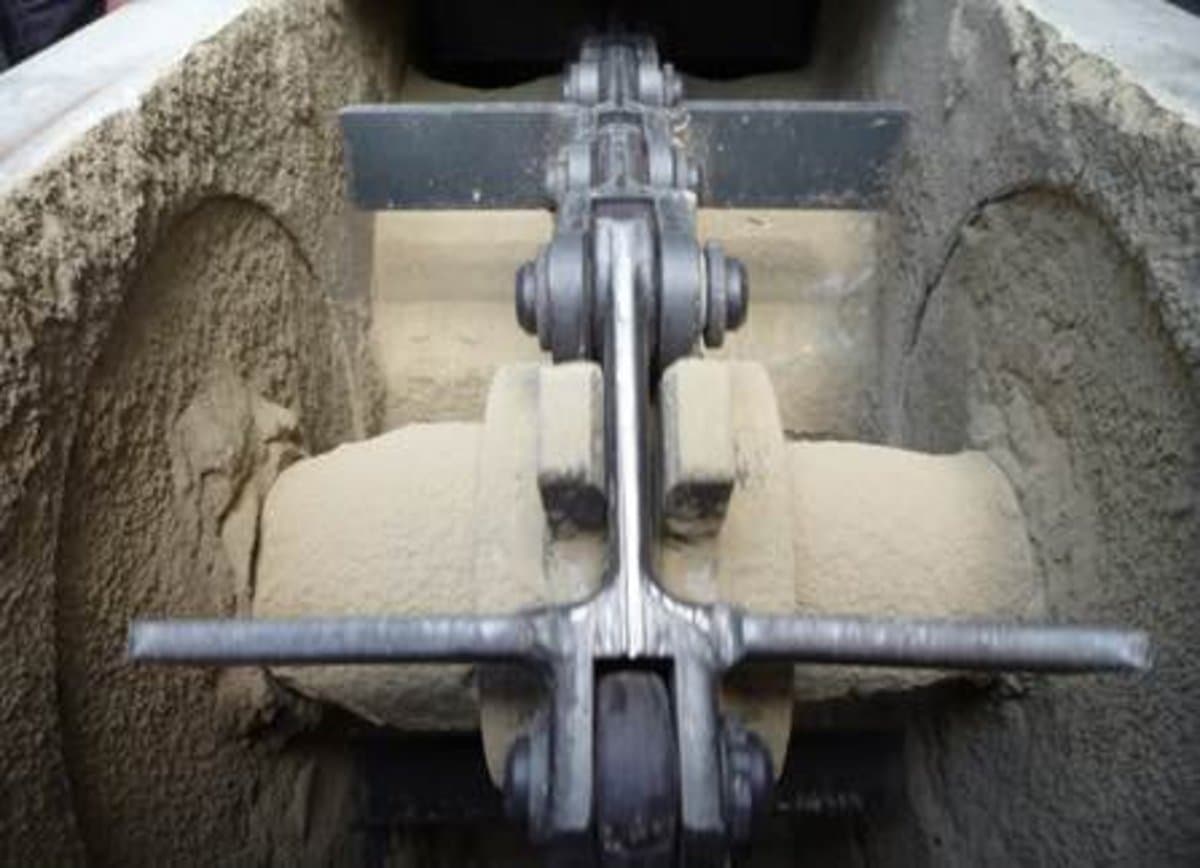 02
02Transporting fine, dust-prone products in an enclosed casing. Casing sealing and inspection covers are designed for the product.
Chemical Process Industry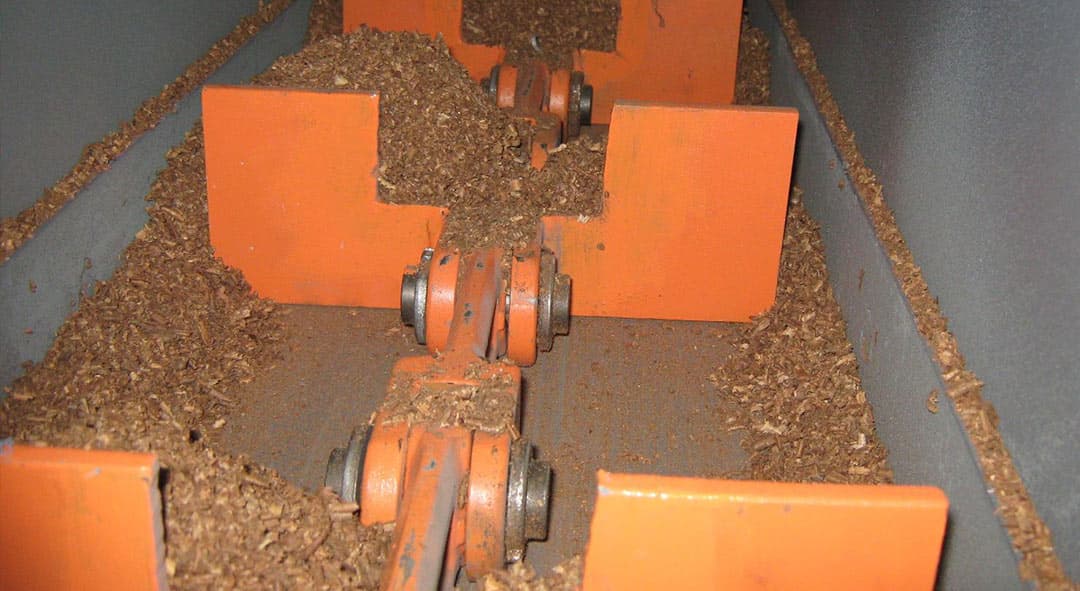 03
03Conveying wood chips and similar light, fibrous bulk materials to process equipment. Flight geometry and casing section are chosen for the material flow.
Recycling and Waste Management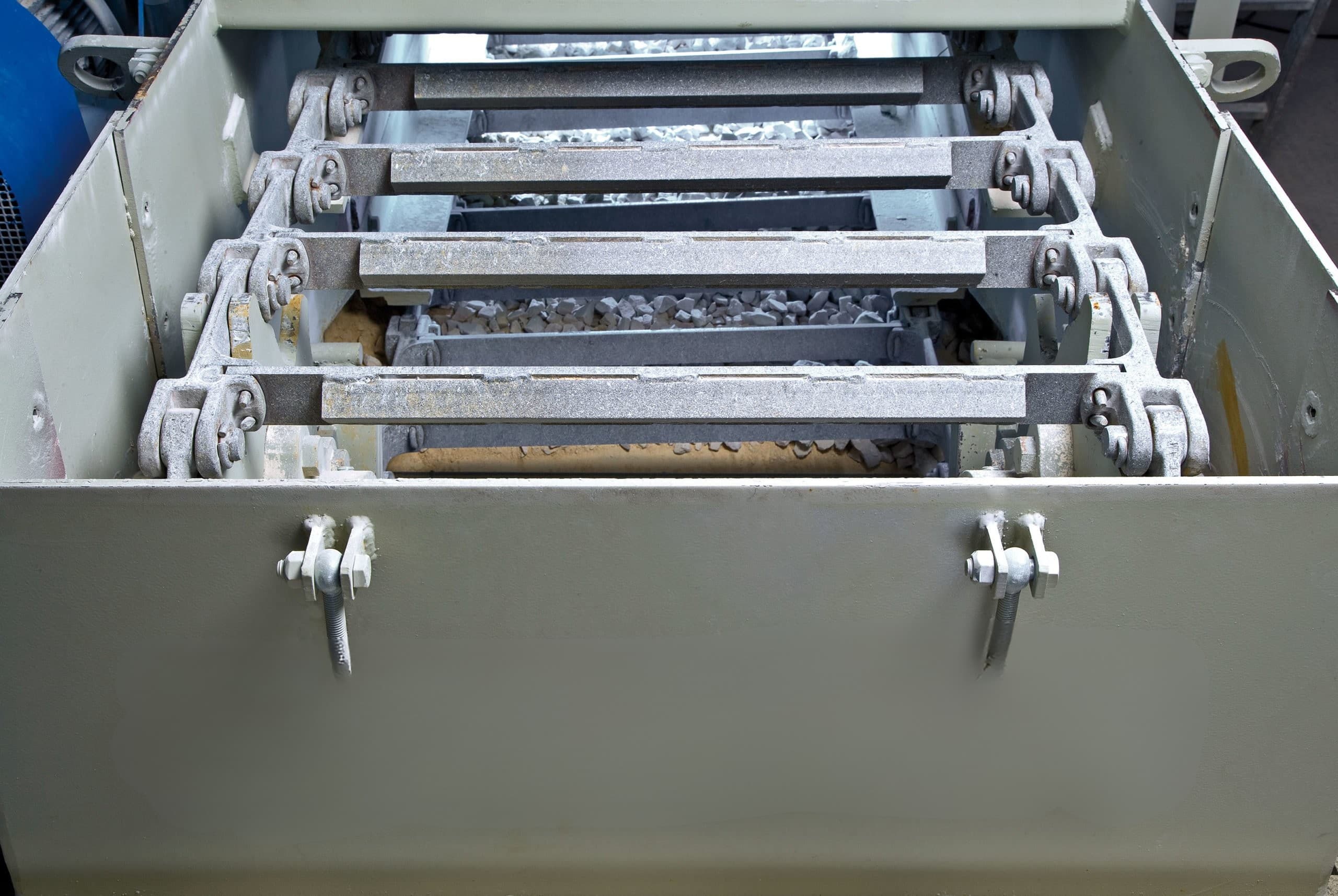
03Design & Manufacturing
PRO MAKINA engineers chain conveyors around the material, capacity and route. Casing, chain and flights, drive and take-up units, inlets, discharge gates and inspection covers are designed together.
Material
Material type, particle size, bulk density, moisture and abrasiveness.
Capacity
Hourly conveying capacity and operating hours.
Route
Conveyor length, inclination and position of inlets and outlets.
Chain and Casing
Chain type, flight material, casing section and wear surfaces.
Drive and Take-up
Gear motor, sprockets, take-up arrangement and maintenance access.
Chain speed and drive power are calculated from material and capacity data; suitability for hot or abrasive products is assessed separately for each project.
04Gallery
05FAQ
On a belt conveyor material rides on an open belt. In a chain conveyor it is dragged by flights on a chain inside an enclosed casing, which makes dust control and multiple discharge points easier.
Inclined lines can be designed for suitable materials. The angle depends on the flow behaviour of the material and the casing design.
Yes. Several discharge gates can be provided along the line, and slide gates select where the material is discharged.
Chain, flights, sprockets and the casing floor are wear parts. Wear liner material and take-up arrangement are selected according to how abrasive the product is.
Material type, particle size, bulk density, product temperature, hourly capacity, conveyor length and inclination, and the inlet and discharge points.
06Resources
Technical Quotation
Share your material, capacity and route, and we will define the chain conveyor and its discharge points together with you.
This site uses cookies required to run the website securely and correctly. With your consent, additional cookies may be used for performance measurement, user experience and marketing. For details see the Cookie Policy and Privacy Policy pages.