 01
01Product Receipt Before Silos
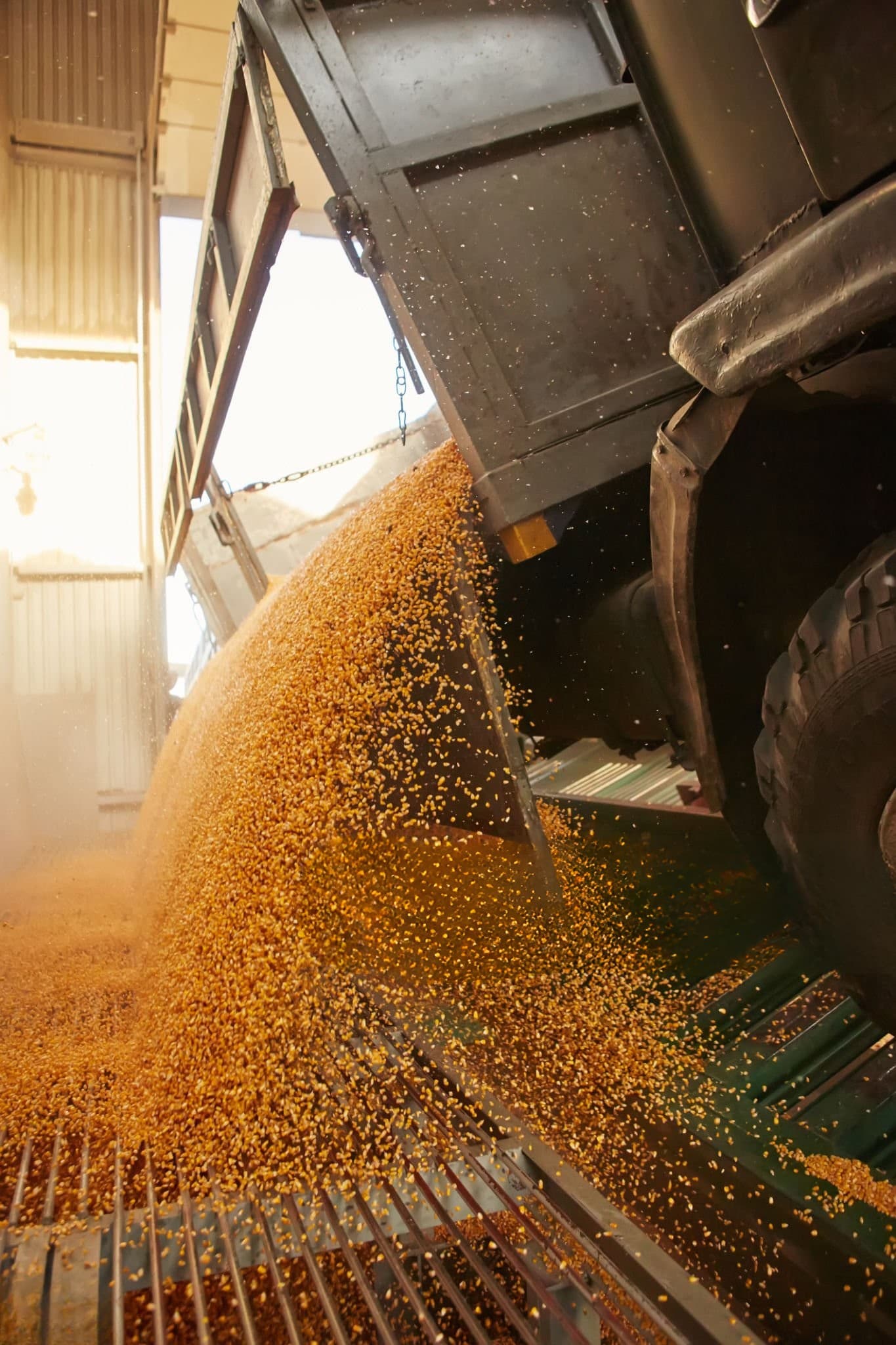
Receiving free-flowing bulk products such as grain from trucks and transferring them to silo storage. The grate opening is selected for the particle size.
Silo SystemsIndustrial Plant Solutions
PRO MAKINA · Truck Intake Hopper
Overview
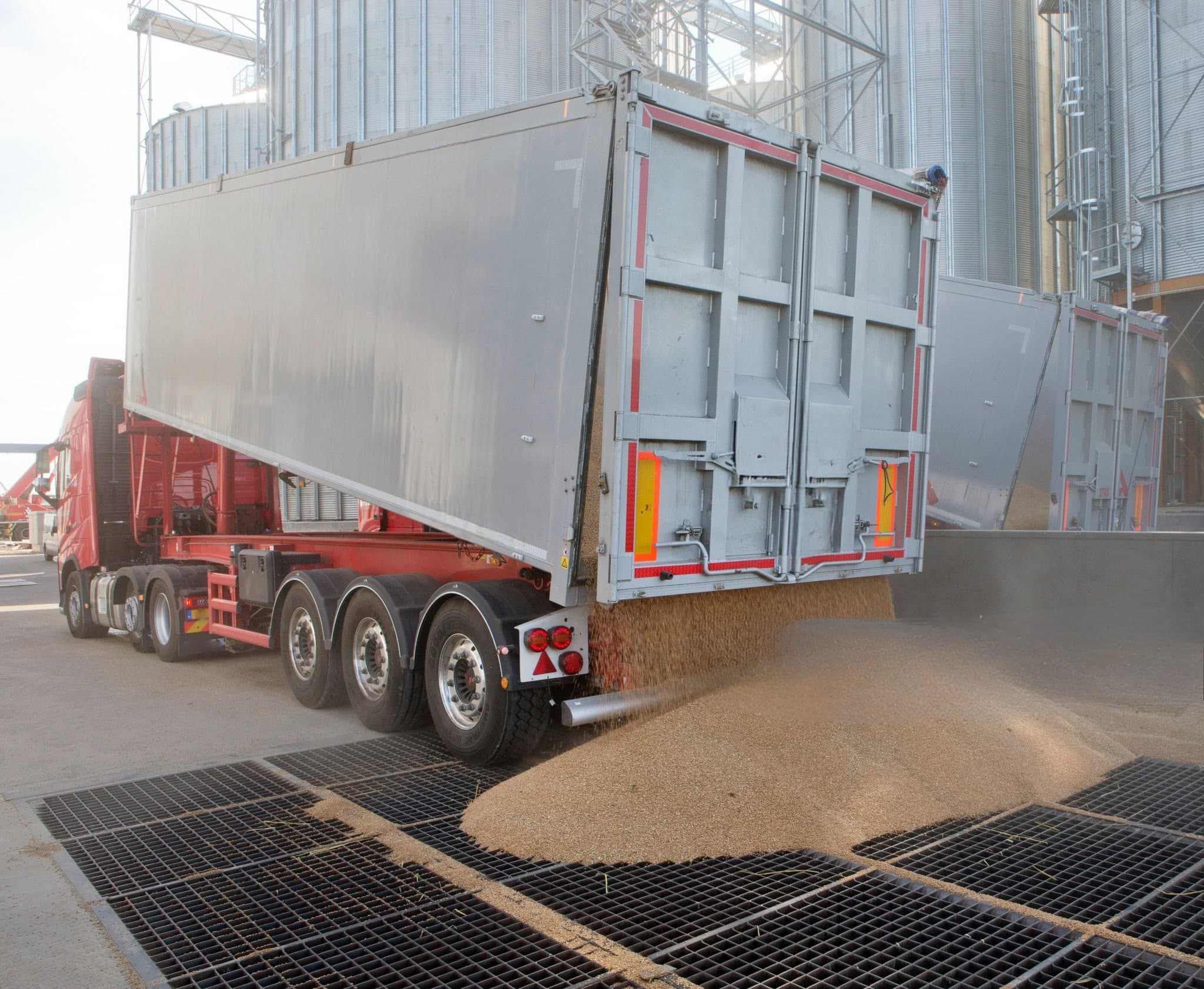
A truck intake hopper, called 'teremi' in Turkish, is the point where bulk product arriving by truck or trailer is first received into the plant. The vehicle unloads over the grated opening at ground level; the product passes through the grate into the hopper and is buffered there for a short time.
From the bottom outlet, the product is transferred steadily to a silo, storage or process by conveying equipment such as a conveyor, screw or elevator. In this way a load that the truck discharges in a short time is converted into a rate the line can handle.
Hopper geometry and outlet are determined by the product's flow behaviour. The grate is designed for vehicle traffic and particle size; dust released during unloading can be controlled by extraction above the intake if required.
01Process Flow
The diagram shows the flow in which the truck unloads onto the grated opening, the product is buffered in the hopper, fed from the bottom outlet in a controlled way and transferred by conveying equipment to a silo or process. Conveyor, elevator and silo are separate equipment.
Scroll horizontally to view the full diagram.
Unloading from vehicle: The truck or trailer unloads product onto the grated opening at ground level.
Intake through the grate: Product passes through the grate into the hopper; large foreign objects stay on the grate.
Controlled holding: The hopper buffers the load delivered in a short time.
Bottom feeding: Product is transferred from the bottom outlet by conveyor, screw or elevator to a silo or process.
Intake extraction: Dust released during unloading is extracted to a filter above the opening if required.
Hopper volume is determined by considering vehicle load, unloading time and the rate of the downstream conveying line together.
02Applications
01Receiving free-flowing bulk products such as grain from trucks and transferring them to silo storage. The grate opening is selected for the particle size.
Silo Systems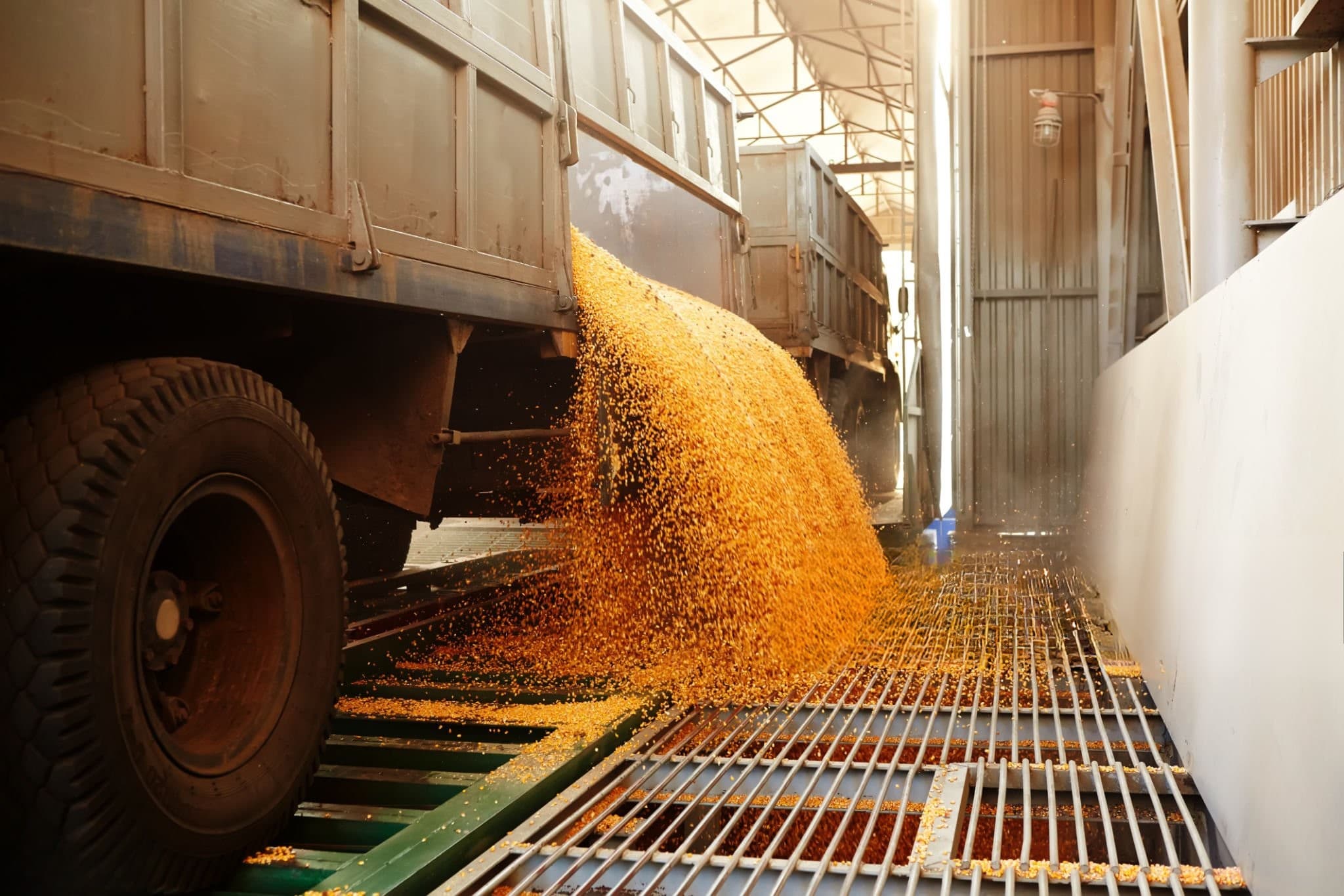 02
02Feeding product received indoors from vehicles to an elevator or conveyor from the bottom outlet. The hopper outlet is matched to the conveying line rate.
Bucket Elevator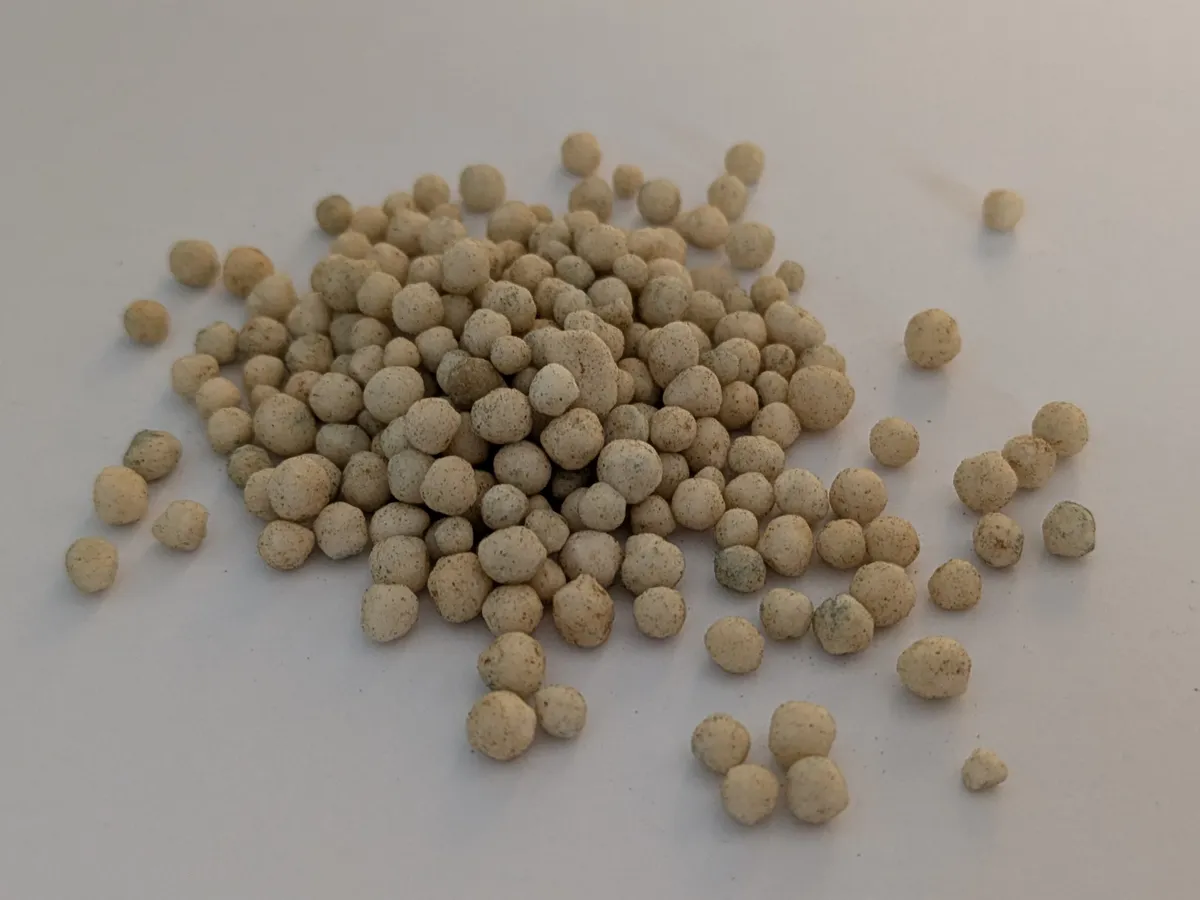 03
03Receiving truck-delivered granular fertilizer raw materials into the plant. For hygroscopic and caking products, grate and outlet are assessed for flow behaviour.
Fertilizer and Granulation Plants
03Design & Manufacturing
PRO MAKINA engineers truck intake hoppers around the product properties, vehicle type and unloading method, required intake rate and downstream conveying line. Grate and supporting structure, hopper geometry, bottom outlet and feeder connection, and dust control are designed together.
Product
Product type, particle size, bulk density and flow behaviour.
Vehicle and Unloading
Vehicle type, unloading direction and load size.
Volume and Geometry
Buffer volume, hopper depth and outlet.
Grate and Structure
Grate opening, structure for vehicle loads and site conditions.
Feeding Connection
Bottom outlet, downstream conveying and dust control.
Hopper volume, grate dimensions and intake rate are defined from product, vehicle and site data; no generic values are stated on this page.
04Gallery
05FAQ
It receives bulk product from trucks or trailers through a grated opening at ground level, buffers it briefly and feeds it steadily to the next equipment.
A truck intake hopper is designed at ground level with a grate and a structure suitable for vehicle loads. General feed bunkers are used for buffering and feeding within the line.
The grate makes the intake safe for vehicles and personnel and keeps large foreign objects out of the hopper.
From the bottom outlet it is transferred by conveyor, screw or elevator to a silo, storage or process.
Product type and properties, vehicle type and load size, required intake rate, downstream conveying equipment and site conditions.
06Resources
Technical Quotation
Share your product, vehicle type and intake rate, and we will define the intake hopper together with you.
This site uses cookies required to run the website securely and correctly. With your consent, additional cookies may be used for performance measurement, user experience and marketing. For details see the Cookie Policy and Privacy Policy pages.