 01
01Sand and Mineral Drying
Collecting dust from rotary dryer exhaust. Gas temperature and moisture determine the bag media; measures against condensation are assessed separately.
Rotary DryerIndustrial Plant Solutions
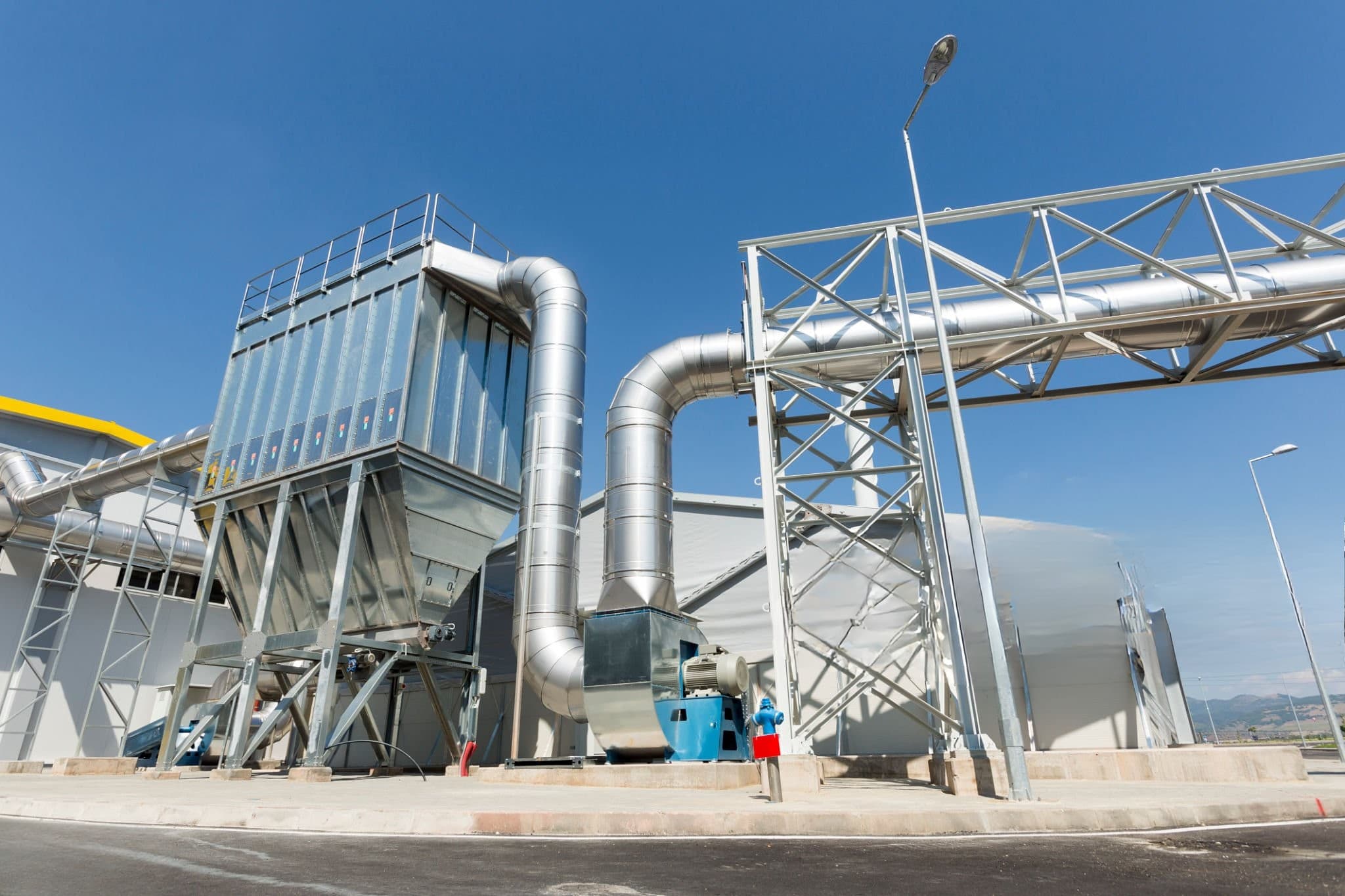
PRO MAKINA · Pulse Jet Filter
Overview
In a pulse jet filter, dusty air drawn by the fan enters the filter housing and passes from the outside of the filter bags inwards. Dust is retained as a layer on the bag surface, while the cleaned air flows through the bag interior into the clean air plenum and on to the fan and stack.
Dust accumulating on the bags is released by short compressed air pulses from pulse valves on the air header and falls into the hopper. Cleaning can be controlled by the filter's differential pressure or by time.
Filter area and air-to-cloth ratio are defined by air flow, inlet dust load, particle size and stickiness. Bag media is selected for gas temperature, moisture, chemical environment and abrasion.
01Process Flow
The diagram shows the flow in which dusty air is extracted and retained on the filter bags, the bags are cleaned by compressed air pulses, collected dust is discharged and the filtered air goes via the fan to the stack.
Scroll horizontally to view the full diagram.
Dusty air extraction: The fan draws dusty air from process equipment or hoods through ducts to the filter.
Retention on bags: As air passes the bags, dust is retained on their outer surface.
Clean air outlet: Filtered air flows from the clean air plenum to the fan and stack.
Pressure monitoring: Differential pressure is monitored to follow cleaning and bag condition.
Compressed air pulse: Pulse valves send short air pulses into the bags to release the dust.
Dust discharge: Dust collected in the hopper is discharged by a rotary valve or screw, or returned to the process.
Where the dust load is high or particles are coarse, cyclone pre-separation upstream can reduce bag load and wear.
02Applications
01Collecting dust from rotary dryer exhaust. Gas temperature and moisture determine the bag media; measures against condensation are assessed separately.
Rotary Dryer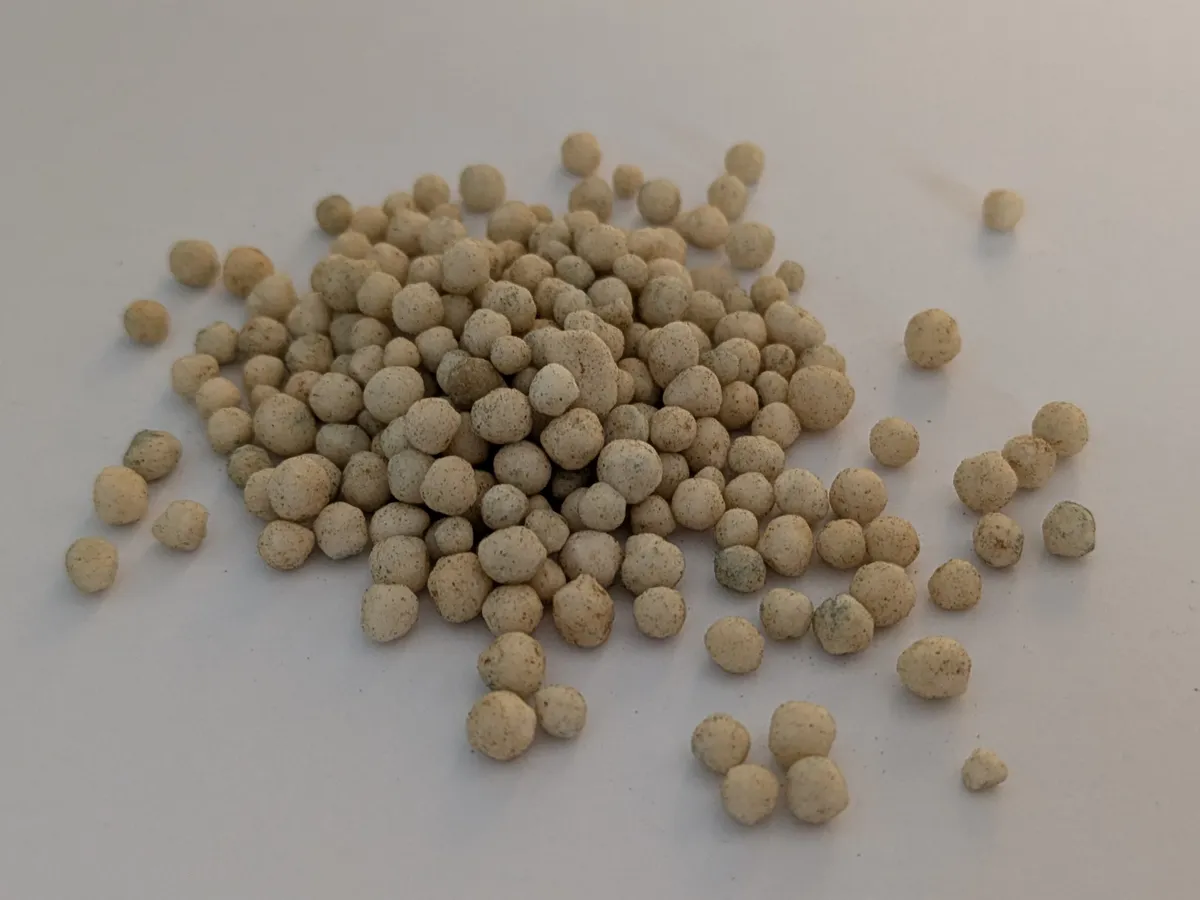 02
02Collecting dust extracted from granulation, drying, screening and transfer points. Bag selection and cleaning settings matter for hygroscopic and sticky dusts.
Fertilizer and Granulation Plants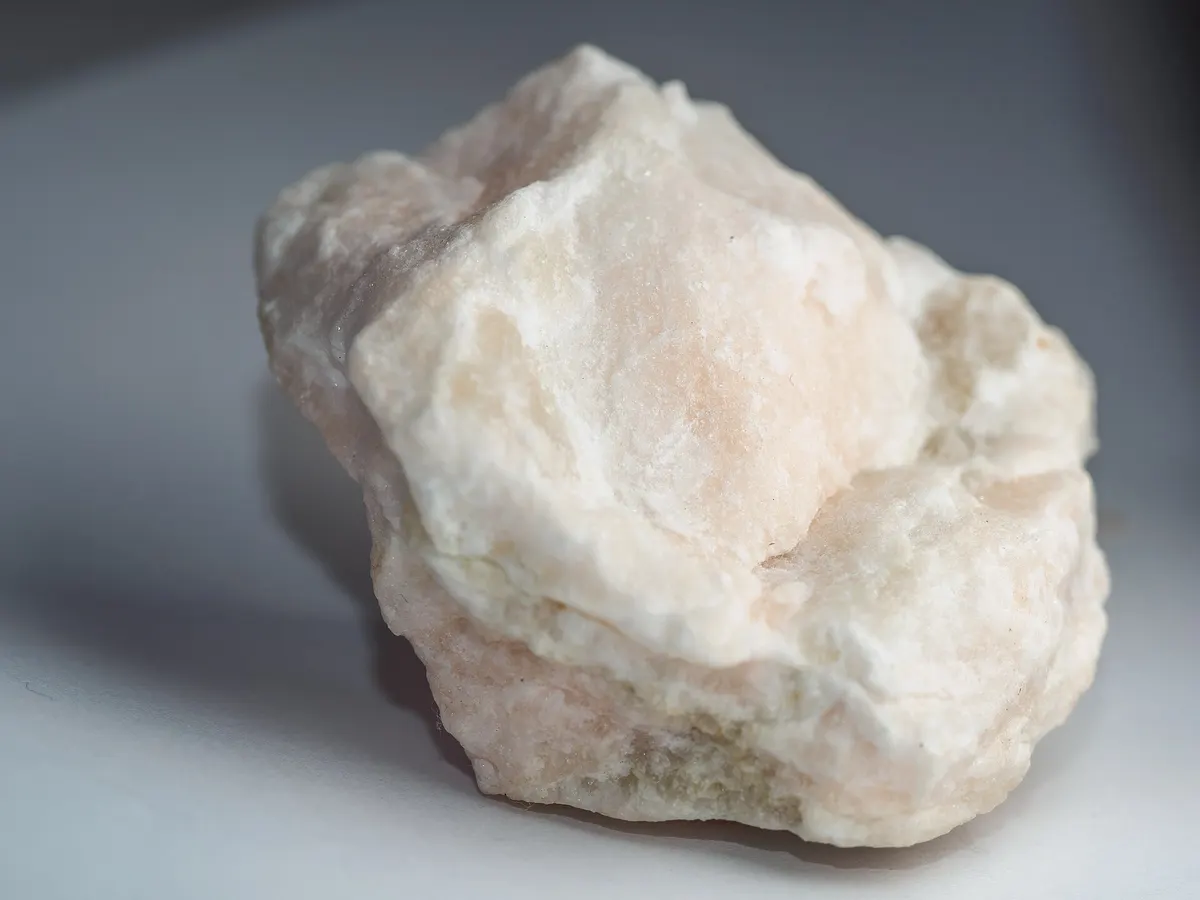 03
03Extracting dust generated at crushing, grinding and bulk transfer points. For abrasive dusts, inlet design and bag protection are considered.
Mining and Mineral Processing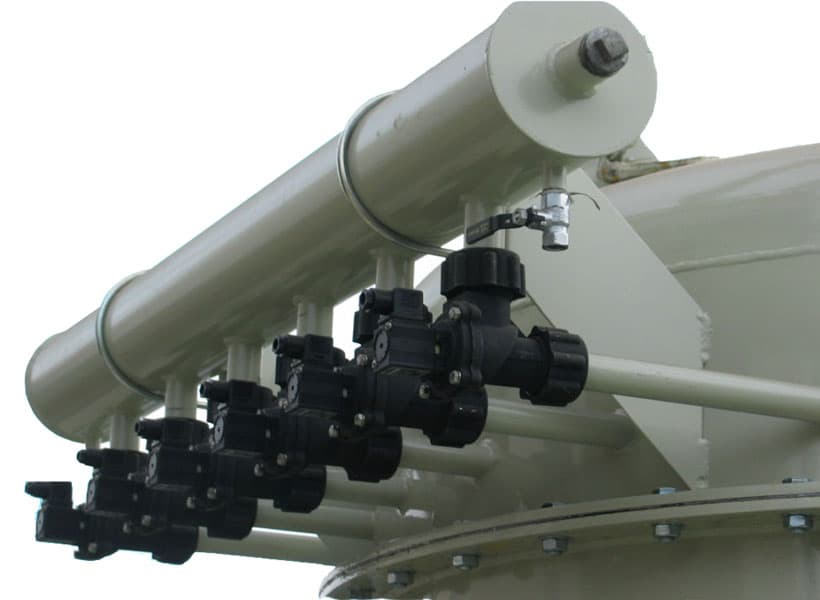
03Design & Manufacturing
PRO MAKINA engineers pulse jet filters around air flow, dust load and dust properties. Filter housing, bags and cages, clean air plenum, pulse cleaning system, hopper and discharge, and fan and duct connections are designed together.
Air Flow
Extraction points, total air flow and duct layout.
Dust Load and Properties
Inlet dust load, particle size, density and abrasiveness.
Filter Area and Element
Filter surface area, air-to-cloth ratio and bag media.
Cleaning and Pressure
Pulse system, compressed air demand and differential pressure monitoring.
Dust Discharge
Hopper, rotary valve or screw and maintenance access.
Filter area, number of bags, fan and compressed air demand are calculated from process data; no efficiency, emission or flow values are stated on this page.
04Gallery
05FAQ
As dusty air passes the filter bags, dust is retained on their surface. Accumulated dust is released by compressed air pulses and discharged from the hopper.
A cyclone separates particles with a rotating flow and can be limited for fine dust. A pulse jet filter retains dust on the filter media, making it a more effective final filtration stage for fine dust.
It is calculated from air flow, inlet dust load, dust properties and the selected air-to-cloth ratio.
Explosive, sticky, hot or chemically aggressive dusts may need additional measures or different solutions; suitability is assessed from process data.
Air flow, gas temperature and moisture, dust type and load, particle size, extraction points and target outlet conditions.
06Resources
Technical Quotation
Share your air flow, dust properties and process conditions, and we will define the pulse jet filter together with you.
This site uses cookies required to run the website securely and correctly. With your consent, additional cookies may be used for performance measurement, user experience and marketing. For details see the Cookie Policy and Privacy Policy pages.