 01
01Fertilizer
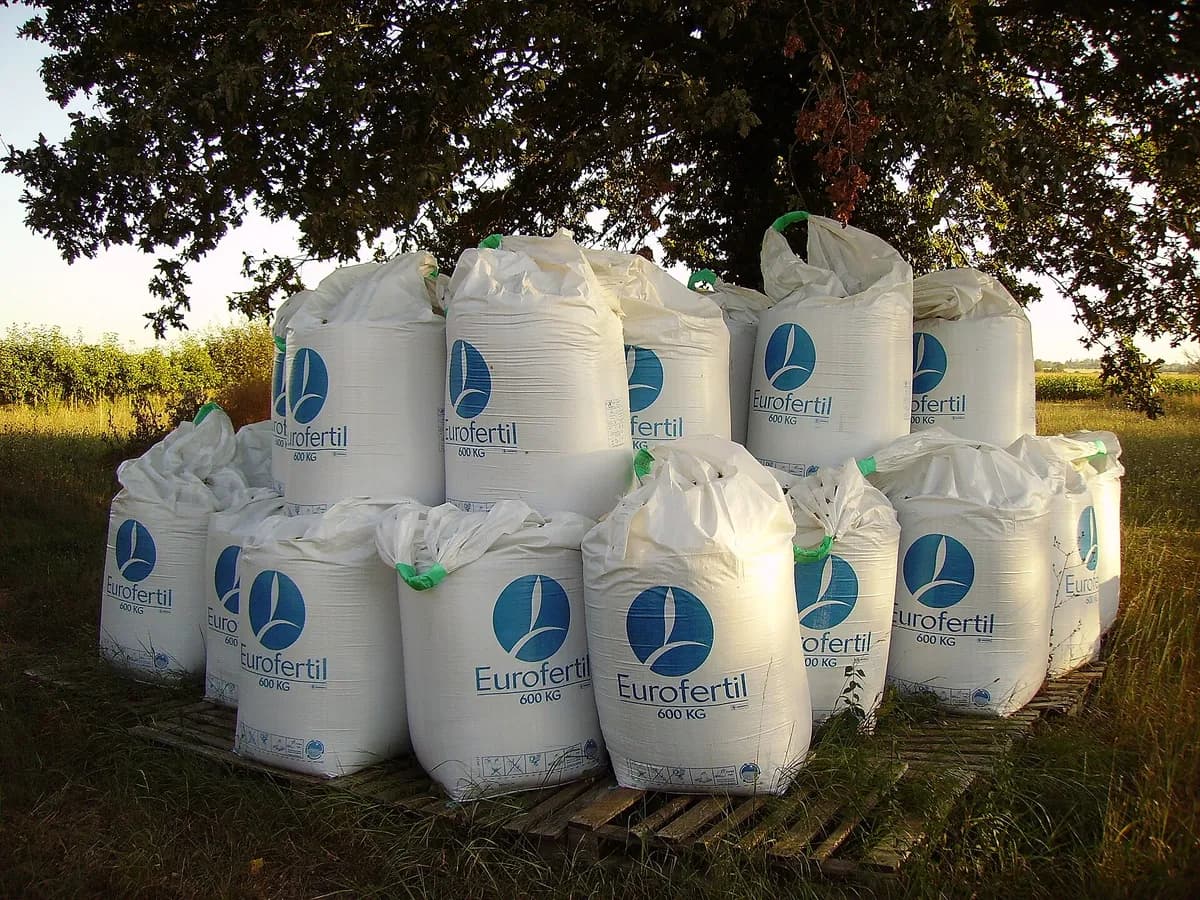
Preparing granular and powder fertilizer for shipment in big bags. Drop height for friable granules and bag liners for hygroscopic products are considered.
Fertilizer and Granulation PlantsIndustrial Plant Solutions
PRO MAKINA · Big Bag Filling
Overview
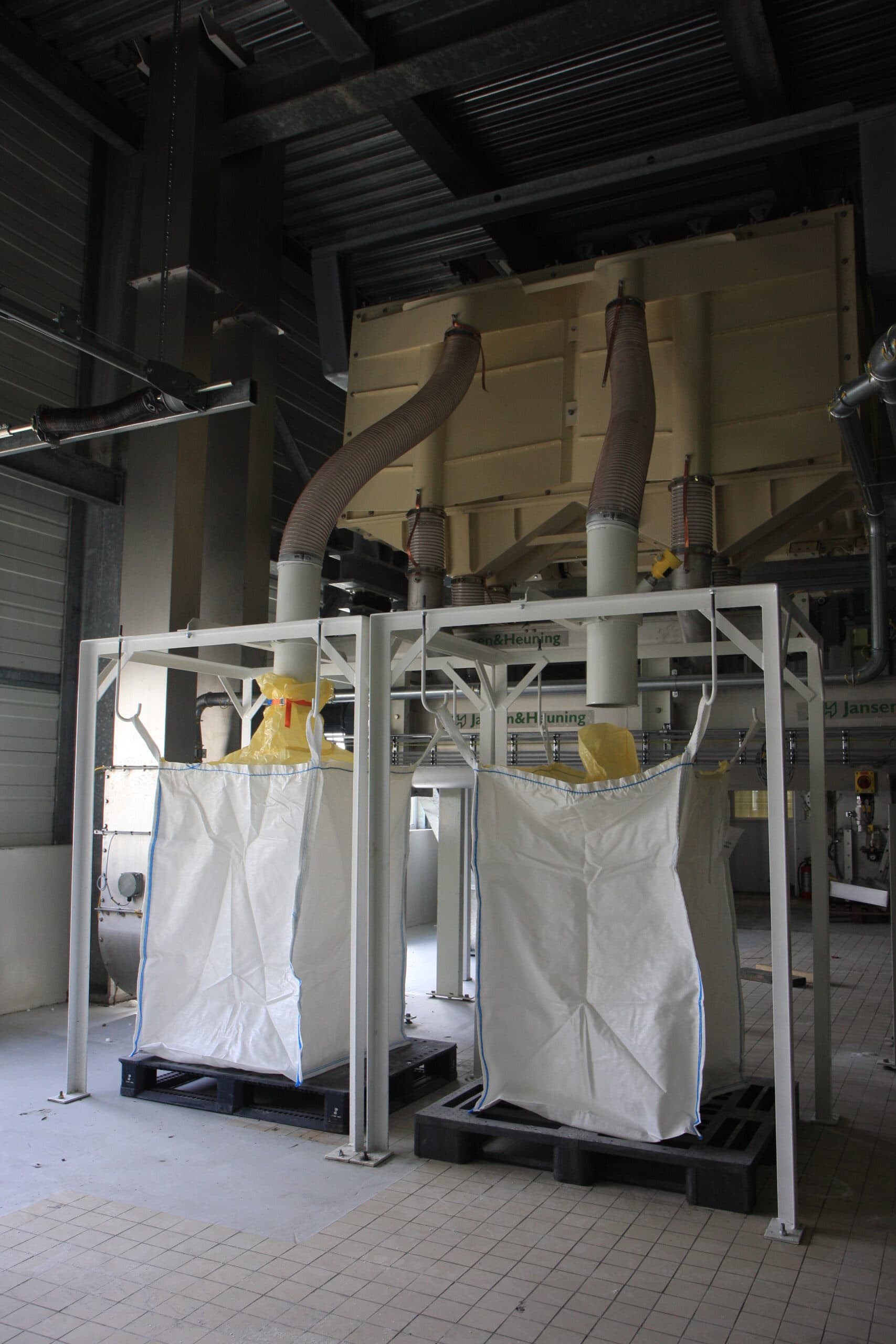
In a big bag filling station, the empty FIBC is hung on the frame by its loops and its inlet is connected to the station's filling spout. As product flows from the upper hopper or feeder into the bag, the weight is monitored by load cells; feeding stops when the target weight is reached.
The feeding method is selected for the product's flowability and bulk density. Switching from coarse to fine feeding near the target weight helps control the fill weight. Dust extraction connected to the spout removes displaced air and dust from the bag in a controlled way.
Filling can be done with or without a pallet. The filled bag is released from the hangers and removed by forklift, roller conveyor or another method suited to the site. Bag size and filling height determine the design of the station frame.
01Process Flow
The diagram shows the flow in which the big bag is positioned, the loops and inlet are connected, product is fed and weighed in a controlled way, and the filled bag is released and removed.
Scroll horizontally to view the full diagram.
Bag positioning: The empty big bag is placed in the station on a pallet or the floor.
Loop and spout connection: Loops are hooked on the hanging points and the inlet is secured on the spout.
Feeding and weighing: Weight is monitored by load cells during feeding; fine feeding starts near the target.
Release and removal: Feeding stops at the target weight; the bag is unhooked and removed by forklift or conveyor.
Spout extraction: Air and dust displaced from the bag during filling are extracted to a filter.
Drop height for friable granules, dust extraction for dusty products and the feeding method for poorly flowing products are assessed separately.
02Applications
01Preparing granular and powder fertilizer for shipment in big bags. Drop height for friable granules and bag liners for hygroscopic products are considered.
Fertilizer and Granulation Plants 02
02Filling sand and mineral products into high-tonnage bags. For abrasive products, the spout and feeder are protected against wear.
Mining and Mineral Processing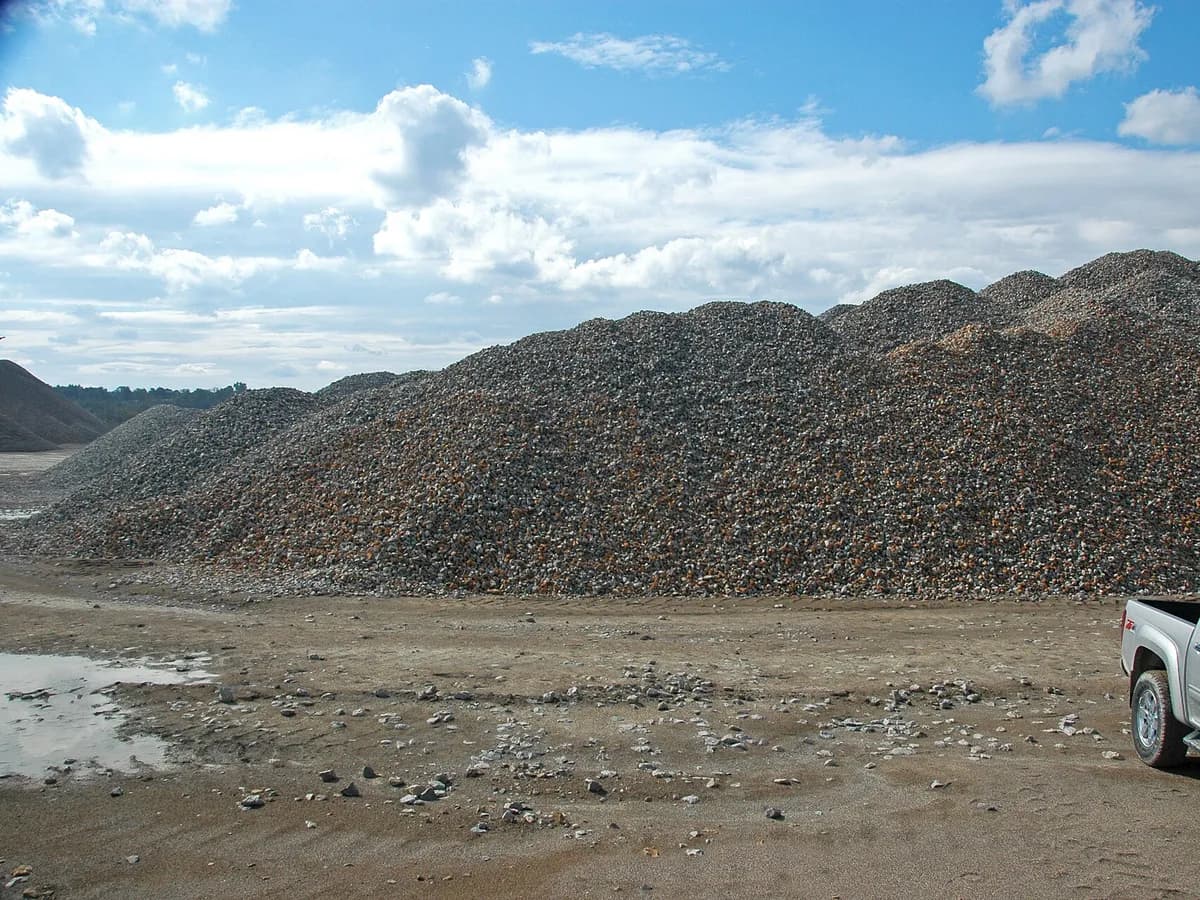 03
03For fine powders, dust extraction and spout sealing are key in big bag filling. The feeding method is selected separately for poorly flowing powders.
Dust Collection Systems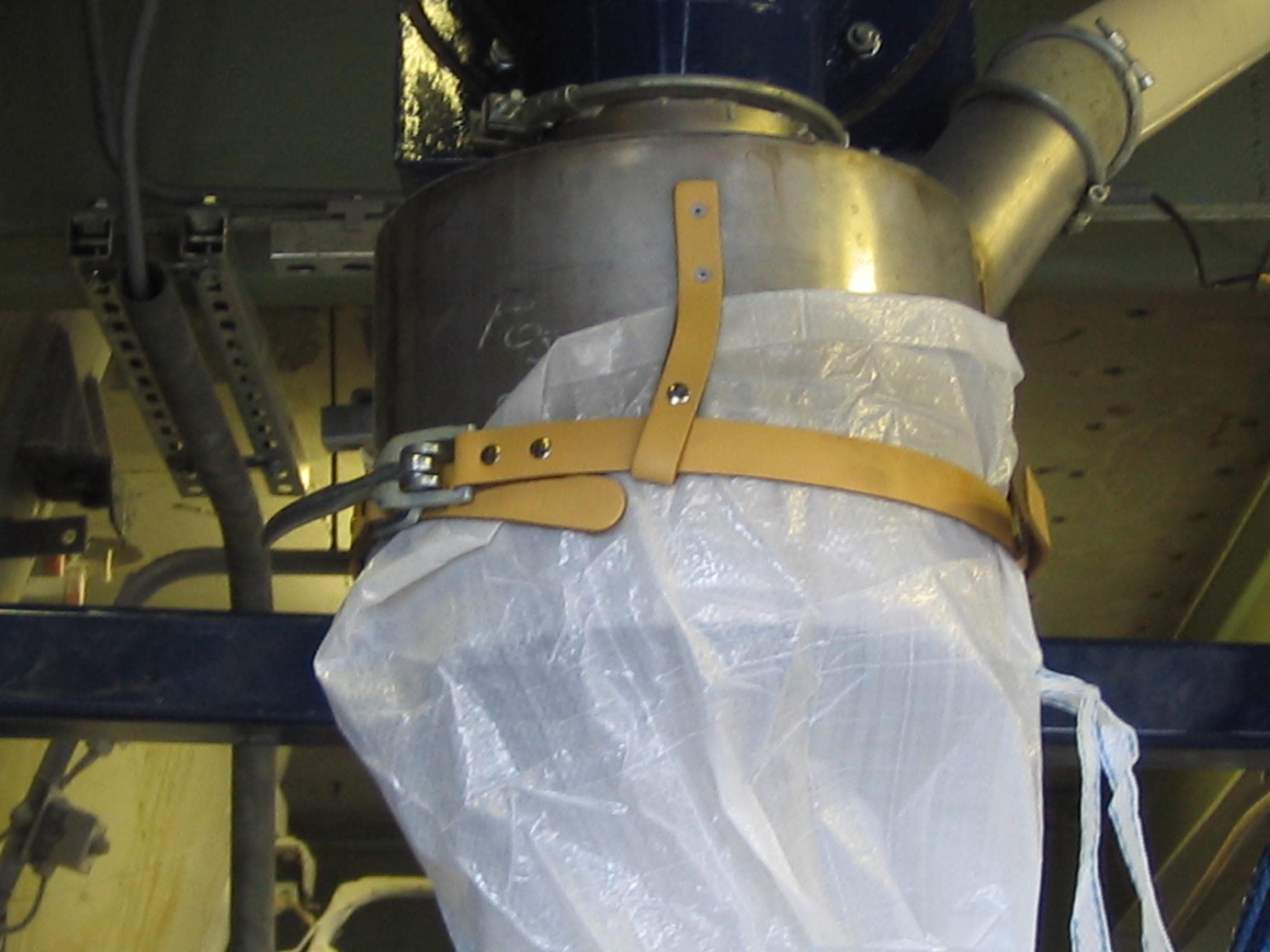
03Design & Manufacturing
PRO MAKINA engineers big bag filling stations around bulk density and flowability, big bag type and size, target fill weight and site layout. Frame and hanging arrangement, filling spout, load cell layout, feeding, dust extraction and discharge are designed together.
Product Density
Bulk density, flowability, friability and dustiness.
Target Weight
Fill weight per bag and filling height.
Big Bag Type
Bag size, loop arrangement and inlet type.
Load Cells and Feeding
Weighing layout, coarse and fine feeding.
Filling Geometry and Discharge
Frame height, pallet use, forklift or conveyor access.
Filling capacity and weighing accuracy are defined from product and bag data; no generic values are stated on this page.
04Gallery
05FAQ
The empty bag is hooked on and its inlet connected to the spout; weight is monitored by load cells during feeding and feeding stops at the target weight.
Big bag filling is a framed station for high-tonnage FIBC bags. Open mouth bagging is for small and medium bags.
Yes; filling can be done with or without a pallet. The choice depends on bag type, discharge method and site layout.
The spout is connected to dust extraction and the spout-to-bag seal is designed for the product properties.
Product type and bulk density, big bag size and loop arrangement, target weight, required capacity and discharge method.
06Resources
Technical Quotation
Share your product, big bag type and target weight, and we will define the filling station together with you.
This site uses cookies required to run the website securely and correctly. With your consent, additional cookies may be used for performance measurement, user experience and marketing. For details see the Cookie Policy and Privacy Policy pages.