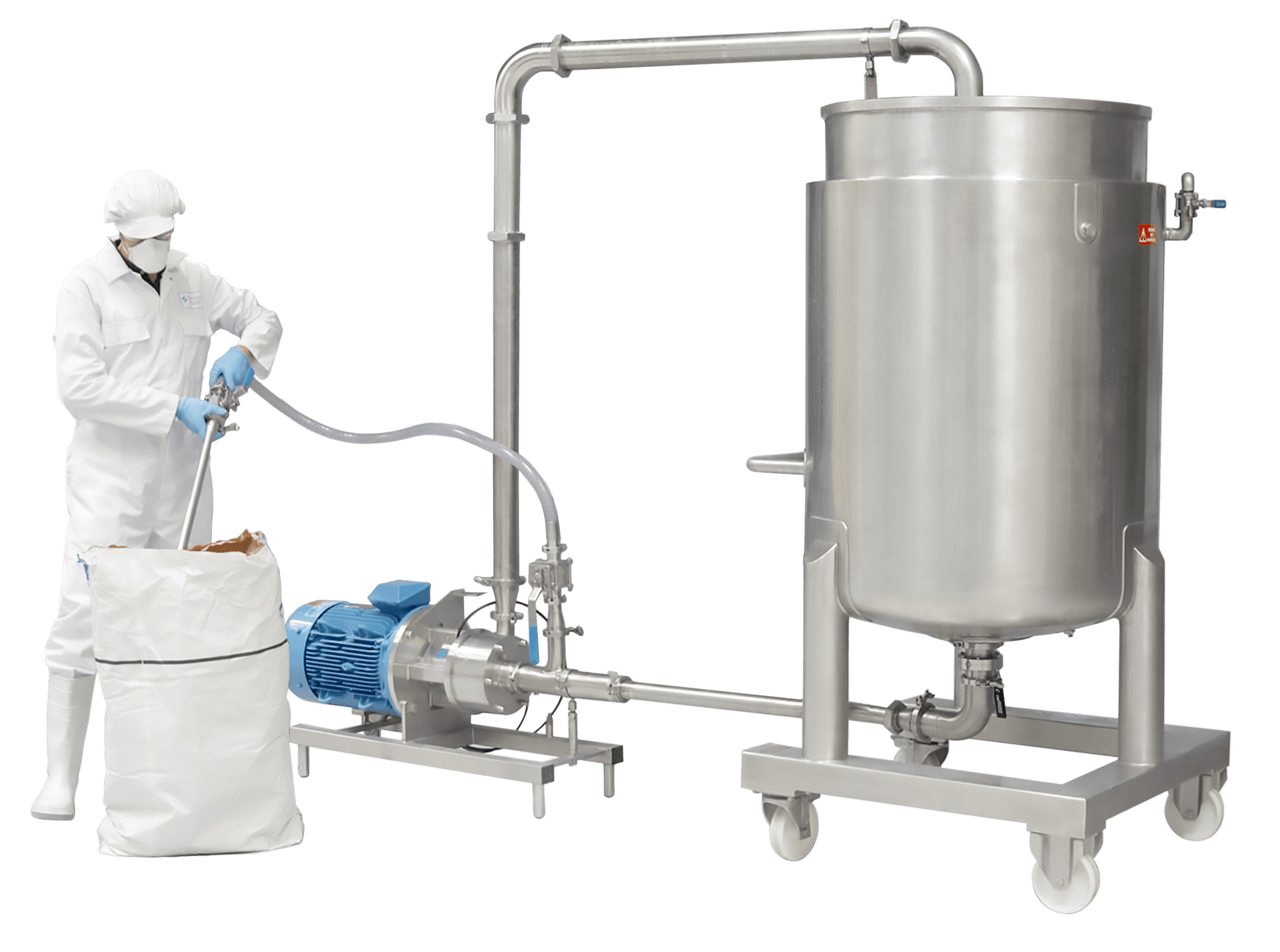
Dissolution Tank – Controlled Solution Preparation from Solid Raw Materials

Stainless steel setup in which powder is fed by hose into a liquid preparation tank

PRO MAKINA

Duty
Controlled dissolution of solid raw material in liquid
Feeding
Solid and liquid feed arrangement per project
Agitation
Agitator type and speed per raw material
Solution
Concentration and temperature from solubility data

Overview

A Homogeneous Solution from a Suitable Solid Raw Material

A dissolution tank is a process tank in which solid raw materials that are soluble in water or another solvent are dissolved in a controlled way to prepare a solution at the target concentration. It is used for liquid fertilizer preparation, chemical solution preparation and pre-mixing steps before formulation.

How much of a raw material dissolves, and how fast, depends on its solubility, solvent temperature, particle size and agitation intensity. The target concentration must be below the solubility limit at the operating temperature; otherwise undissolved solids remain in the tank or crystallization can occur as the solution cools.

A conical bottom, bottom drain or downstream filtration can be planned for undissolved solids, impurities and sediment. Some raw materials release or absorb heat on dissolving; in that case the need for heating or cooling is assessed separately.
01Process Flow

Dissolution Tank Process Flow

The diagram shows the general flow in which solvent and solid raw material are fed to the tank, dissolved under agitation, the solution is checked and transferred to the next process. Feed order and quantities follow the recipe.

Dissolution tank process flow diagramProduct line: liquid and solid feed, dissolution tank, solution check and product transfer. Heating or cooling medium line if required.PRODUCT LINE1Liquid & solid feedSolvent + raw material2DISSOLUTION TANKdissolution under agitation3Solution checkTemperature, level, sample4TransferFilter / storage / processHEATING / COOLING (IF REQUIRED)AMedium inletJacket / coilBMedium returnUtility circuit

Scroll horizontally to view the full diagram.

Product line

  1. 1

    Liquid and solid feed: Solvent is charged first; solids are added in a controlled way from bags, big bags or a screw.

  2. 2

    Dissolution under agitation: The agitator keeps solids suspended, increasing contact with the liquid and speeding up dissolution.

  3. 3

    Solution check: Temperature and level are monitored; samples are taken for density or pH if required.

  4. 4

    Product transfer: The finished solution is pumped to a filter, storage tank or the next process step.

Heating / cooling line (if required)

  1. A

    Heating or cooling: If solubility or heat of dissolution requires it, a medium is supplied to the jacket or coil.

  2. B

    Medium return: The medium returns to the plant utility circuit.

Dissolution time depends on raw material, particle size, temperature and agitation; no time or concentration guarantee is given on this page.

02Applications

Dissolution Tank Applications

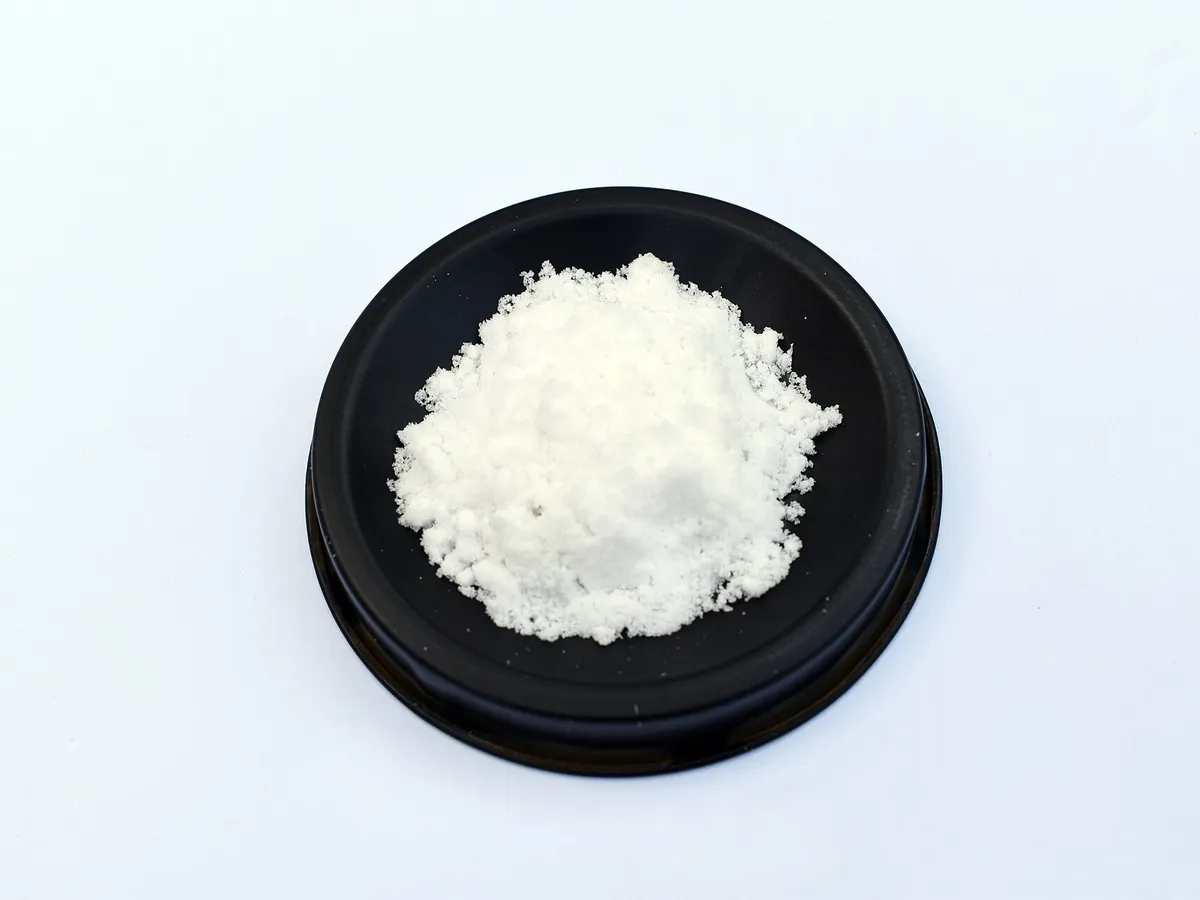
White crystalline potassium nitrate fertilizer in a black dish01

Water-Soluble Fertilizer Raw Materials

Preparing liquid fertilizer or recipe solutions from water-soluble fertilizer raw materials such as potassium nitrate. Target concentration is set by the solubility at operating temperature.

Fertilizer and Granulation Plants
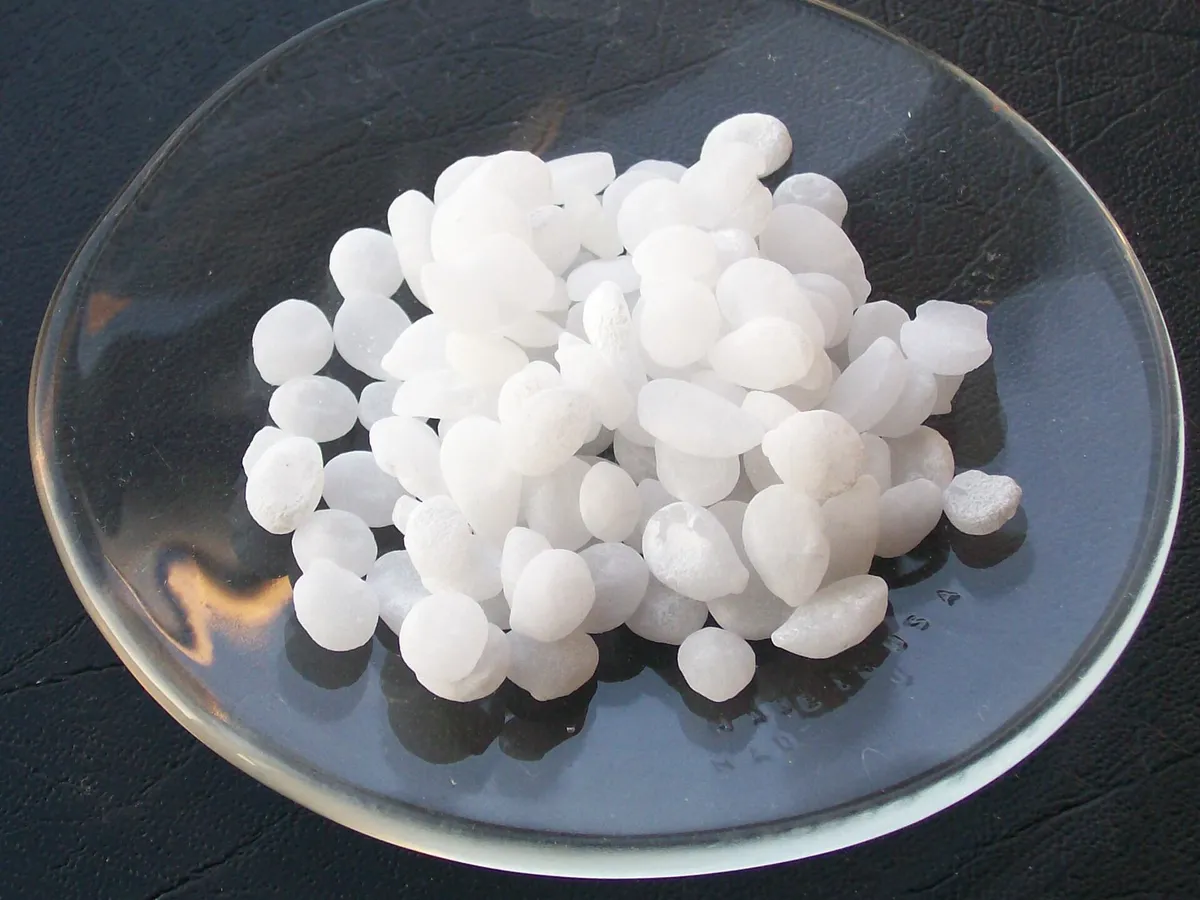
White sodium hydroxide pellets on a watch glass02

Chemical Solution Preparation

Preparing process solutions by dissolving chemicals such as sodium hydroxide in water. For raw materials that release heat on dissolving, the solution can be brought to a safe temperature in a cooling tank before use.

Cooling Tank

03Design & Manufacturing

Custom Dissolution Tank Design and Manufacturing

PRO MAKINA engineers dissolution tanks around the raw material and solvent, target concentration, batch size and the chemical properties of the raw material. Solid feed arrangement, agitator, shell material, sediment handling and connections are designed together.

  • Solids inlet and dust control
  • Agitator and speed for the raw material
  • Chemically compatible shell material
  • Conical bottom, bottom drain and sampling point

Process Design Data

  1. 01

    Raw Material and Solvent

    Type and particle size of the solid raw material, and the solvent.

  2. 02

    Concentration and Temperature

    Target concentration, solubility data and operating temperature.

  3. 03

    Volume and Feeding

    Batch size, solid and liquid feeding method.

  4. 04

    Agitation

    Agitator type, speed and circulation if needed.

  5. 05

    Material, Discharge and Instruments

    Corrosion compatibility, sediment handling, level and temperature measurement.

Tank volume, agitator speed and dissolution time are defined from raw material and recipe data; no generic values are stated on this page.

04FAQ

Dissolution Tank FAQ

What is a dissolution tank used for?

It is used to dissolve solid raw materials that are soluble in water or another solvent under agitation, preparing a solution at the target concentration.

Does every raw material dissolve in a dissolution tank?

No. Only raw materials soluble in the chosen solvent dissolve, and the amount that can dissolve is limited by the temperature-dependent solubility.

What is the difference between dissolution and suspension preparation?

In dissolution the solid dissolves completely in the liquid. In a suspension the solid stays undissolved and is kept suspended; an agitated reactor is assessed for that duty.

How are undissolved solids and sediment handled?

Sediment can be removed through a conical bottom and bottom drain; the solution can be filtered in the next step if required.

What information is needed for a quotation?

Raw material and solvent, target concentration, batch size, operating temperature, solid feeding method and chemical properties.

05Resources

Related Machines and Plants

Technical Quotation

Request a technical quotation for a dissolution tank

Share your raw material, solvent and target concentration, and we will define the dissolution tank together with you.

Information Needed for a Technical Quotation

  • Solid raw material and solvent
  • Target solution concentration
  • Batch size
  • Operating temperature
  • Solid feeding method (bags, big bags, screw)
  • Chemical properties and corrosion conditions
WWhatsApp

Cookie Preferences

This site uses cookies required to run the website securely and correctly. With your consent, additional cookies may be used for performance measurement, user experience and marketing. For details see the Cookie Policy and Privacy Policy pages.