 01
01Liquid Fertilizer Products
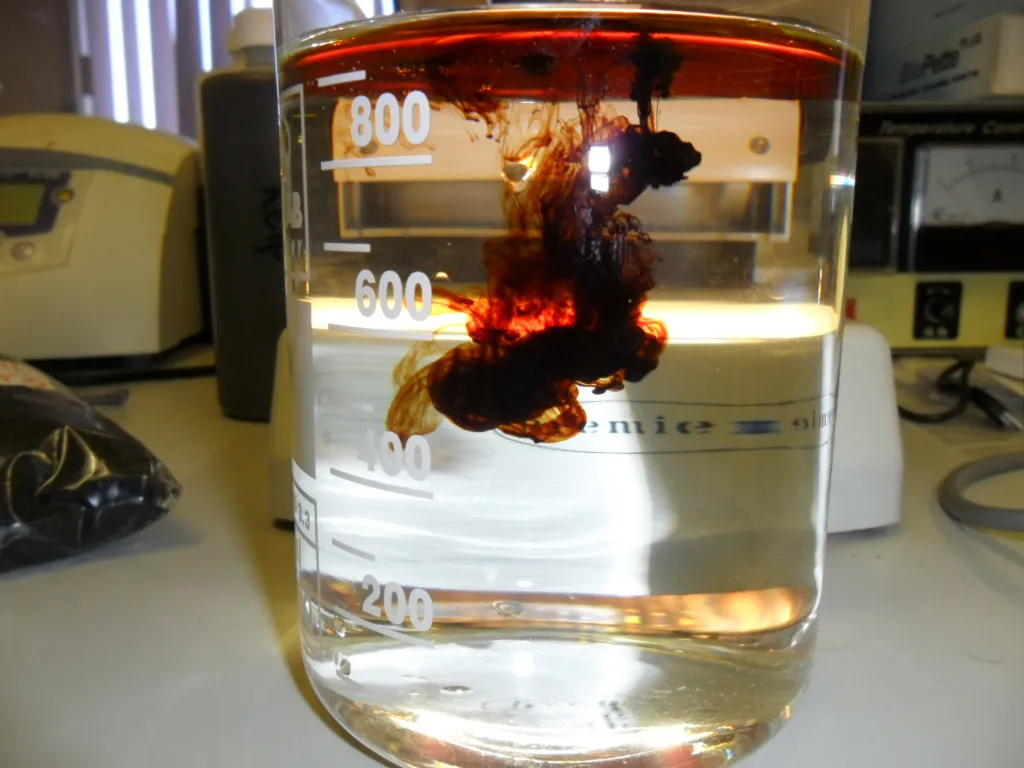
Storing prepared liquid fertilizers and humic solutions before filling or shipment. For products that tend to settle, the need for agitation or circulation is assessed separately.
Fertilizer and Granulation PlantsIndustrial Plant Solutions
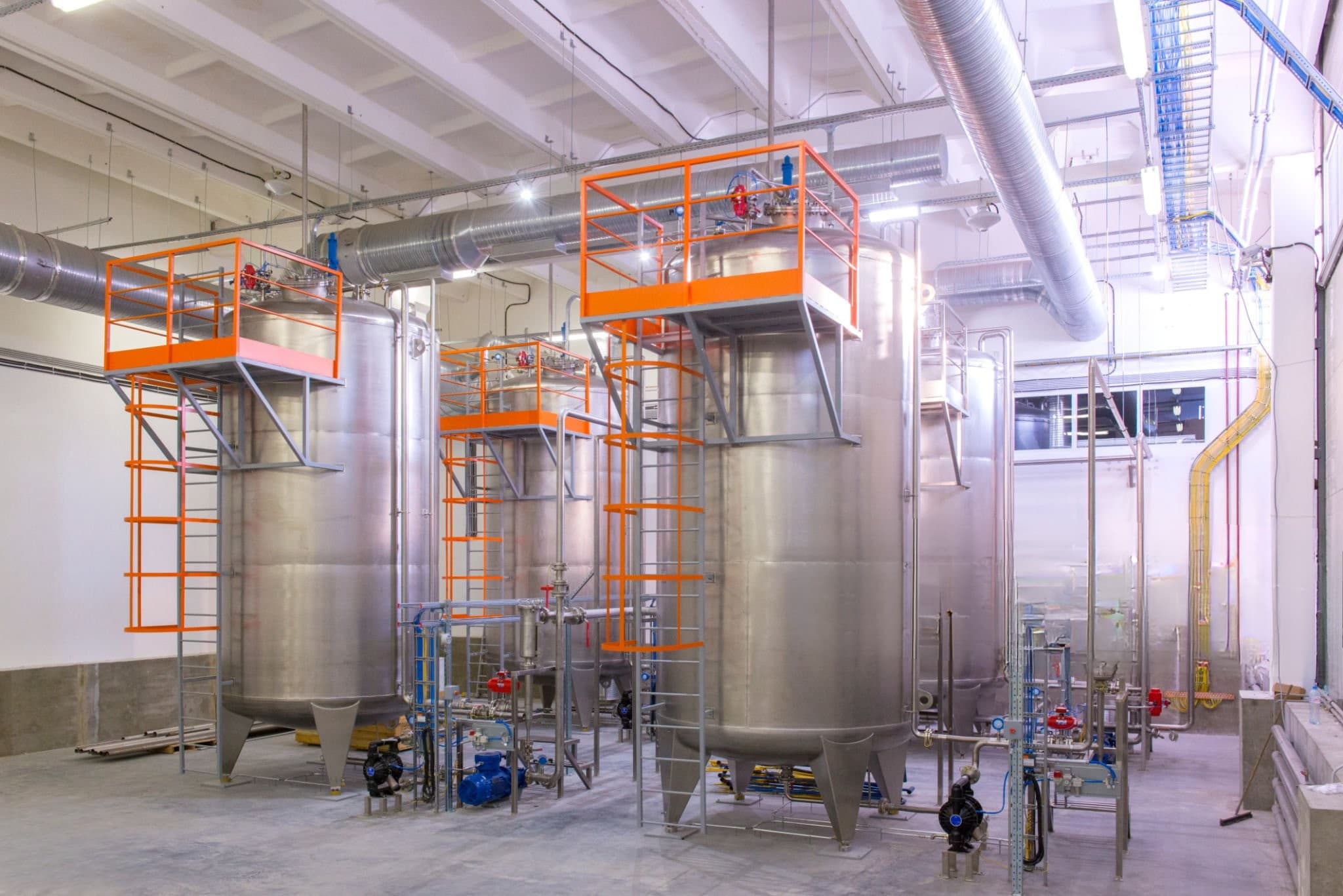
PRO MAKINA · Storage Tank
Overview
A storage tank is a tank in which liquid raw materials, intermediates or finished products are held safely before processing, filling or shipment. It provides a buffer volume that balances production and consumption.
Tank geometry (vertical or horizontal cylindrical), working volume and shell material are defined by the type and chemical properties of the stored product and the site layout. Filling and discharge connections, venting, overflow, level measurement and manholes are planned together.
Equipment such as insulation, heating or an agitator is not part of every storage tank; it is added only when the product's freezing, settling or viscosity behaviour requires it. If storage under pressure is needed, the tank is assessed with separate criteria.
01Process Flow
The diagram shows the general flow in which product is received into the tank, stored with level monitoring and discharged to filling, processing or shipment when needed.
Scroll horizontally to view the full diagram.
Product receipt: Product is pumped into the tank from the process line or a tanker.
Controlled storage: Product is held in a shell made of material suited to it.
Level monitoring: Level is measured; vent and overflow connections support safe filling.
Discharge on demand: Product is transferred to the filling line, process or shipment when needed.
While the tank fills and empties, the vent line balances internal pressure; overflow piping and level measurement help prevent overfilling.
02Applications
01Storing prepared liquid fertilizers and humic solutions before filling or shipment. For products that tend to settle, the need for agitation or circulation is assessed separately.
Fertilizer and Granulation Plants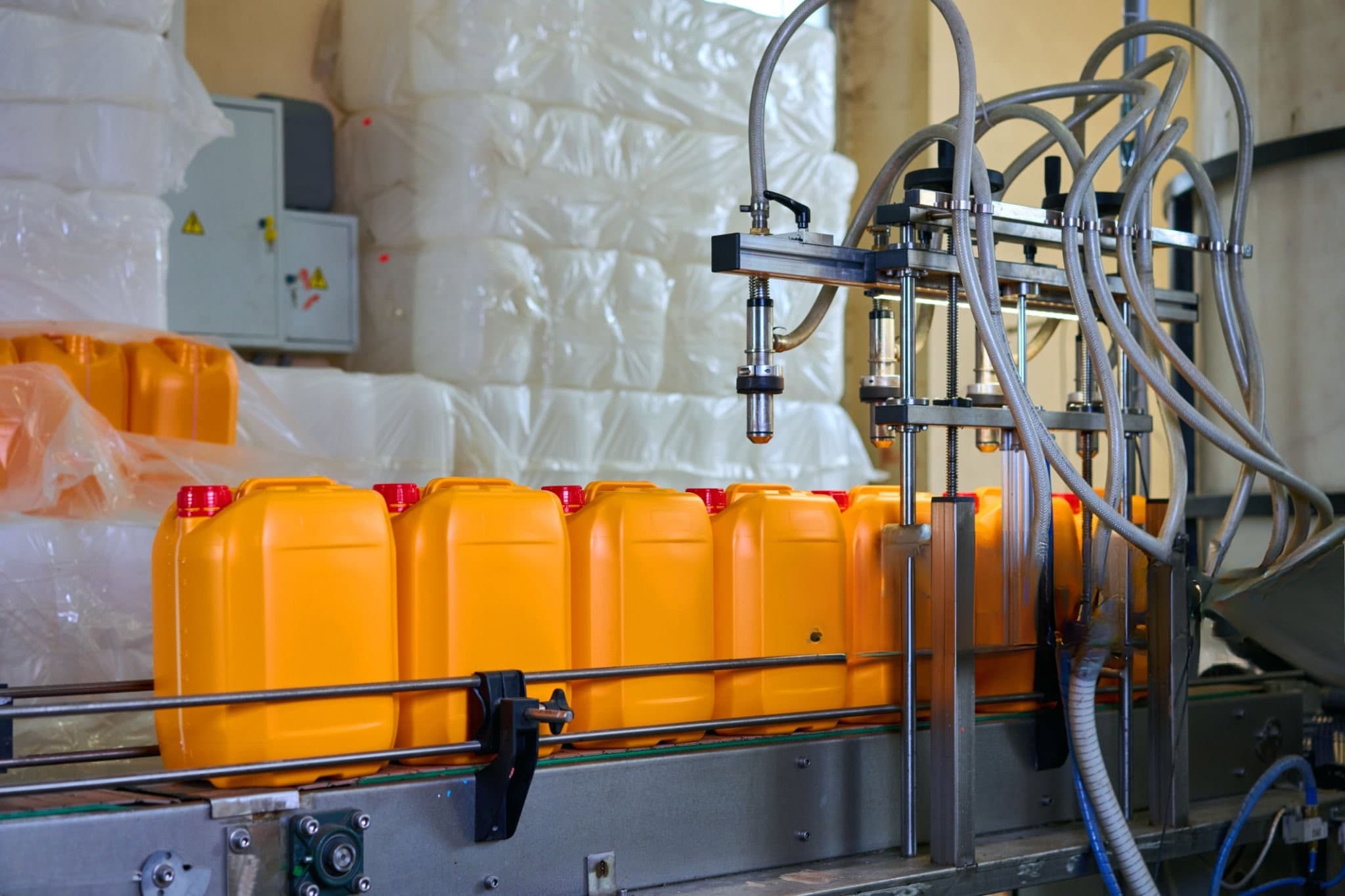 02
02Providing an intermediate storage volume so the filling machine is fed without interruption. Tank volume is set by filling rate and the time between production batches.
Packaging and Filling Systems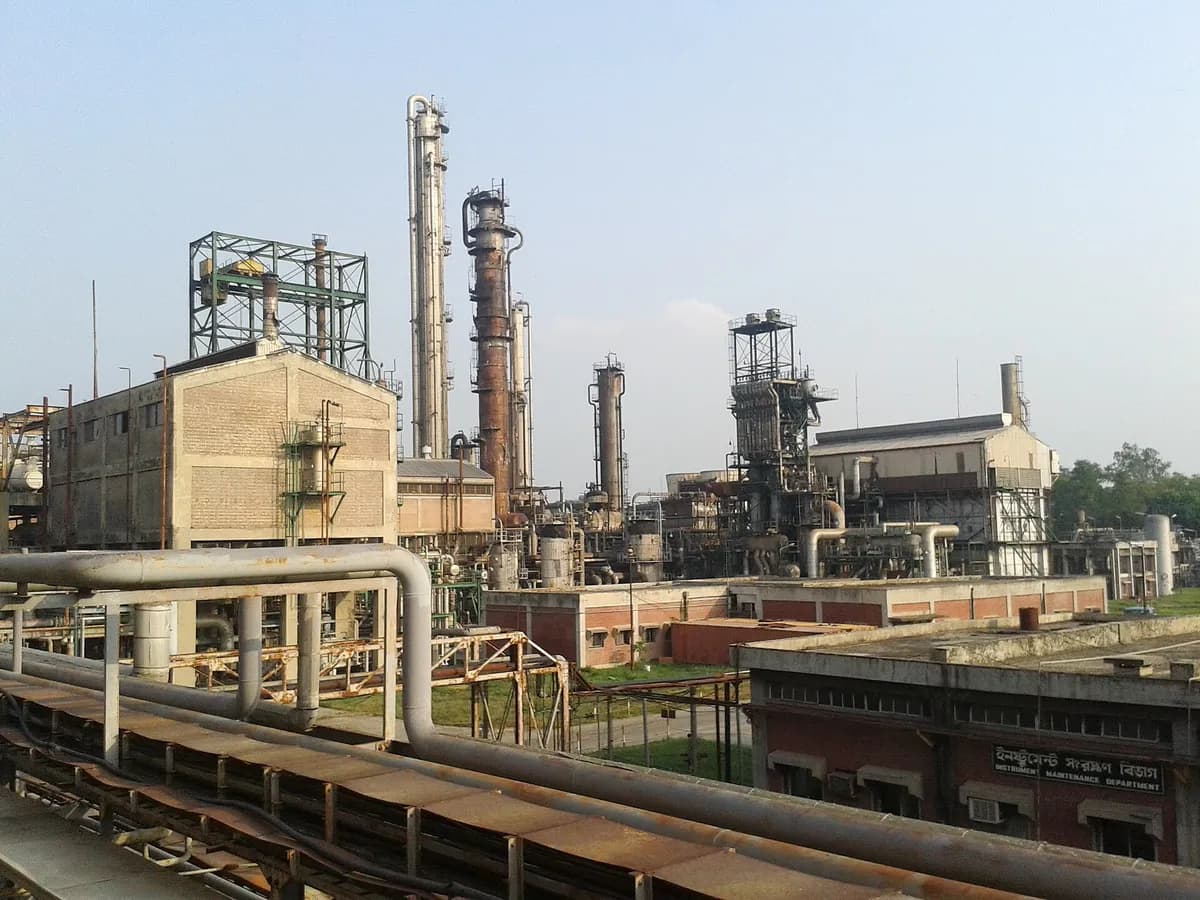 03
03Storing liquid chemical raw materials and intermediates used in the process. Shell material, gaskets and connections are selected for the chemical compatibility of the product.
Chemical and Process Industry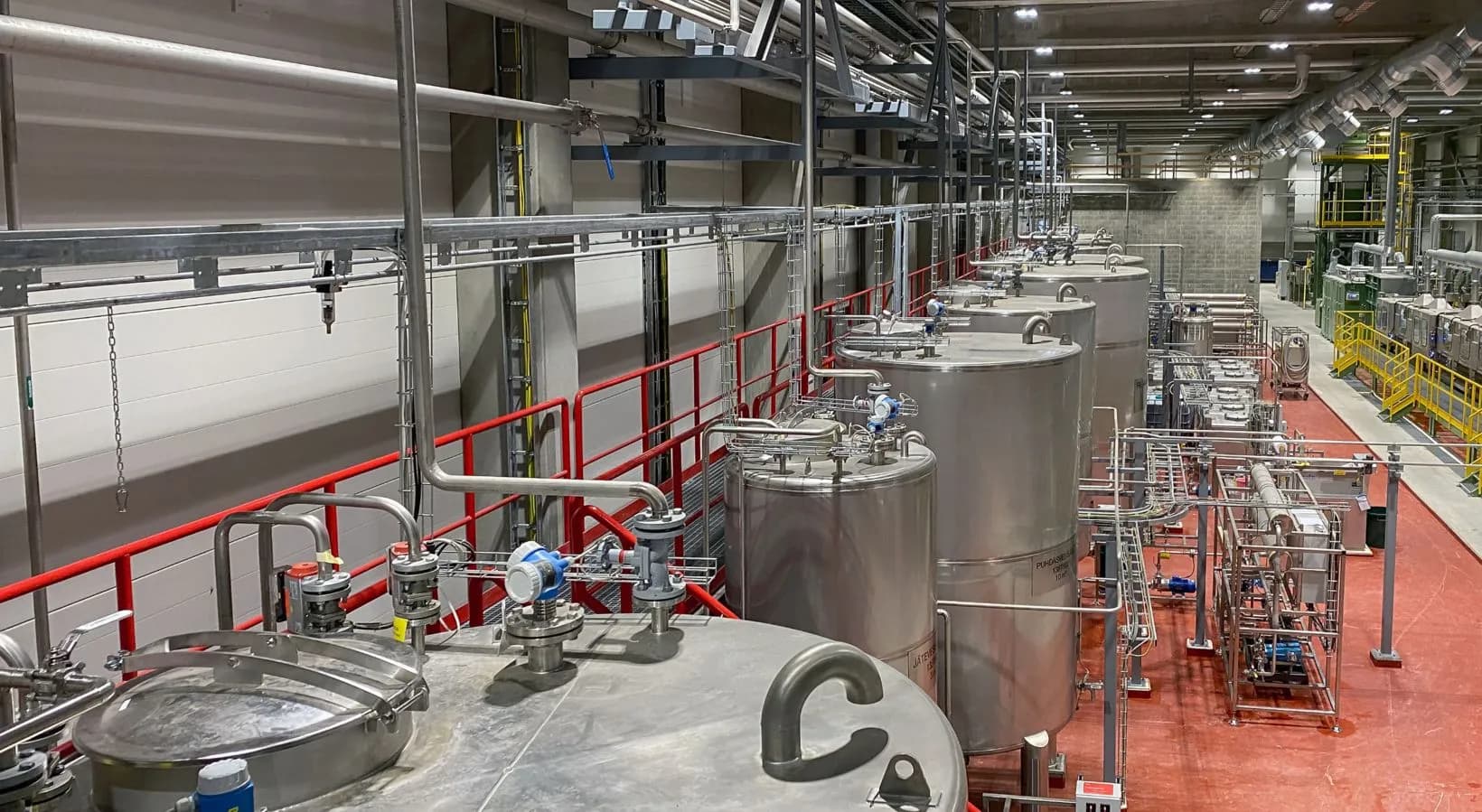
03Design & Manufacturing
PRO MAKINA engineers storage tanks around the type and chemical properties of the stored product, working volume, site layout and filling and discharge arrangement. Shell and bottom, connections, venting, level measurement and access equipment are designed together.
Stored Product
Product type, density, temperature and chemical properties.
Volume and Geometry
Working volume, vertical or horizontal design and layout dimensions.
Material and Corrosion
Shell and bottom material, gaskets and chemical compatibility.
Connections and Venting
Filling, discharge, vent, overflow and manholes.
Level, Site and Access
Level measurement, foundation and support structure, platform and ladder.
Tank volume, shell thickness and material grade are defined from product and site data; no generic values are stated on this page.
04FAQ
It holds liquid raw materials, intermediates or finished products safely before processing, filling or shipment, and provides a buffer volume.
In a reactor the product undergoes a process such as mixing, dissolution or reaction. In a storage tank the product is not processed, only stored.
No. An agitator, heating or insulation is added only when the product's settling, freezing or viscosity behaviour requires it.
Liquid storage tanks are mostly atmospheric designs with venting to balance internal pressure. If storage under pressure is required, the tank is assessed with separate criteria.
Stored product and its properties, working volume, filling and discharge method, site layout and installation environment (indoor or outdoor).
05Resources
Technical Quotation
Share the product to be stored, the volume and your site conditions, and we will define the storage tank together with you.
This site uses cookies required to run the website securely and correctly. With your consent, additional cookies may be used for performance measurement, user experience and marketing. For details see the Cookie Policy and Privacy Policy pages.