 01
01Washed Sand
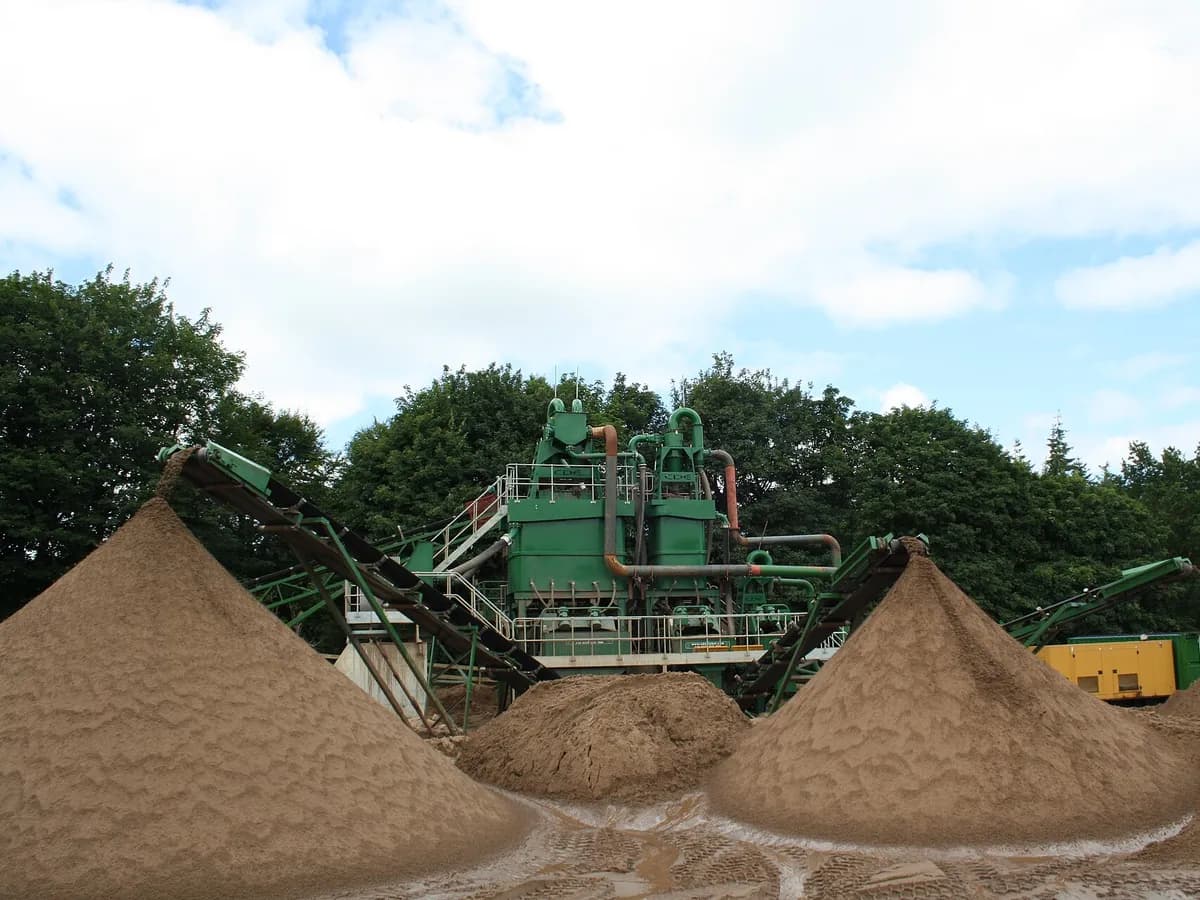
Reducing the free water of product from a sand washing line before stockpiling. For sands with high fines content, panel and aperture are assessed separately.
Mining and Mineral ProcessingIndustrial Plant Solutions
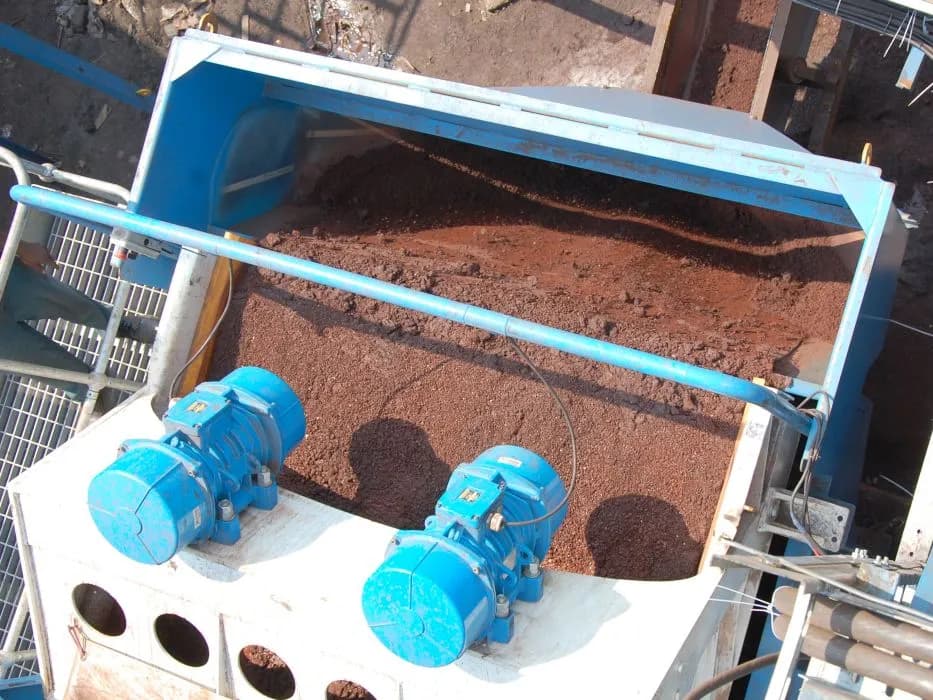
Illustrative process photo
Overview
A dewatering screen is a vibrating screen used to remove the free water from sand, aggregate or mineral product arriving with water after washing or wet classification. The product forms a bed on the deck; with vibration, water drains through the bed and the apertures, while the solid product leaves at the end of the deck.
Dewatering performance mainly depends on the solids load and water content of the feed, size distribution and fines content, panel type and aperture, deck inclination, vibration and bed depth. The deck is usually made of wear-resistant polyurethane panels.
Drained water is collected in the hopper below the screen and sent to the plant's water recovery or settling system. Fines carried in the water are assessed at this step.
01Process Flow
The diagram shows the flow in which wet material is fed to the screen, free water is separated on the vibrating deck, water is collected and the solid product is discharged. Washing equipment, hydrocyclones and water treatment are separate equipment.
Scroll horizontally to view the full diagram.
Wet feed: Washed or wet-classified product enters the screen together with water.
Bed formation: The product forms a bed on the deck and advances with vibration.
Free water separation: Water drains through the material bed and apertures to the underside.
Solid product discharge: Product with reduced free water leaves the deck end to a conveyor or stockpile.
Collecting drained water: Water passing the deck is collected in a hopper or launder.
Water discharge: Water is sent to the plant recovery or settling system.
Even distribution of the feed across the screen width forms a uniform bed and lets water drain evenly.
02Applications
01Reducing the free water of product from a sand washing line before stockpiling. For sands with high fines content, panel and aperture are assessed separately.
Mining and Mineral Processing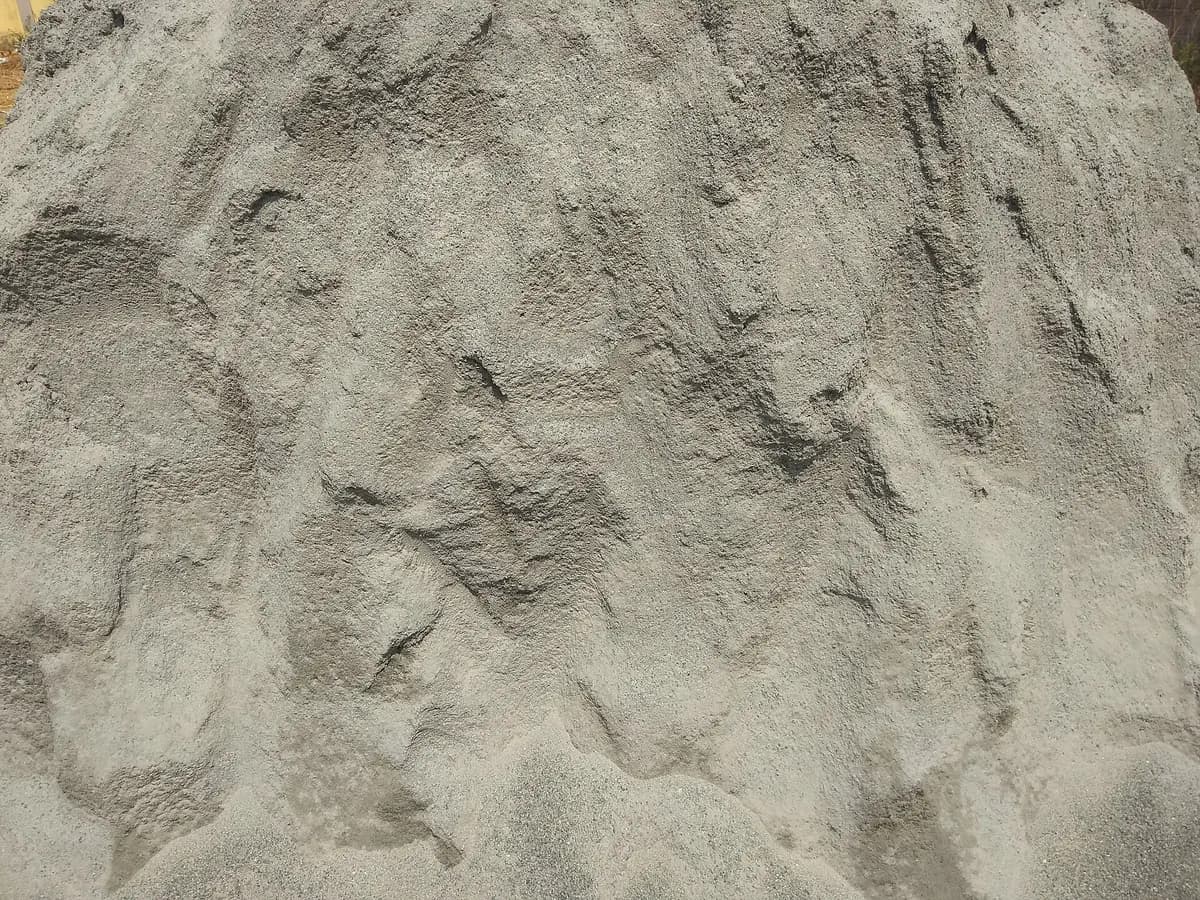 02
02Removing free water from manufactured sand produced by a vertical shaft impact crusher and washed. Outlet moisture depends on the sand's size distribution.
Vertical Shaft Impact Crusher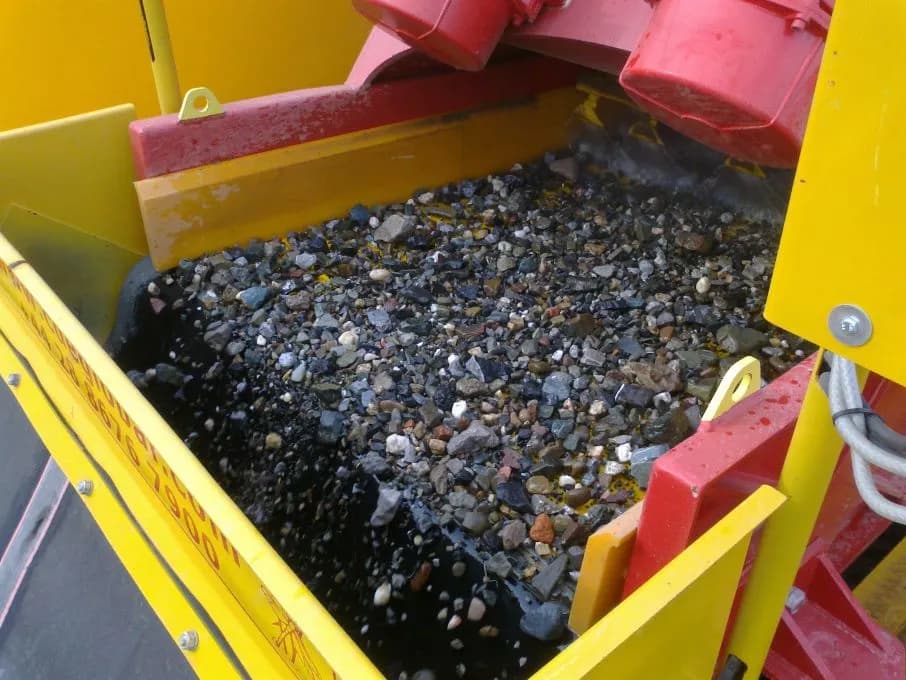 03
03Draining washed recycled aggregate before it goes to the conveyor. For abrasive products, panel material and thickness are important.
Recycling and Waste Management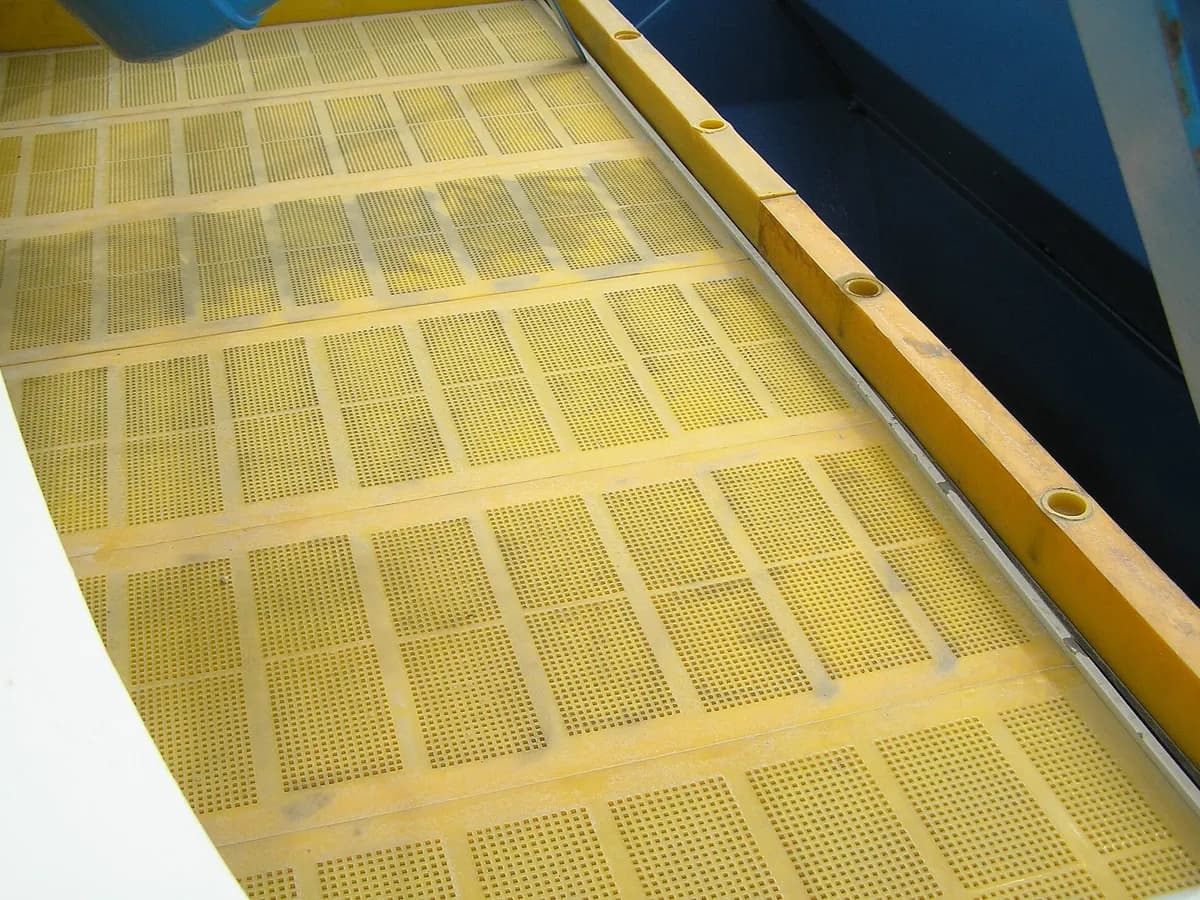
03Design & Manufacturing
PRO MAKINA engineers dewatering screens around the type and size distribution of the feed, feed rate, solids load and amount of free water. Screen body, panels and aperture, inclination, vibration system, and water collection and discharge are designed together.
Wet Feed
Material type, size distribution and fines content.
Free Water Load
Feed rate, solids load and water content.
Panels and Aperture
Panel material, aperture and open area.
Vibration and Inclination
Vibration system, inclination and material bed.
Water Discharge
Collection of drained water and connection to the plant water circuit.
Screen area, aperture, capacity and outlet moisture are assessed from material and feed data; no generic values or moisture guarantee are stated on this page.
04FAQ
Wet product forms a bed on the deck; with vibration, free water drains through the bed and apertures, while the solid product leaves at the end of the deck.
No. It does no thermal drying; it only reduces free water. If lower moisture is needed, thermal drying is assessed separately.
No fixed value can be given; outlet moisture depends on size distribution, fines content, feed conditions and screen design.
A wet screen separates product into size fractions with the help of water. The task of a dewatering screen is to remove free water from wet product.
Material type, size distribution, feed rate, solids and water content, and the plant's washing and water recovery arrangement.
05Resources
Technical Quotation
Share your material, size distribution and feed conditions, and we will define the dewatering screen together with you.
This site uses cookies required to run the website securely and correctly. With your consent, additional cookies may be used for performance measurement, user experience and marketing. For details see the Cookie Policy and Privacy Policy pages.