Agricultural Waste Biogas Plants: Pre-Treatment, Feeding and Digestate
We supply equipment for feeding silage, straw and crop residues to the digester steadily and at the right size, and for processing the digestate.
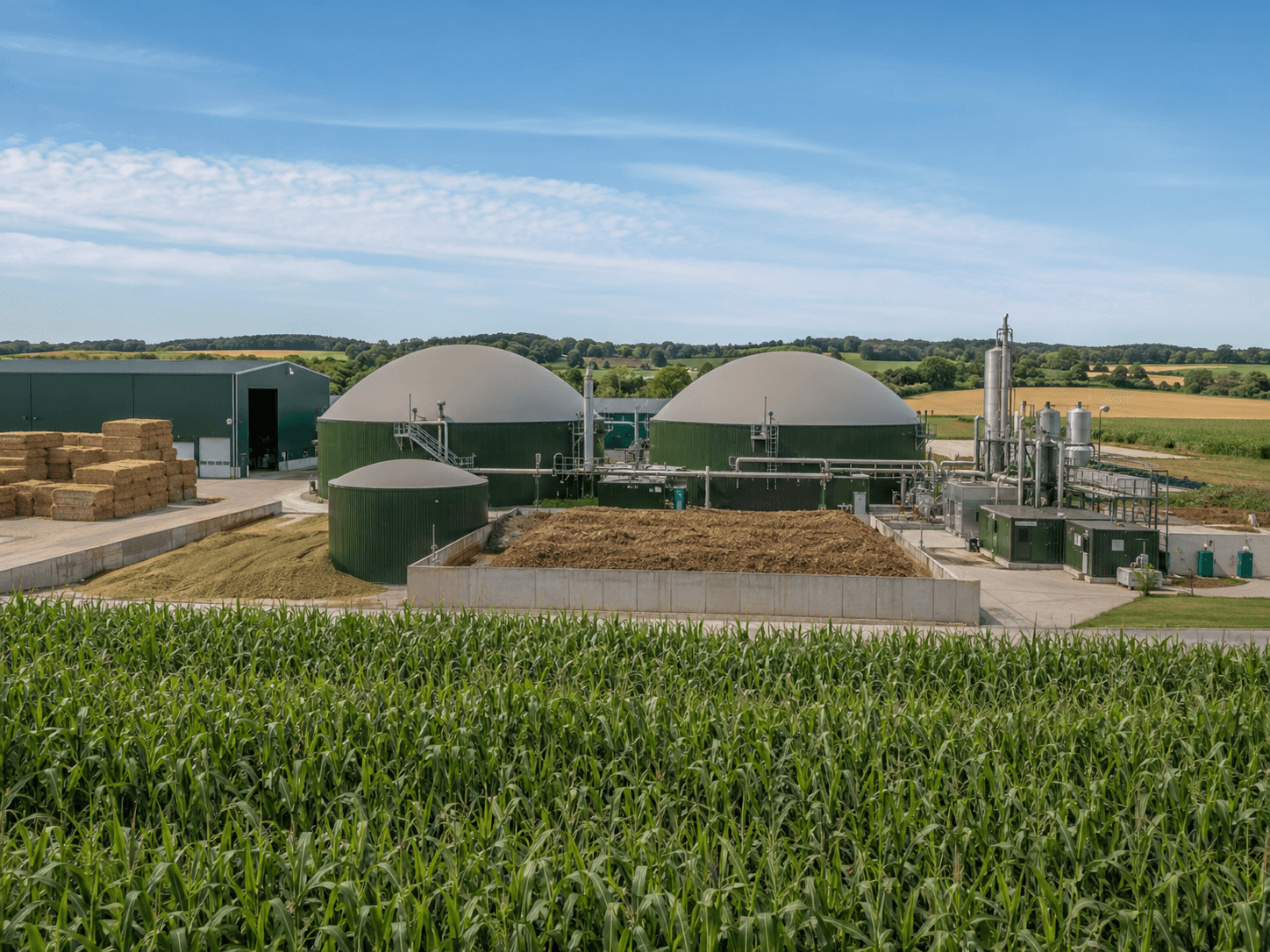
Preparing Fibrous Agricultural Feedstock for the Digester
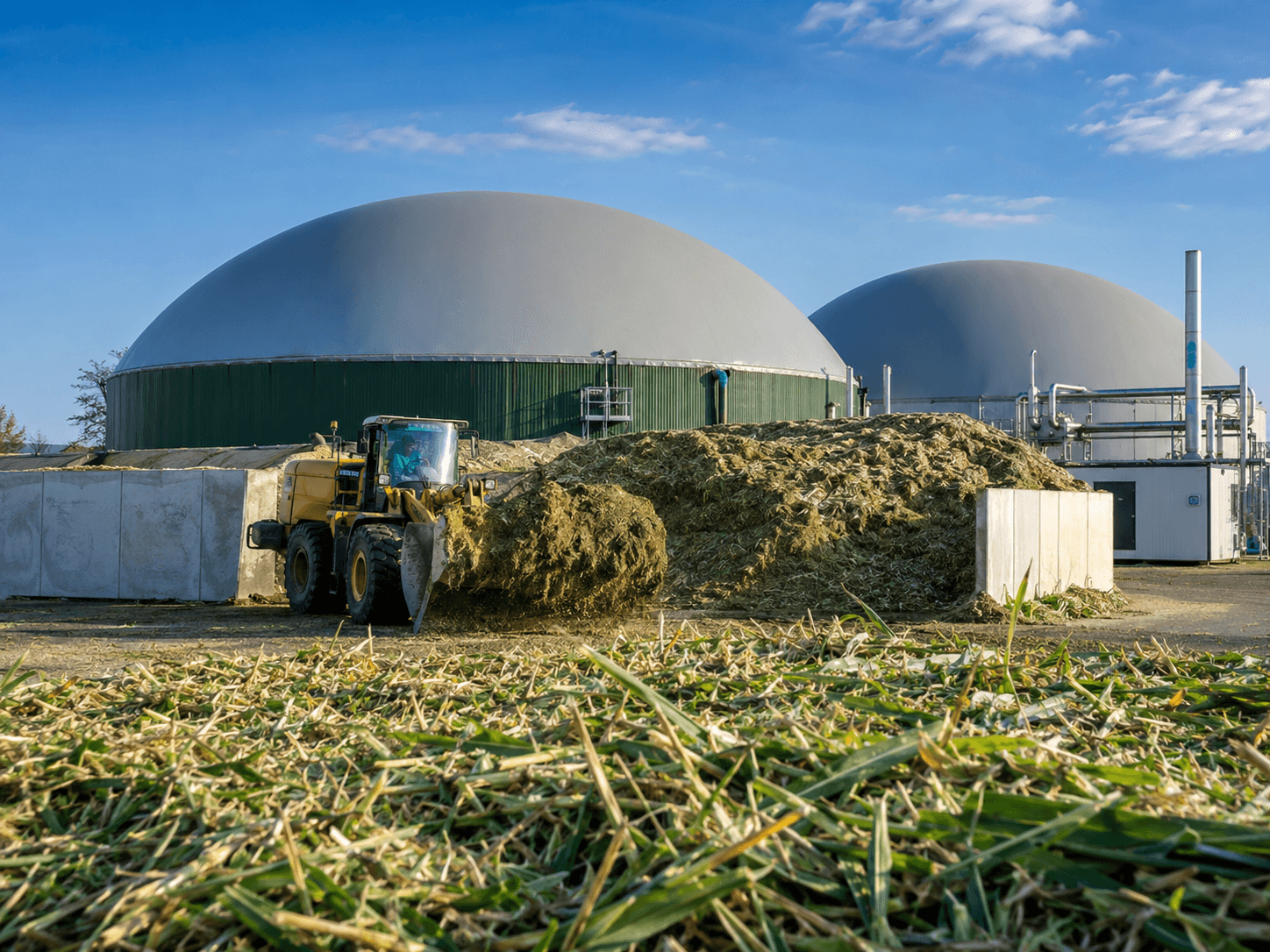
In agricultural biogas plants, energy crops such as maize silage, stalks, straw and vegetable residues are converted into biogas in an anaerobic digester. Fibrous inputs can form a floating layer in the digester and limit microbial access. Reducing the feedstock to a suitable size and feeding it steadily is therefore important for stable gas production.
Pro Makina's scope in these plants covers feedstock reception bunkers, size reduction, solid feeding and transfer equipment, and solid-liquid separation and drying systems on the digestate side. The digester, gas storage and energy conversion unit (CHP) are defined by the project designer; the interfaces of our equipment with these systems are agreed at the start of the project.
Digestate is the material that remains after digestion. Its solid phase can be separated and dried or composted, while the liquid phase is stored and used. How digestate is used depends on the applicable regulations and analysis results.
Material Flow in an Agricultural Waste Biogas Plant
In this flow, Pro Makina equipment is used in the preparation before the digester and in digestate processing after it.
Step 1
Feedstock intake and storage
Silage and agricultural residues are taken from the storage area into the reception bunker.
Step 2
Size reduction
Fibrous inputs are reduced to a size that will not form a floating layer in the digester.
Step 3
Solid feeding
Feedstock is fed to the digester steadily and in metered amounts by a screw feeder.
Step 4
Anaerobic digestion
Biogas is produced in the digester and sent to gas storage and the energy unit.
Step 5
Digestate separation
The digestion residue is separated into solid and liquid phases.
Step 6
Using the solid digestate
The solid phase is dried or composted; the liquid phase is stored.
Equipment Used in an Agricultural Biogas Plant
Bunkers and Hoppers
Bunkers where silage and agricultural residues are received and buffered.
View MachineHammer Crusher
Size reduction of fibrous inputs such as straw and stalks.
View MachineScrew Conveyor
Metered feeding of solid feedstock to the digester.
View MachineBelt Conveyor
Feedstock transfer between the storage area and preparation equipment.
View MachineDewatering Screen
Separating digestate into solid and liquid phases.
View MachineRotary Dryer
Reducing the moisture of separated solid digestate.
View MachineFrequently Asked Questions About Agricultural Waste Biogas Plants
Which parts of a biogas plant does Pro Makina supply?
We supply feedstock reception, size reduction, solid feeding and transfer equipment, as well as digestate separation and drying systems. The interface with the digester and energy unit is defined at the start of the project.
Can straw and stalks be used in a biogas plant?
They can, but their fibrous structure requires size reduction and a suitable mixing ratio. Gas yield is evaluated based on feedstock analysis.
Why should feedstock be shredded?
Smaller particles improve microbial access and reduce the risk of floating layers in the digester and feed blockages.
What can digestate be used for?
Solid digestate can be dried or composted to become a raw material for organic products; the liquid phase is stored and used. Use depends on regulations and analysis.
Can a feeding line be added to an existing biogas plant?
Yes. The feeding points and capacity of the existing digester are reviewed and suitable bunker, size reduction and feeding equipment is selected.
Quotation & Technical Consultation
Request a quote for your agricultural biogas plant
Share your feedstock types, daily feed quantity and digestate goals, and we will define the pre-treatment and feeding line together.