Food Waste Biogas Plants: Pre-Treatment and Controlled Feeding
We build pre-treatment lines that clean food production, supermarket and canteen waste of foreign matter and feed it to the digester under control.
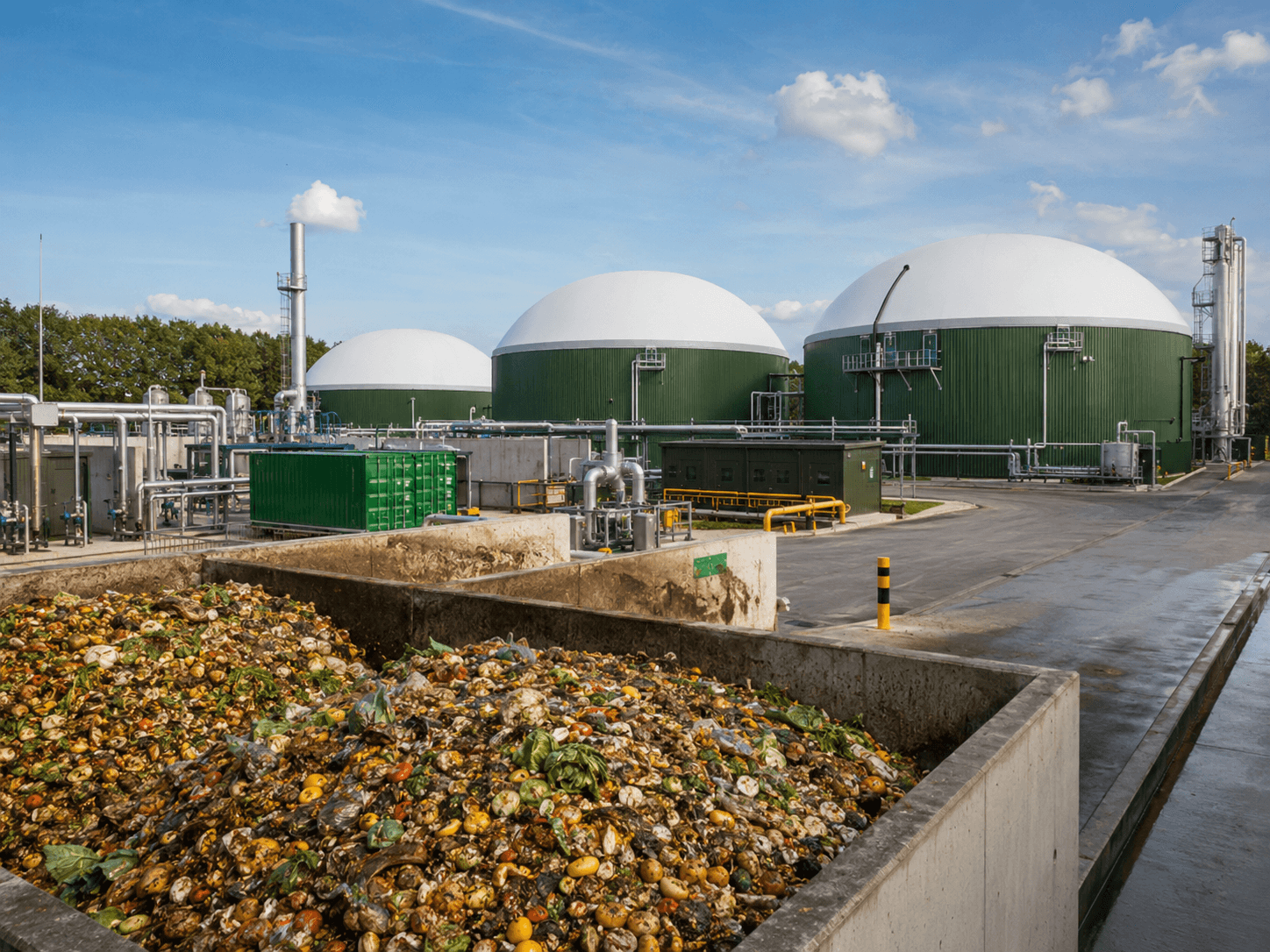
A High-Energy but Sensitive Feedstock: Food Waste
Food waste contains easily degradable organic matter, which makes it a feedstock with high biogas potential. The same property, however, can lead to acidification and a drop in gas production if it is fed suddenly or in excess. Food waste is therefore balanced in a buffer tank and fed to the digester in controlled amounts.
Packaging in market and supermarket waste is the biggest technical problem of food waste biogas plants. Plastics and other foreign matter can form floating or settled layers in the digester and wear equipment. Pre-treatment removes these materials through shredding, depackaging and screening.
Waste containing meat and cooked food may fall under animal by-product rules; in that case the hygienization step required by regulation is added to the flow. Reception and pre-treatment areas are designed enclosed, and odorous air is treated.
Food Waste Biogas Pre-Treatment Flow
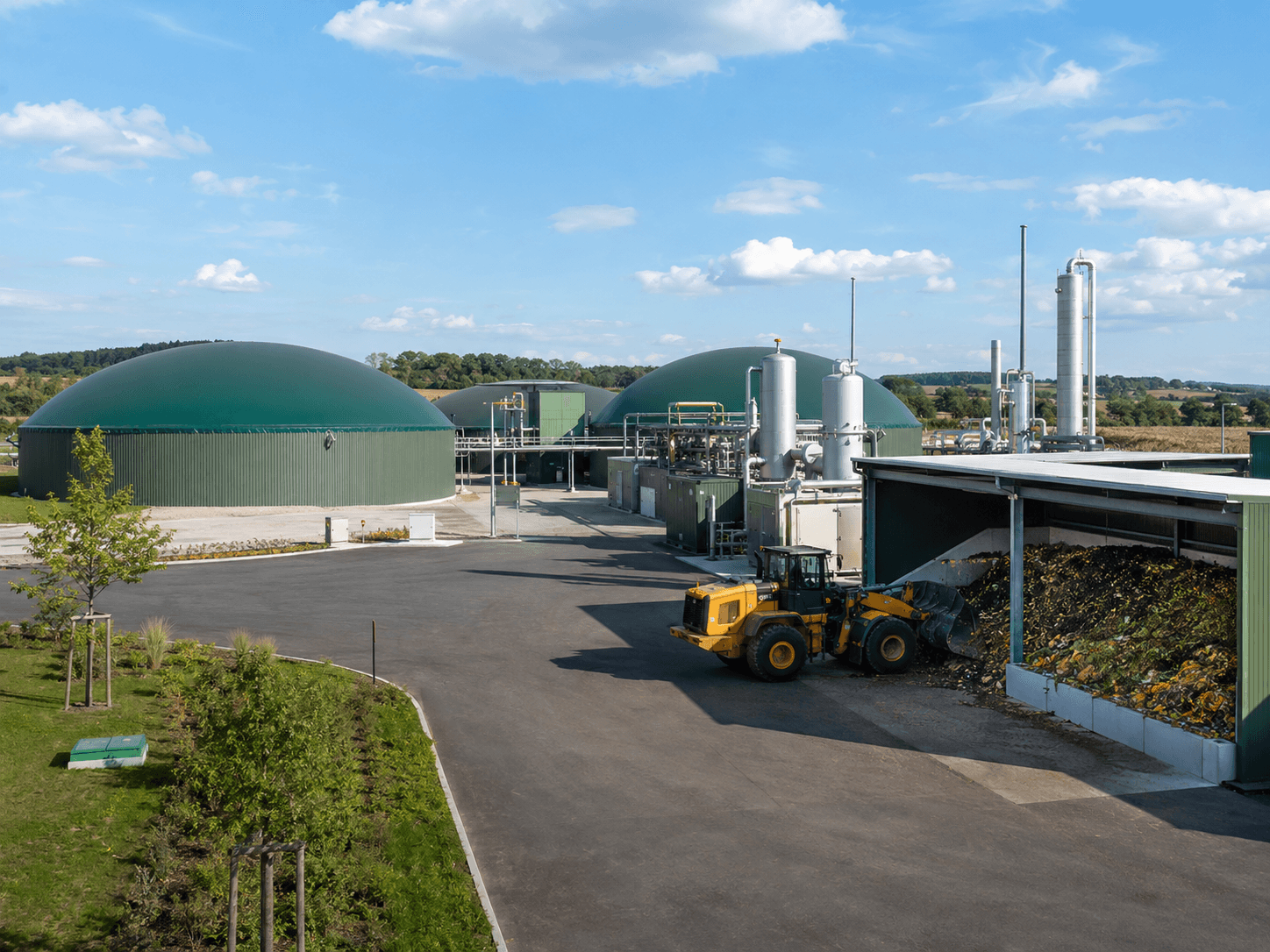
The flow is set up so that foreign matter is removed before the digester and feeding is balanced.
Step 1
Enclosed reception
Waste is received in an enclosed area; waste type and regulatory category are checked.
Step 2
Shredding and depackaging
Packaged waste is opened and packaging is separated from the organic fraction.
Step 3
Screening
Remaining plastics, sand and coarse pieces are screened from the pulped waste.
Step 4
Hygienization (if required)
Controlled heat treatment is applied to waste where required by regulation.
Step 5
Buffer tank
Waste is homogenized and held in a buffer tank for feeding.
Step 6
Controlled feeding
It is fed to the digester in steady amounts that prevent acidification.
Equipment Used in a Food Waste Biogas Pre-Treatment Line
Shredder Systems
Opening and shredding packaged and bulky food waste.
View MachineWet Screen
Screening plastics and coarse particles from the pulped waste.
View MachineStorage Tank
Tank where waste is homogenized and buffered for digester feeding.
View MachineScrew Conveyor
Enclosed conveying of shredded waste.
View MachineDewatering Screen
Dewatering separated packaging and coarse fractions.
View MachineWet Scrubber Systems
Scrubbing odorous air extracted from reception and pre-treatment areas.
View MachineFrequently Asked Questions About Food Waste Biogas Plants
Why should food waste be fed under control?
Easily degradable food waste can cause acid accumulation and a drop in gas production when overfed. A buffer tank and steady feeding reduce this risk.
Can packaged food waste be processed in a biogas plant?
Yes, but packaging must be removed before it enters the digester. The packaging share defines the scope of the pre-treatment line.
Is hygienization required for all food waste?
No. The requirement depends on waste content and regulatory category. Accepted waste types and conditions are clarified at the start of the project.
How is odor prevented at a food waste biogas plant?
Reception and pre-treatment take place in enclosed areas, indoor air is extracted and treated, and waste is not stored for long.
Can food waste be added to an existing agricultural biogas plant?
If regulatory permits and digester capacity allow, food waste can be included by adding pre-treatment and a buffer tank.
Quotation & Technical Consultation
Request a quote for your food waste biogas pre-treatment line
Share your waste sources, packaging share and daily quantity, and we will define separation, buffer and feeding capacity together.