Biomethane and Biogas Upgrading Solutions
We provide pre-treatment, auxiliary systems and project engineering support for upgrading raw biogas to biomethane.
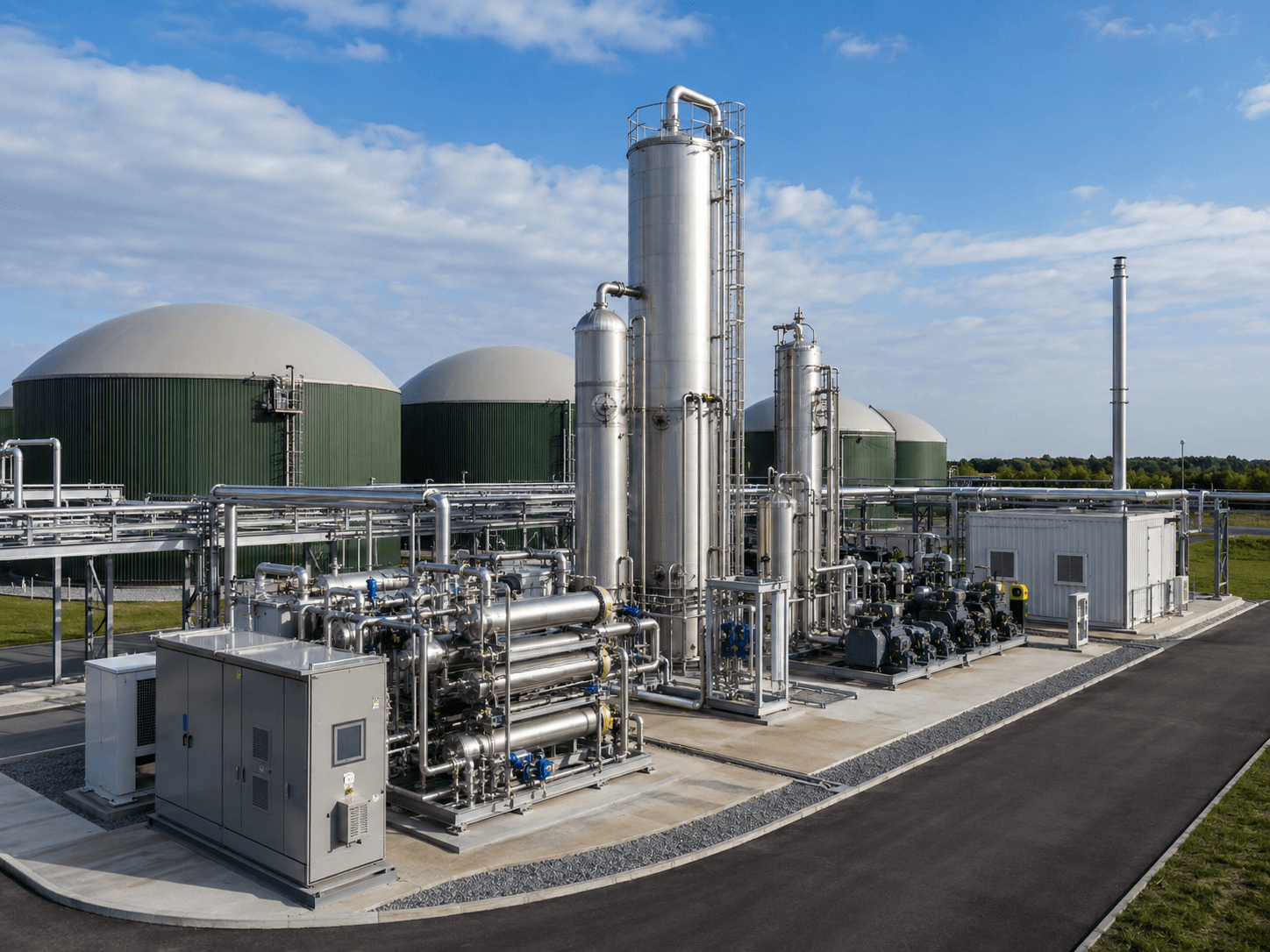
From Raw Biogas to Biomethane: What Is Removed?
Besides methane, raw biogas contains carbon dioxide, water vapor, hydrogen sulfide and, depending on the source, compounds such as siloxanes. Biogas can be used directly in a CHP engine; but if it is to be injected into the natural gas grid or used as vehicle fuel, these components must be removed to raise the methane content. This process is called biogas upgrading, and the resulting gas is called biomethane.
Upgrading technologies include water scrubbing, membrane separation, pressure swing adsorption (PSA) and chemical absorption (amine scrubbing). The choice depends on gas flow, raw gas composition, target gas quality and energy consumption. Hydrogen sulfide and moisture are usually removed before the main upgrading unit.
In these projects Pro Makina supports pre-treatment and auxiliary systems, process water and chemical tanks, and exhaust air scrubbing equipment. The main upgrading unit is selected together with the technology provider; gas quality requirements for grid injection or vehicle fuel are set by the relevant authority.
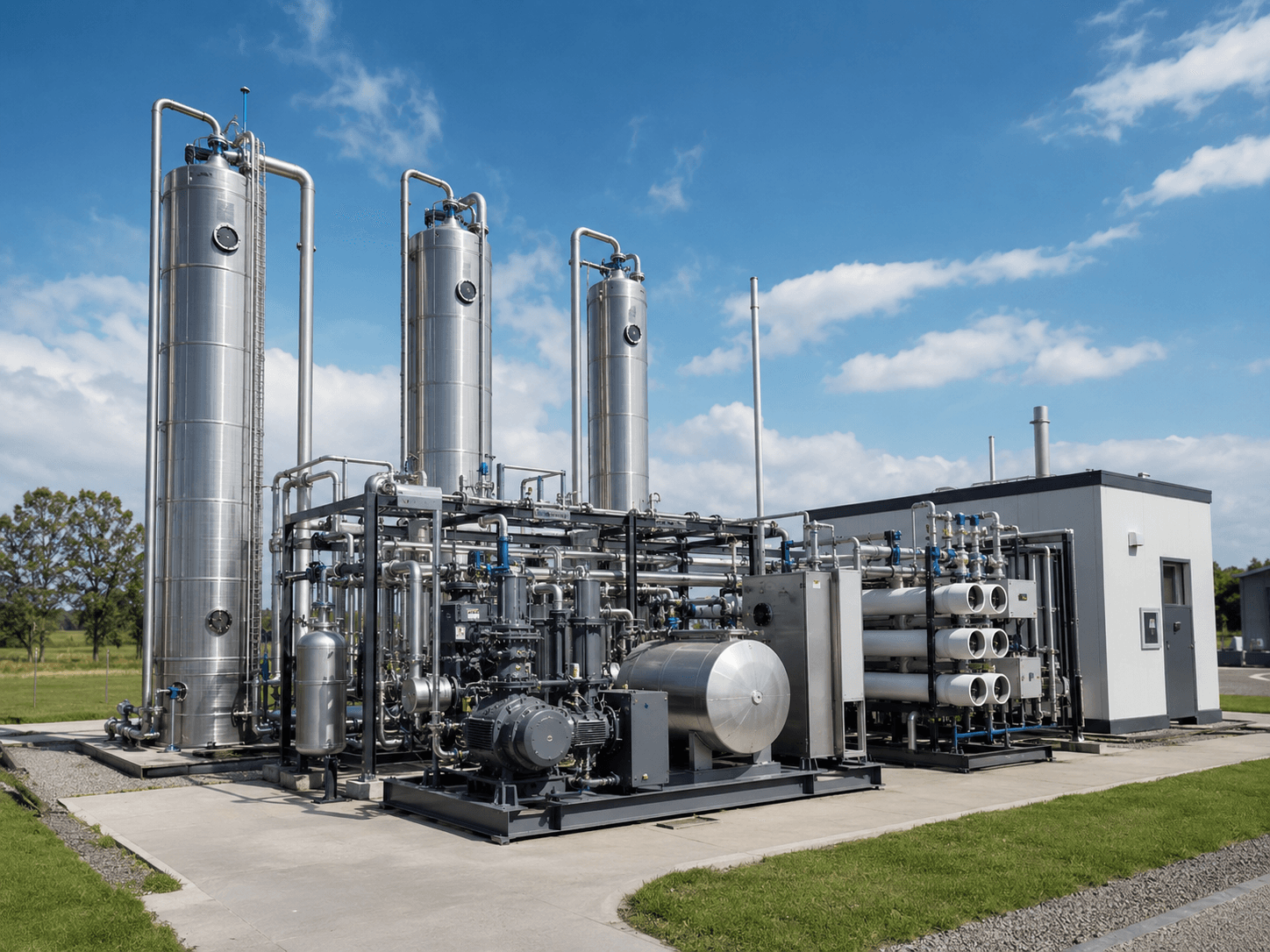
Biogas to Biomethane Upgrading Flow
Technology selection in this flow depends on raw gas composition and intended use; the sequence of steps is generally the same.
Step 1
Raw gas analysis
Methane, carbon dioxide, hydrogen sulfide, moisture and siloxane contents are measured.
Step 2
Desulfurization
Hydrogen sulfide is reduced by biological, chemical or adsorption methods.
Step 3
Moisture and particle removal
The gas is cooled to separate condensed water, and particles are captured.
Step 4
Carbon dioxide separation
Carbon dioxide is separated with the selected technology to raise the methane content.
Step 5
Quality control and odorization
Biomethane quality is measured; it is odorized according to grid requirements.
Step 6
Compression and use
The gas is brought to the pressure required for the grid or vehicle fuel.
Auxiliary Equipment Used in Biogas Upgrading Projects
Wet Scrubber Systems
Scrubbing plant exhaust air and odorous gases; use in the gas line is verified against project requirements.
View MachineDissolution Tank
Preparing chemical solutions used for desulfurization.
View MachineStorage Tank
Storage tanks for process water, chemicals and condensate.
View MachineFrequently Asked Questions About Biomethane and Biogas Upgrading
What is the difference between biogas and biomethane?
Biogas is raw gas that contains carbon dioxide and other components besides methane. Biomethane is gas with a higher methane content, similar to natural gas, obtained by removing these components.
Which upgrading technology should be chosen?
The choice between water scrubbing, membrane, PSA and amine scrubbing is made based on gas flow, raw gas composition, target quality and energy consumption.
Why is hydrogen sulfide removed first?
Hydrogen sulfide causes corrosion and can damage some upgrading technologies. It is therefore reduced before the main upgrading step.
Can biomethane be injected into the natural gas grid?
It can if gas quality and pressure meet the grid operator's requirements. The requirements are set by the relevant authority.
Does Pro Makina also supply the upgrading unit?
The main upgrading unit is selected together with the technology provider. Pro Makina supports pre-treatment, auxiliary systems, tanks and exhaust air scrubbing equipment.
Quotation & Technical Consultation
Request a technical consultation for your biogas upgrading project
Share your raw biogas flow, gas analysis and intended use, and we will clarify the pre-treatment and auxiliary system scope together.