 01
01Multiple Silo Filling
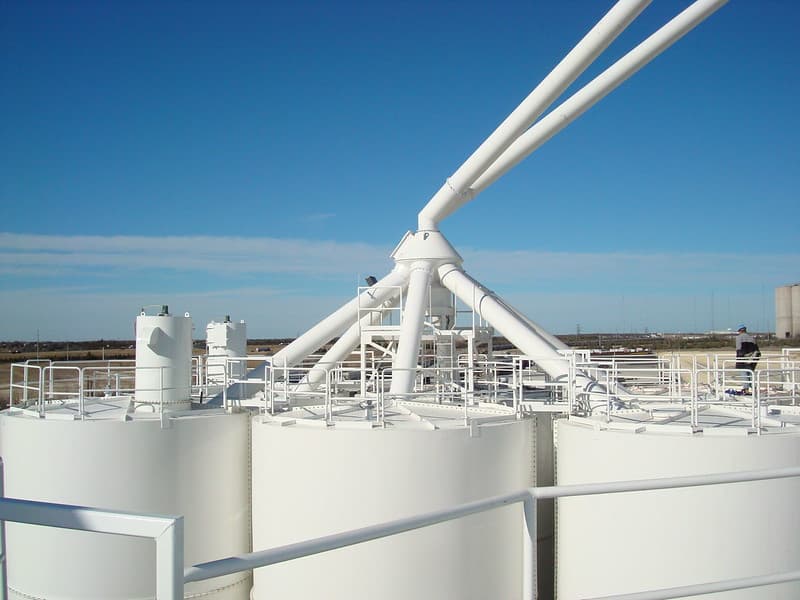
Filling one selected silo of a silo battery from a single elevator line. Outlet pipes are arranged radially towards the silos.
Silo SystemsIndustrial Plant Solutions
PRO MAKINA · Distributor
Overview
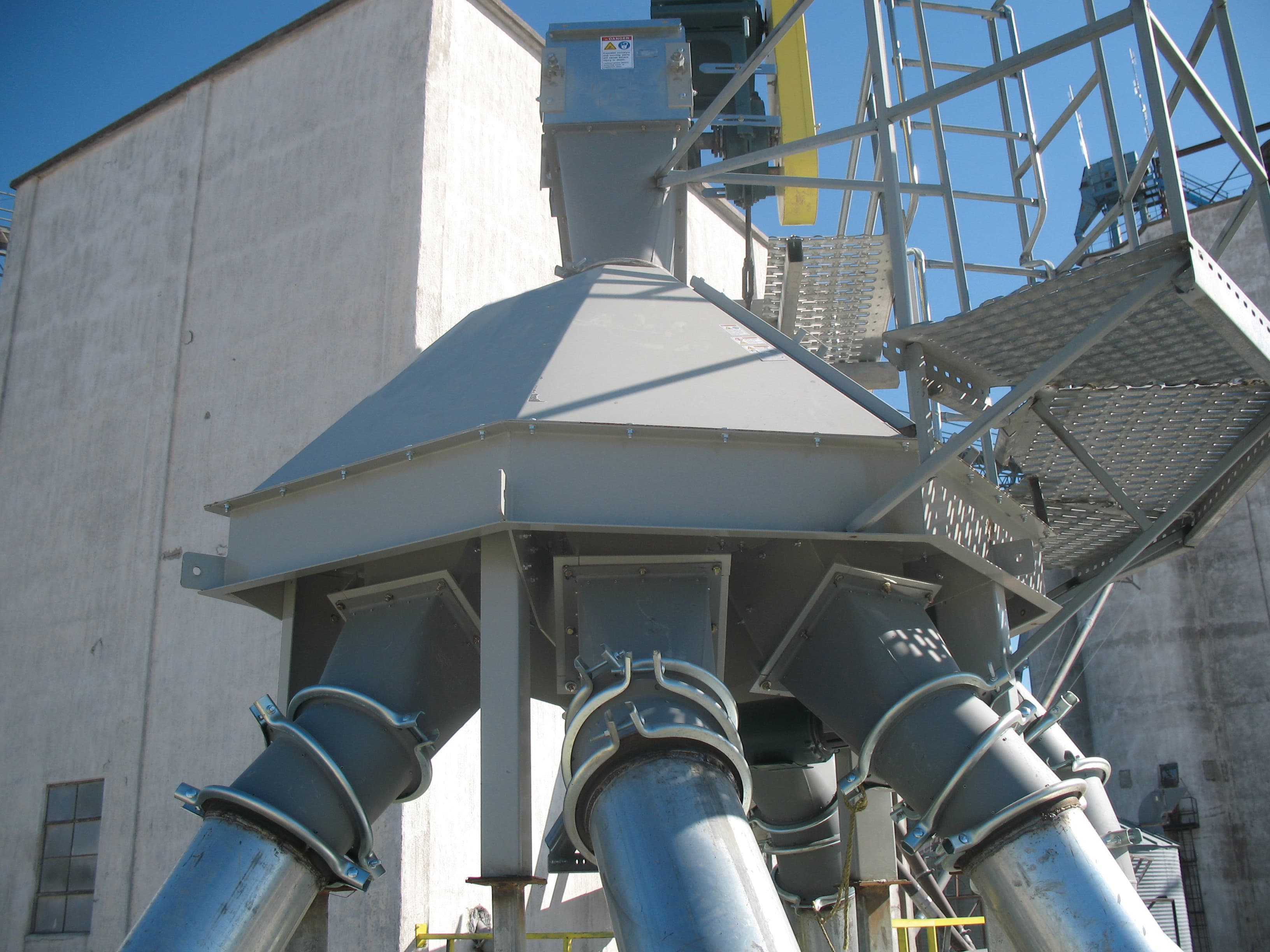
A distributor is flow equipment that directs bulk material arriving from an elevator or conveyor to one line selected from several silos, bunkers or process lines. Product enters the body through a single inlet and flows by gravity out of the selected outlet pipe.
In a rotary distributor, the spout inside the body is turned by the drive unit to face the selected outlet. When the spout reaches position, a position sensor confirms it; the flow is started only after this signal.
Sealing between spout and outlet keeps product from leaking into unselected lines. Wearing surfaces and the spout are designed with replaceable parts according to the product's abrasiveness.
01Process Flow
The diagram shows product received through a single inlet, the spout turned to the selected outlet and the product transferred to the relevant silo, bunker or line. Elevator, conveyor and silos are separate equipment.
Scroll horizontally to view the full diagram.
Single inlet: Product from the elevator or conveyor enters the distributor inlet.
Outlet selection: The drive turns the spout to the selected outlet.
Position check: The position sensor confirms the spout is at the correct outlet; the feed starts.
Transfer to line: Product flows by gravity through the selected outlet pipe to a silo, bunker or line.
The outlet is changed after the feed has been stopped and the line has emptied, so that product is not mixed into the wrong line.
02Applications
01Filling one selected silo of a silo battery from a single elevator line. Outlet pipes are arranged radially towards the silos.
Silo Systems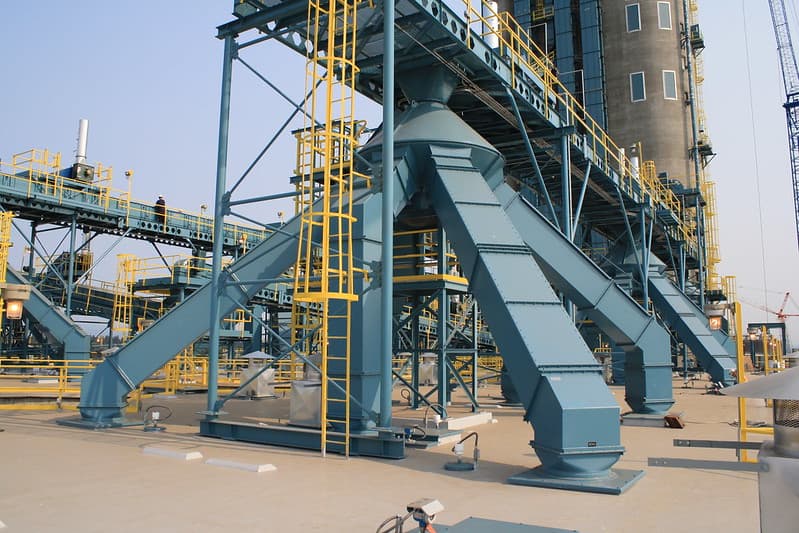 02
02Directing product to different conveyor or bunker lines in a transfer tower. For large-section chutes, wear surfaces are part of the design.
Conveying Systems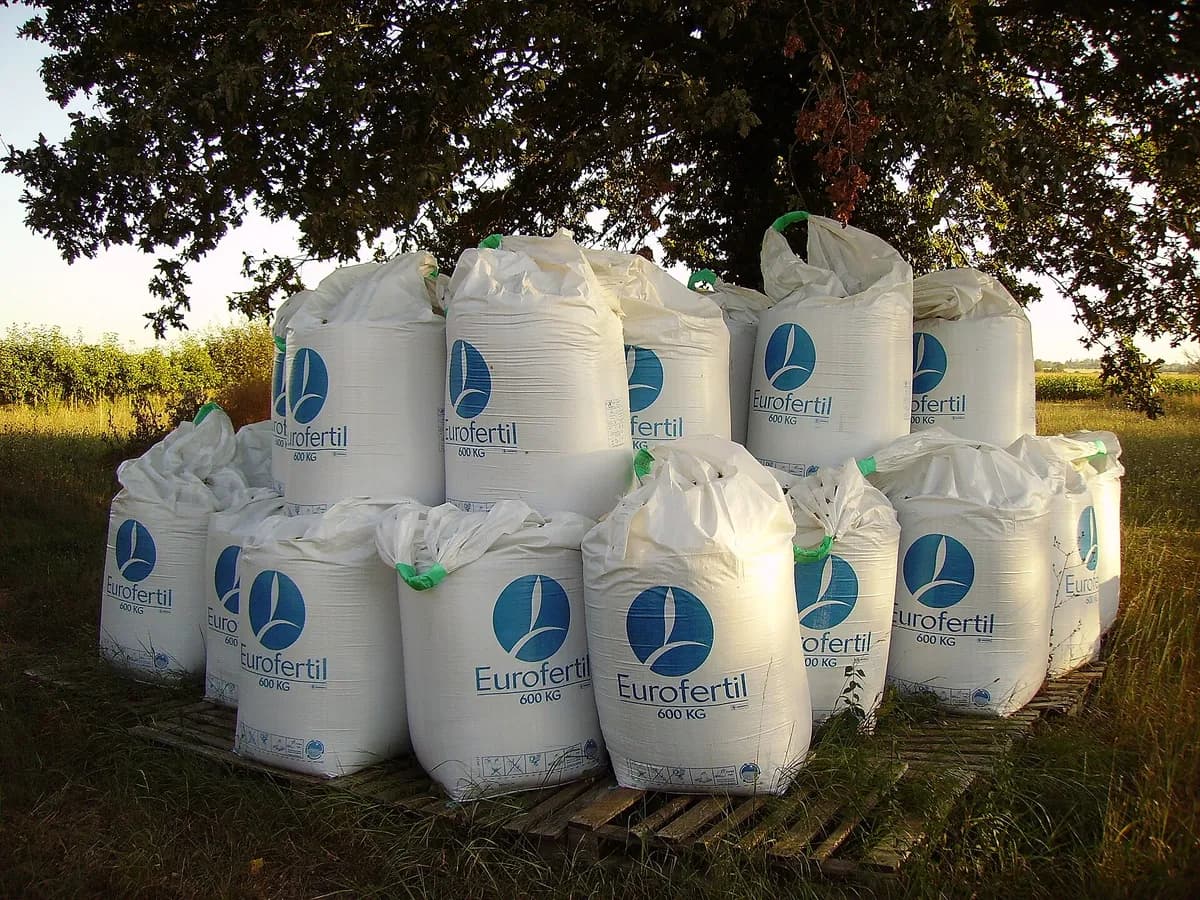 03
03Feeding the flow from a product bunker to one of several bagging or big-bag filling lines. Line changes are made by the automation system.
Packaging and Filling Systems 04
04Distributing granular fertilizer, raw materials and product stocks to different bunkers or stores. For hygroscopic products the internal body geometry is assessed against build-up.
Fertilizer and Granulation Plants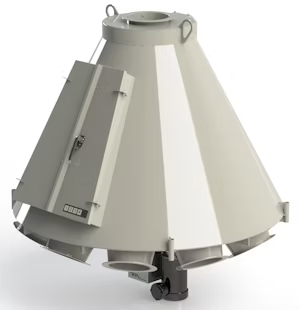
03Design & Manufacturing
PRO MAKINA engineers distributors around the product, number and layout of outlets, flow section, drive and position control requirements. Body geometry, spout, sealing and wear parts are designed together.
Product
Product type, particle size, bulk density, abrasiveness and tendency to stick.
Inlet and Outlets
Number of outlets, outlet angles and layout of the target silos or lines.
Flow Section
Inlet, spout and outlet sections matched to the feeding equipment rate.
Drive and Position
Drive type, position sensing and automation signals.
Sealing and Dust
Sealing between outlets, enclosed body and maintenance access.
Number of outlets, section and capacity are defined from product and plant layout; no generic values are stated on this page.
04Gallery
05FAQ
It directs bulk material arriving through a single inlet to one line selected from several silos, bunkers or process lines.
The spout inside the body is turned by the drive to face the selected outlet. After the position is confirmed, the feed starts and the product flows by gravity through that outlet.
No. A distributor directs the flow to the selected line; it neither measures the quantity nor splits it between lines. The quantity is set by the feeding equipment or a separate dosing system.
A two-way flap diverter directs the flow to one of two outlets. A rotary distributor allows selection among many outlets in a single body.
Product type and bulk density, particle size, feed rate, number and layout of outlets, and drive and automation requirements.
06Resources
Technical Quotation
Share your product, number of outlets and the layout of your target lines, and we will define the distributor together with you.
This site uses cookies required to run the website securely and correctly. With your consent, additional cookies may be used for performance measurement, user experience and marketing. For details see the Cookie Policy and Privacy Policy pages.