Granular NPK Fertilizer Production Plant
We build lines that turn nitrogen, phosphorus and potassium raw materials into strong, uniform granules that do not cake in storage.
Size, Strength and Storage Stability in Compound NPK Granules
In granular NPK production, raw materials such as urea, ammonium sulfate, phosphates and potassium salts are weighed at the recipe ratio and granulated with water or steam in a granulator drum. Every granule carrying the same nutrient ratio is important to avoid segregation in the bag.
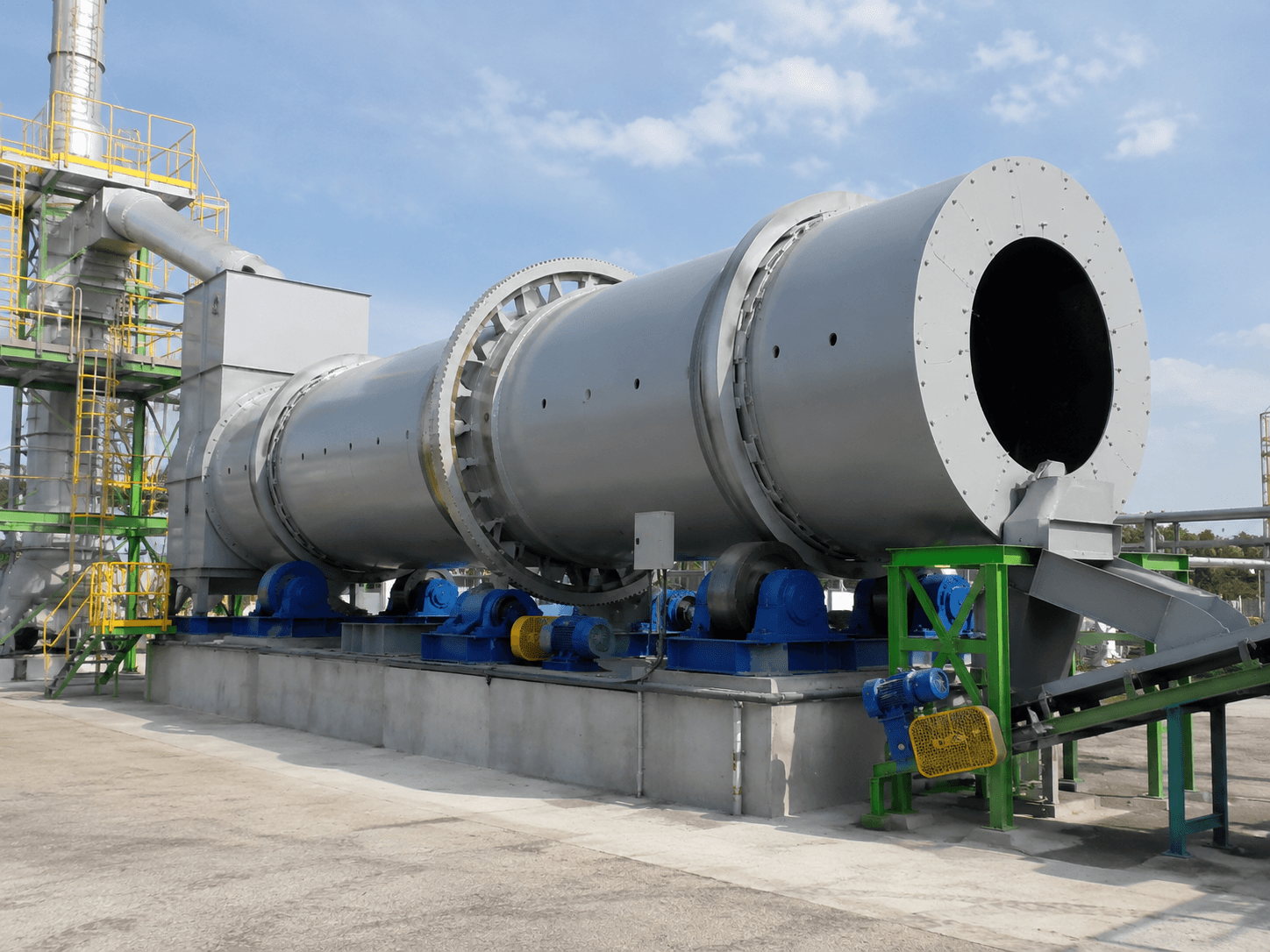
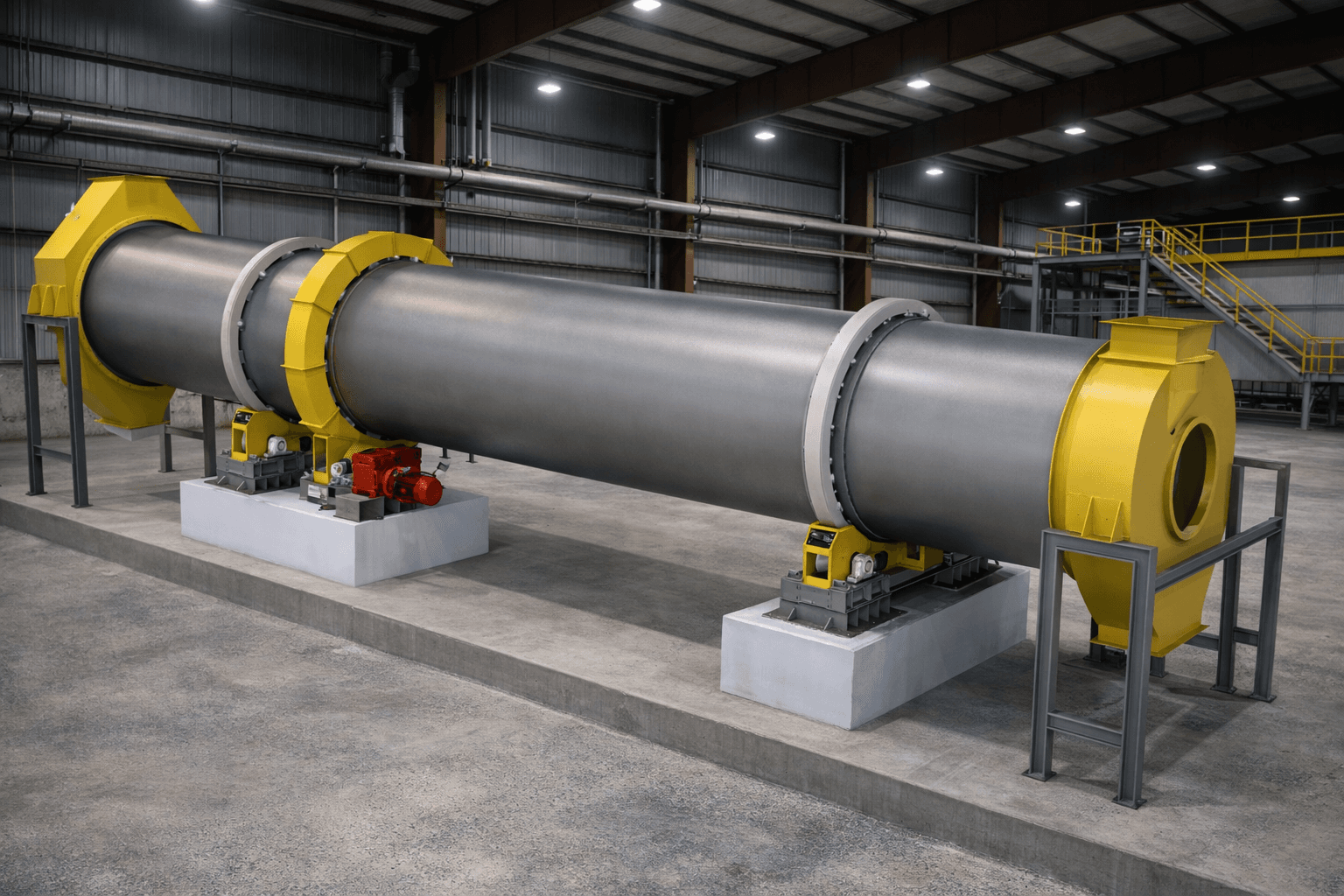
Because some NPK raw materials are hygroscopic, drying, cooling and storage conditions directly affect the product's tendency to cake. The cooling drum brings the product down to storage temperature, and the coating drum applies an anti-caking coating to the granule surface.
After screening, off-size granules are crushed and recycled. The recycle quantity and the capacity of the dryer, elevator and screen are calculated together; the bottleneck of the line usually depends on this balance.
Granular NPK Fertilizer Production Flow
The line runs continuously from weighing to coating with a recycle loop.
Step 1
Raw material weighing
Nitrogen, phosphorus and potassium sources are fed at the recipe ratio by weigh belt feeders.
Step 2
Granulation
The mixture is granulated with water or steam in the granulator drum.
Step 3
Drying
Granules are dried in a rotary dryer to a moisture suitable for storage.
Step 4
Cooling
The hot product is brought down to storage temperature in the cooling drum.
Step 5
Screening and recycle
On-size product is separated; oversize is crushed and returns to the granulator with undersize.
Step 6
Coating and packaging
Granules are coated to reduce caking and then sent to packaging.
Equipment Used in a Granular NPK Fertilizer Line
Weigh Belt Feeder
Continuous weighing and feeding of NPK raw materials at the recipe ratio.
View MachineRotary Drum Granulator
Drum where the raw material mixture is granulated with water or steam.
View MachineRotary Dryer
Rotary drum where granules are dried to a moisture suitable for storage.
View MachineRotary Cooler
Cooling hot granules to reduce the risk of caking.
View MachineVibrating Screen
Screen that separates on-size product and defines the recycle fractions.
View MachineCoating Drum
Applying an anti-caking coating material to the granule surface.
View MachineFrequently Asked Questions About Granular NPK Fertilizer Plants
What is the difference between granular NPK and blended NPK?
In granular NPK every granule carries the same nutrient ratio. In blends different granules are mixed; if sizes differ, segregation can occur during handling.
Why do NPK granules cake in storage?
Hygroscopic raw materials, high product temperature and pressure can cause caking. Sufficient drying, cooling and coating reduce this risk.
Is steam granulation necessary for every recipe?
No. Steam makes granulation easier for some recipes; whether it is needed depends on the raw material mix and target granule quality.
Can different NPK formulas be produced on the same line?
Yes. The dosing system and process settings are changed per formula, and emptying the line during changeovers is planned.
Is a dust collection system needed?
Dryer and cooler exhaust air carries dust. Capturing it with cyclones and filters is necessary for both environmental requirements and product recovery.
Quotation & Technical Consultation
Request a quote for your granular NPK fertilizer line
Share the formulas you want to produce and your hourly capacity target, and we will calculate the granulation, drying and recycle balance together.