Liquid NPK Fertilizer Production Plant
We design solution lines that produce nitrogen, phosphorus and potassium sources at the target analysis, without crystallization and with repeatable quality.
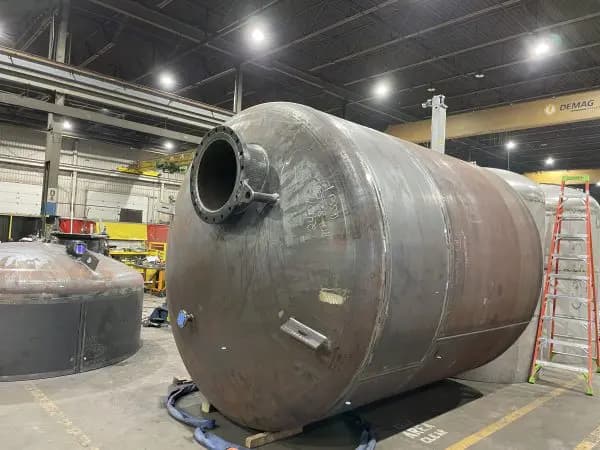
Process for Clear Solution and Suspension NPK Recipes
In liquid NPK production, the order, temperature and concentration at which urea, phosphate and potassium sources are dissolved determine product stability. The temperature drops when urea dissolves, while neutralizing phosphoric acid with bases such as potassium hydroxide releases heat. That is why we select tanks and reactors together with the thermal behavior of the recipe.
In clear solution recipes, the goal is to stay below the solubility limit to prevent crystallization in storage. In suspension recipes, mixing and storage design keep the solid phase from settling. For products stored in cold climates, the position of the storage tank and the need for insulation are also evaluated from the start.
The process consists of dissolving, mixing, cooling if required, quality control, storage and filling. In recipes that use acids and bases, material selection, safe dosing and operator protection are part of the design.
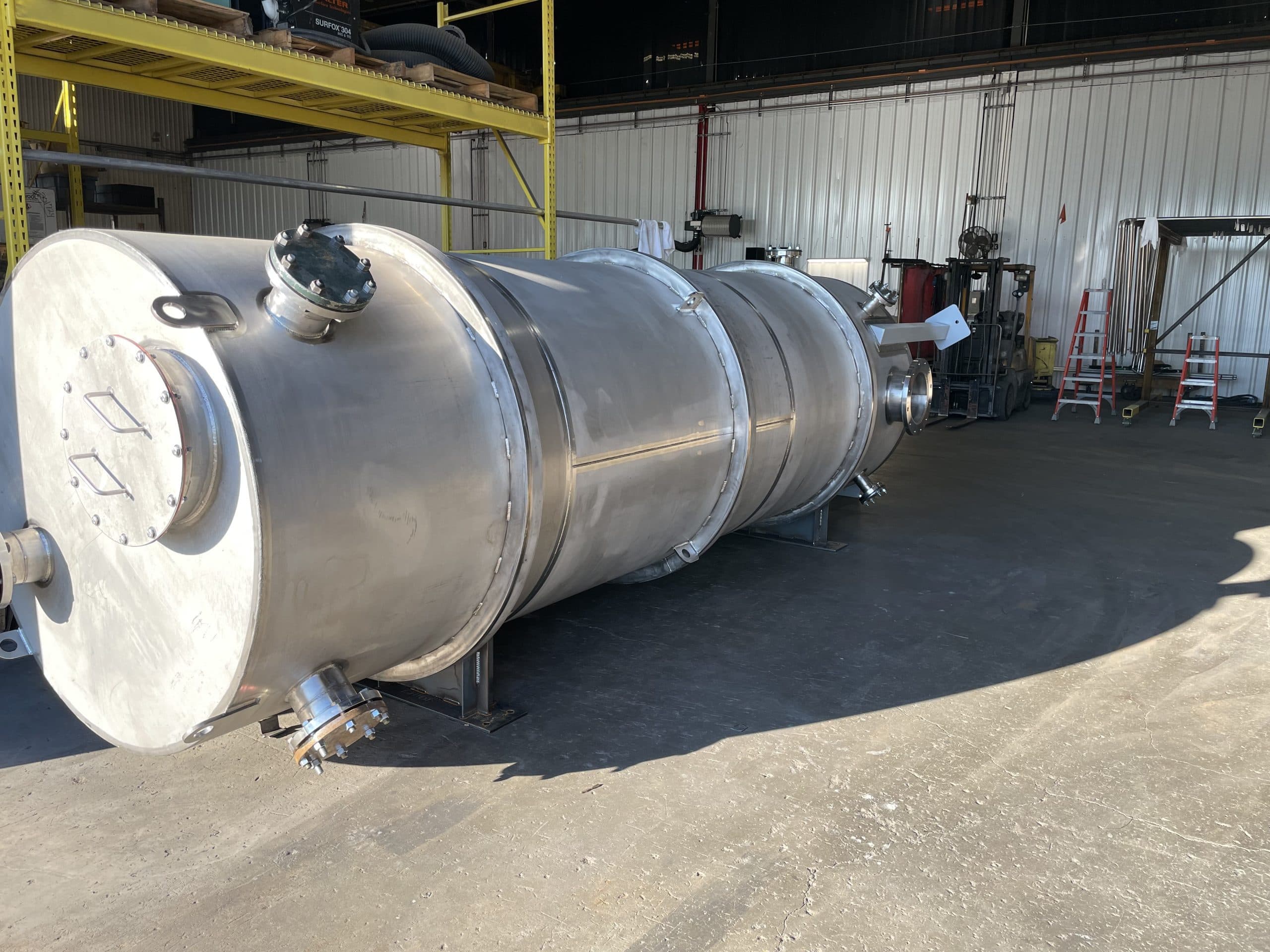
Liquid NPK Fertilizer Production Flow
The flow is applied with small differences depending on whether the recipe is a clear solution or a suspension.
Step 1
Recipe and raw material preparation
Raw materials are weighed for the target N-P-K ratio; if acids and bases are used, a safe dosing sequence is defined.
Step 2
Dissolving
Urea, phosphate and potassium sources are dissolved in water in an order that suits their dissolution behavior.
Step 3
Neutralization and mixing
In recipes containing acids and bases, the reaction is run at a controlled rate and the product is homogenized.
Step 4
Temperature control
Depending on reaction heat or the cooling effect, the product is brought to the target temperature in a cooling tank.
Step 5
Quality control
Density, pH and analysis are checked; clarity or suspension stability is verified.
Step 6
Storage and filling
The product is transferred from the storage tank to the filling and labeling line.
Equipment Used in a Liquid NPK Fertilizer Line
Dissolution Tank
First process tank where urea, phosphate and potassium sources are dissolved.
View MachineAgitated Reactor
Reactor where acid-base neutralization and recipe mixing are carried out under control.
View MachineCooling Tank
Tank that cools the product heated by the reaction before filling.
View MachineStorage Tank
Tank where the clear solution or suspension is stored before filling.
View MachineLiquid Filling & Bottling
Line where liquid NPK products are filled into packages.
View MachineBottle Labeling Machine
Labeling the analysis and batch information on the package.
View MachineFrequently Asked Questions About Liquid NPK Fertilizer Plants
What is the difference between clear solution and suspension liquid NPK?
In a clear solution all components are dissolved. In a suspension part of the solid phase is kept suspended, which changes mixing and storage design.
Why does liquid NPK crystallize in storage?
If the concentration is close to the solubility limit, salts can crystallize when the temperature drops. Recipe concentration and storage conditions should be evaluated together.
What should be considered in a line working with phosphoric acid?
Acid-resistant materials, controlled dosing, removal of neutralization heat and operator safety are addressed together in the design.
Can different NPK formulas be produced on the same line?
Yes. If the number of tanks, intermediate cleaning time and storage tank arrangement are planned for product changeovers, several formulas can be produced.
What does automation bring to a liquid NPK line?
Recording weighing, dosing sequence and temperature improves batch repeatability and reduces operator error.
Quotation & Technical Consultation
Request a quote for your liquid NPK fertilizer line
Share your target formulas, raw materials and filling packaging, and we will calculate dissolving and storage capacity together.