Granular Compost (Organic Fertilizer) Plant
We build lines that turn mature compost into granular organic fertilizer that is easy to transport, store and spread by machine.
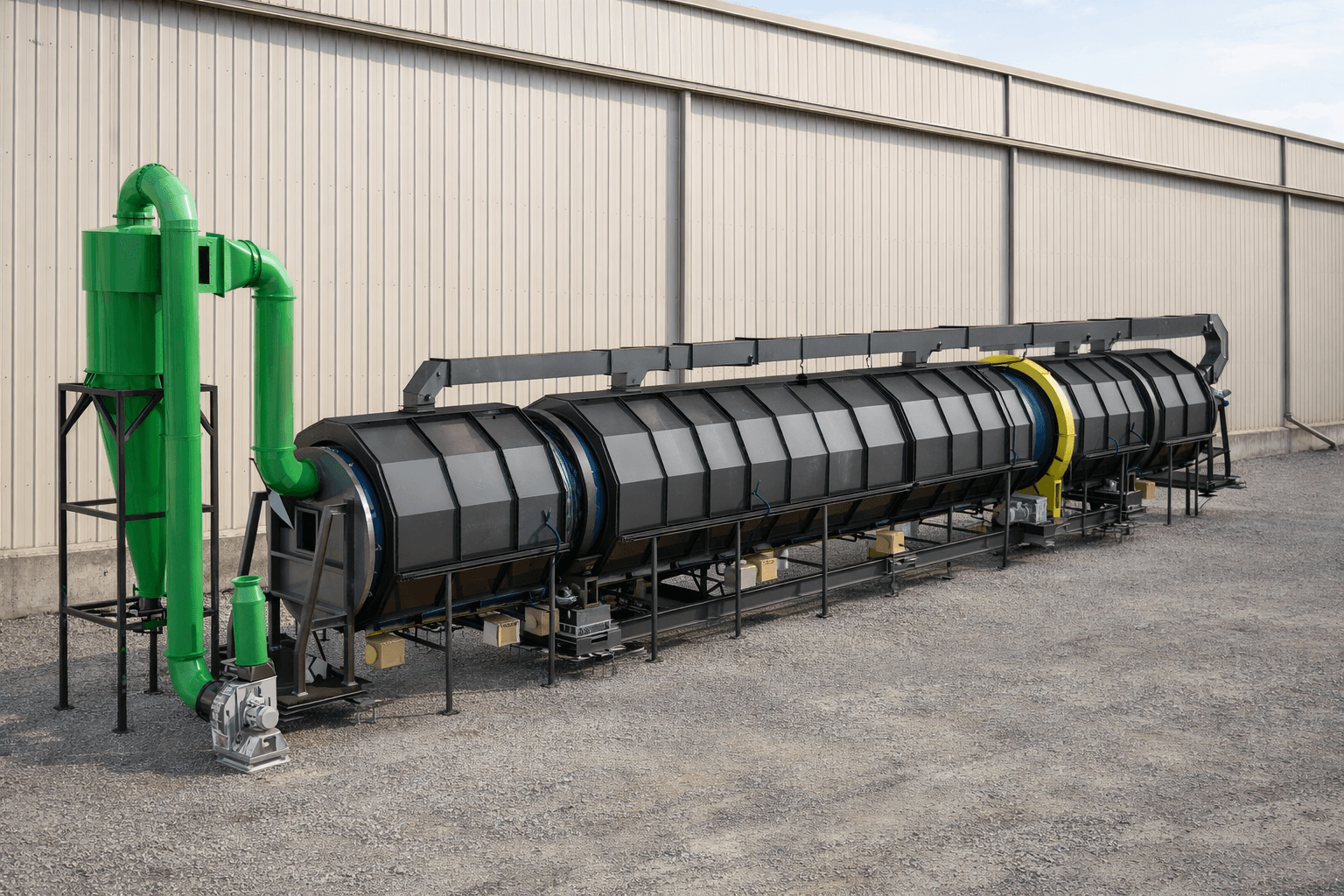
Turning Mature Compost Into a Granular Product
A granular compost line starts after composting. The compost fed to granulation must be mature and stable; immature material can cause biological activity, odor and spoilage in storage inside the granule. Compost quality is therefore the first input of the line design.
Compost is first screened to remove stones, plastics and coarse pieces, then crushed to a fine size. Granulation moisture and binder demand are adjusted to the fiber structure of the compost. If required, mineral nutrients can be added to the recipe to produce an organomineral product.
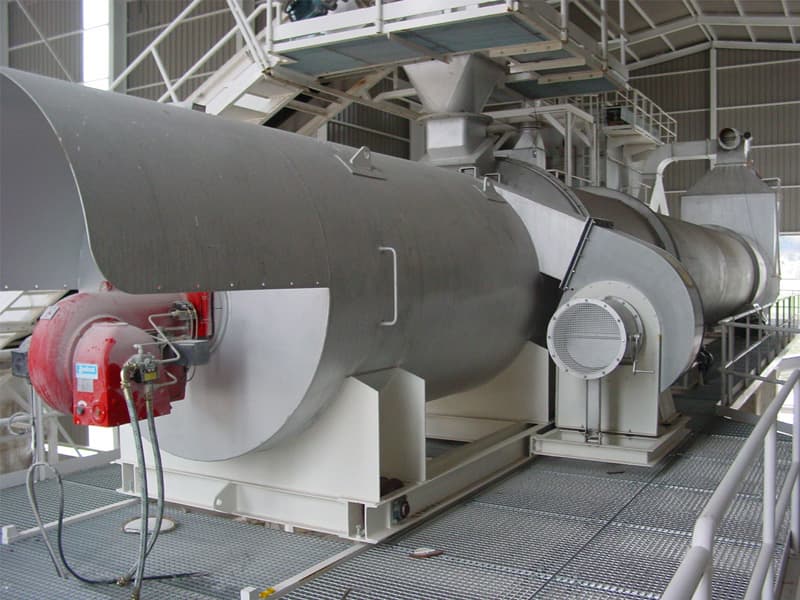
Granules are dried at a controlled temperature to protect organic matter, then cooled and screened. If the compost plant and granulation line are built on the same site, the capacities of both lines and the storage areas are planned together.
Granular Compost Production Flow
The flow starts with the intake of mature compost and ends with packaged granular product.
Step 1
Mature compost intake
Compost maturity, moisture and foreign matter are checked.
Step 2
Screening and crushing
Foreign matter is removed in a trommel screen and compost is crushed to a fineness suitable for granulation.
Step 3
Granulation
Compost is granulated in the granulator drum, with mineral additives and binder if required.
Step 4
Controlled drying
Granules are dried to target moisture at a temperature that protects organic matter.
Step 5
Cooling and screening
The product is cooled and screened; off-size granules are recycled.
Step 6
Packaging
Granular compost is filled into bags or big bags.
Equipment Used in a Granular Compost Line
Trommel Screen
Rotary screen separating stones, plastics and coarse pieces from mature compost.
View MachineHammer Crusher
Crushing screened compost to a fine size for granulation.
View MachineRotary Drum Granulator
Drum where compost is formed into granules with binder and moisture.
View MachineRotary Dryer
Drying granules at a temperature that protects organic matter.
View MachineRotary Cooler
Cooling dried granules before packaging.
View MachineVibrating Screen
Separating on-size granules and defining the recycle.
View MachineFrequently Asked Questions About Granular Compost Plants
Can any compost be granulated?
Compost must be mature, stable and free of foreign matter for granulation. Immature compost can cause odor and spoilage in storage.
Is a binder required for granular compost?
It depends on the compost's fiber structure and target granule strength. Binder type and ratio are defined through trial production.
What is the advantage of granular compost over powder compost?
Granular product creates less dust, is easier to transport and store and can be applied more evenly with fertilizer spreaders.
Can mineral nutrients be added to granular compost?
Yes. Mineral additives can be dosed before granulation to obtain an organomineral product; product registration requirements are then evaluated separately.
Can a compost plant and granulation line be built together?
Yes. Composting, maturation and granulation capacities are balanced against each other, and intermediate storage areas are planned in the layout.
Quotation & Technical Consultation
Request a quote for your granular compost line
Share the source, moisture and target product quantity of your compost, and we will define screening, granulation and drying capacity together.