Agricultural Waste Compost Plant
We process post-harvest stalks and straw, greenhouse plant residues and fruit and vegetable waste in compost plants suited to seasonal variation.
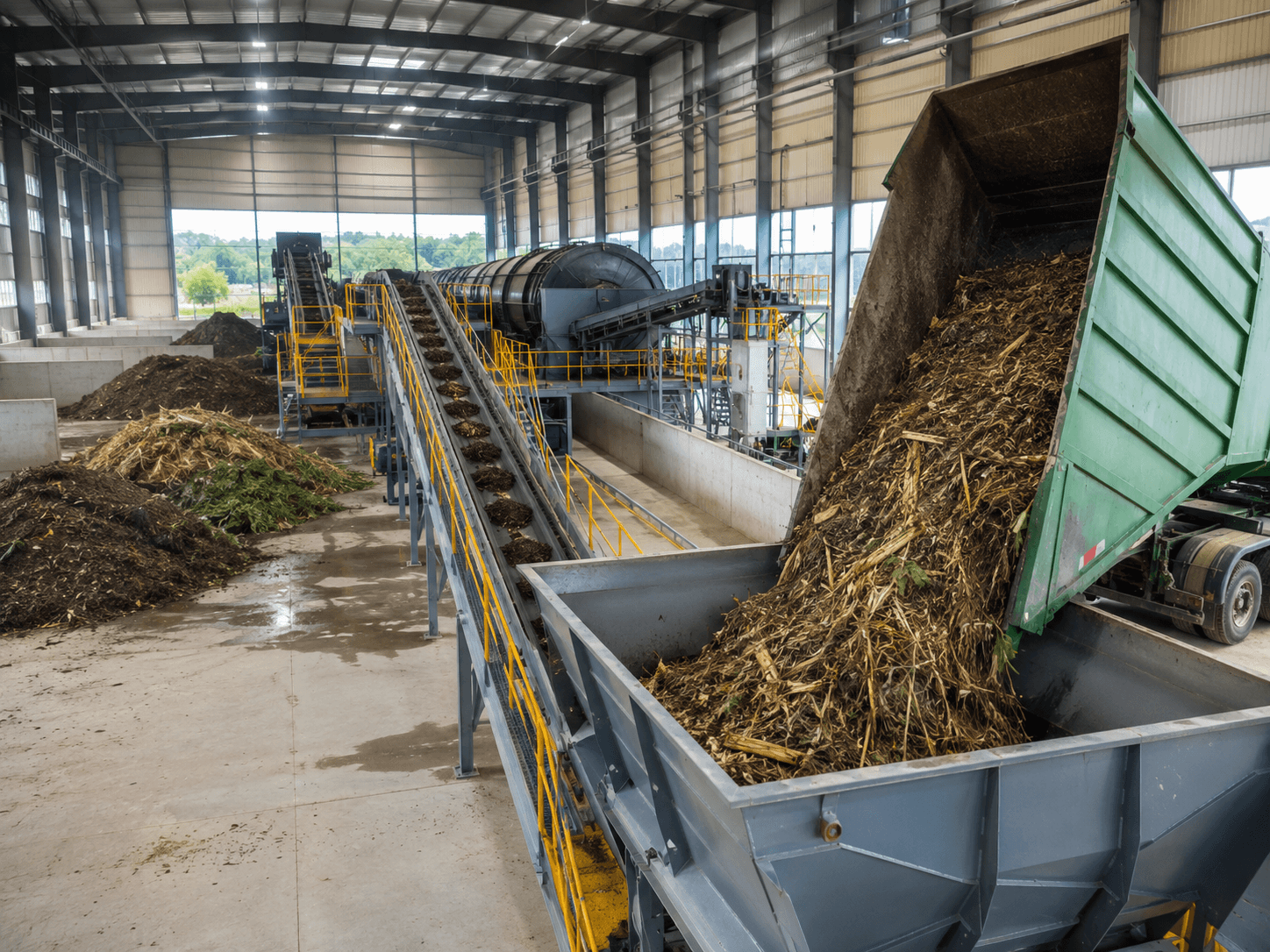
Composting Seasonal and Fibrous Agricultural Waste
Agricultural waste is mostly seasonal: large amounts of stalks, straw and plant residues arise during harvest, while input decreases during the rest of the year. If plant capacity and storage area are not planned for this fluctuation, intake bottlenecks occur in peak periods and idle capacity in quiet periods.
Stalks, straw and greenhouse residues are fibrous and rich in carbon; to start composting they must be shredded, moistened and balanced with a nitrogen-rich input such as animal manure. Fruit and vegetable waste is wetter and richer in nitrogen, so mixing it with fibrous waste makes balancing easier.
In greenhouse waste, the plastic strings and clips used to support plants are the most common foreign matter; they must be removed before shredding and in final screening. For the turnkey plant scope, you can review our plant and agricultural waste compost plant page.
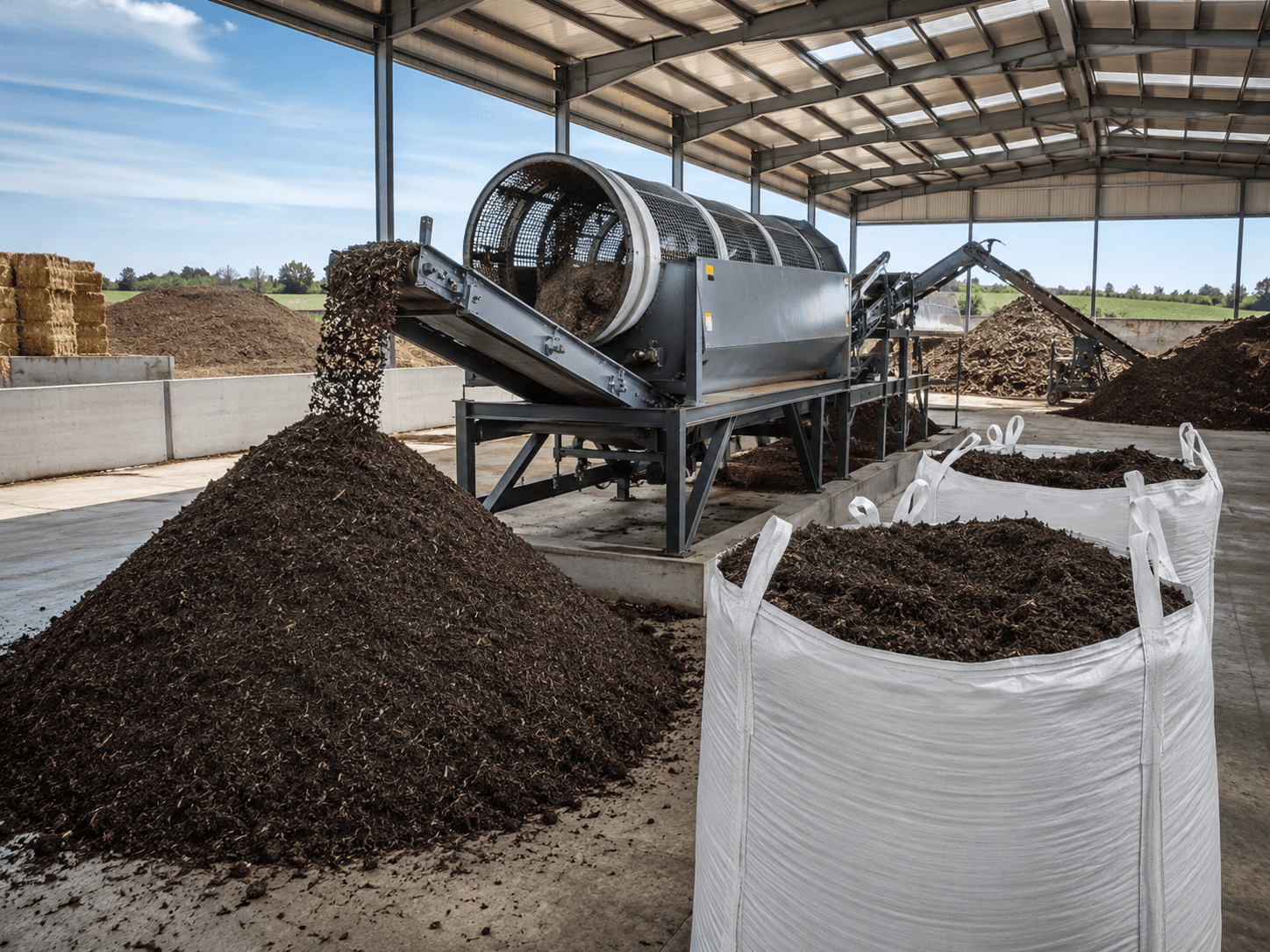
Agricultural Waste Composting Flow
The flow starts by shredding fibrous, seasonal waste and turning it into a balanced mix.
Step 1
Intake and seasonal stock
Excess waste during harvest is held in a controlled storage area.
Step 2
Foreign matter removal
Plastic strings, clips and stones in greenhouse waste are removed before shredding.
Step 3
Shredding
Stalks, straw and plant residues are shredded to a size suitable for composting.
Step 4
Mixing and moisture adjustment
Nitrogen-rich input and water are added for carbon-nitrogen and moisture balance.
Step 5
Composting and maturation
The mix is aerated, composted and matured.
Step 6
Screening and packing
Compost is screened; oversize returns as structure material and the product is packed.
Equipment Used in an Agricultural Waste Compost Plant
Shredder Systems
Pre-shredding fibrous stalks, straw and greenhouse residues.
View MachineHammer Crusher
Reducing shredded plant waste to a finer size.
View MachineBelt Conveyor
Transferring waste between storage, shredding and composting areas.
View MachineCompost Drum
Intensive composting phase of the balanced mix.
View MachineTrommel Screen
Screening mature compost and removing plastic residues.
View MachineOpen Mouth Bagging System
Bagging screened compost.
View MachineFrequently Asked Questions About Agricultural Waste Compost Plants
Can straw and stalks be composted on their own?
Being rich in carbon, they compost slowly on their own. Adding a nitrogen-rich input such as animal manure and moisture speeds up the process.
How is seasonal waste fluctuation managed?
A storage area is planned for excess waste in peak periods, and plant capacity is balanced between the annual average and the peak period.
Do plastic strings in greenhouse waste cause problems?
Yes. They can wrap around the shredder and contaminate the compost. Sorting before shredding and separation in final screening are required.
Do pesticide residues pass into compost?
For waste with a risk of plant protection product residues, the use of the compost should be evaluated according to analysis results and regulations.
Where is agricultural compost used?
It can be used as a soil improver in field, orchard and greenhouse applications or as a raw material for granular organic fertilizer.
Quotation & Technical Consultation
Request a quote for your agricultural waste compost plant
Share your waste types, seasonal quantities and site information, and we will plan shredding, storage and composting capacity together.