Food Waste Compost Plant
We take waste from food production, wholesale markets, supermarkets and canteens into enclosed composting processes that manage moisture and odor load.
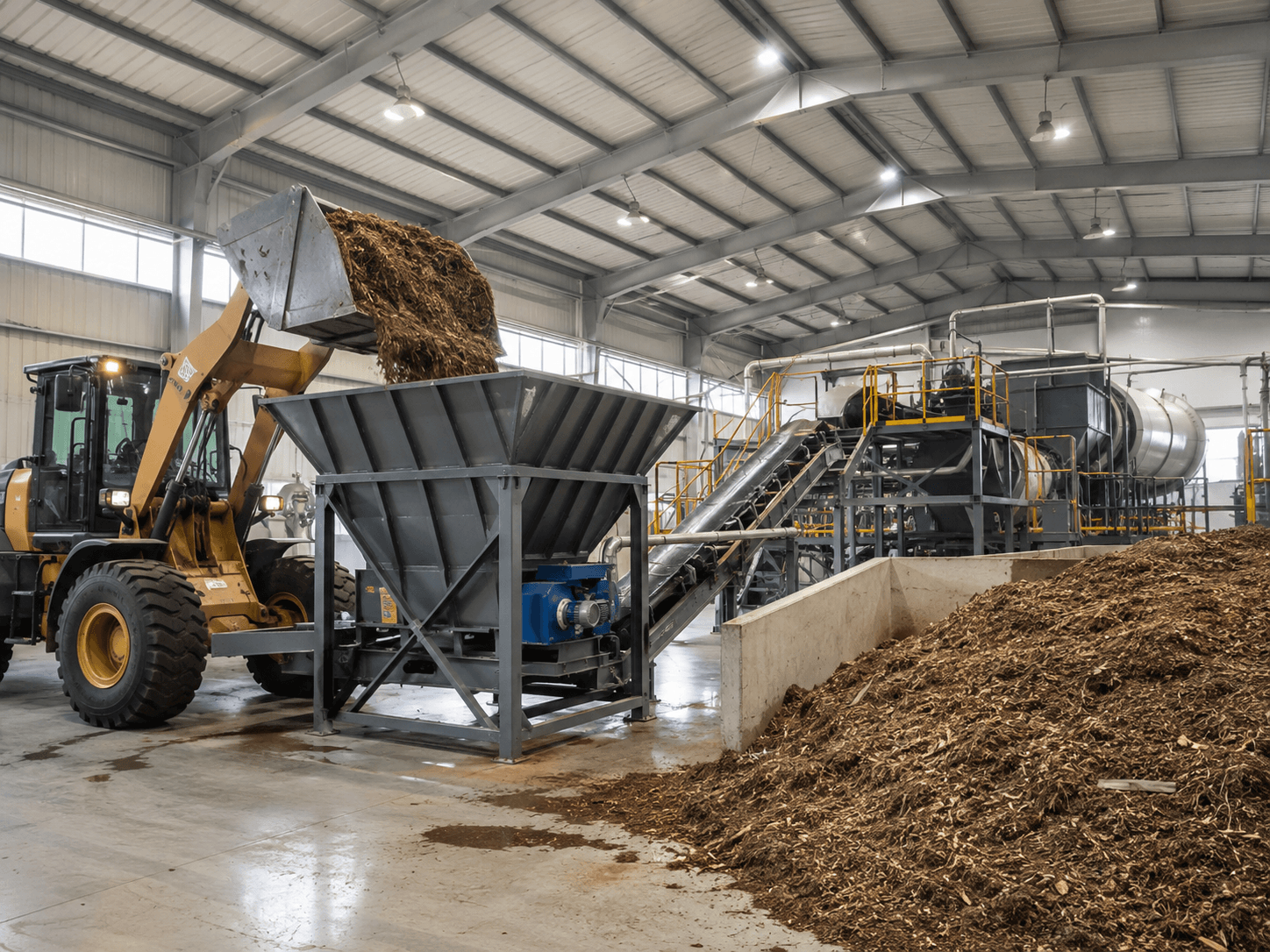
A Compost Concept for Wet, Fast-Degrading Waste
Food waste covers production residues from food processing plants, wholesale market and supermarket waste, and canteen and restaurant waste. These are wet materials with weak structure that quickly acidify and become putrid. For composting to start properly, excess water must be removed and a porous mix created with structure material.
In market and supermarket waste, packaging is the largest source of foreign matter. Packaged waste requires depackaging, while shredding and screening may be sufficient for unpackaged streams. Since cooked food and meat-containing waste may fall under animal by-product rules, the accepted waste types are defined from the start.
Waste is processed without delay; reception and composting take place in enclosed areas and odorous air is treated. After maturation and final screening, the use of the product is determined by analysis.
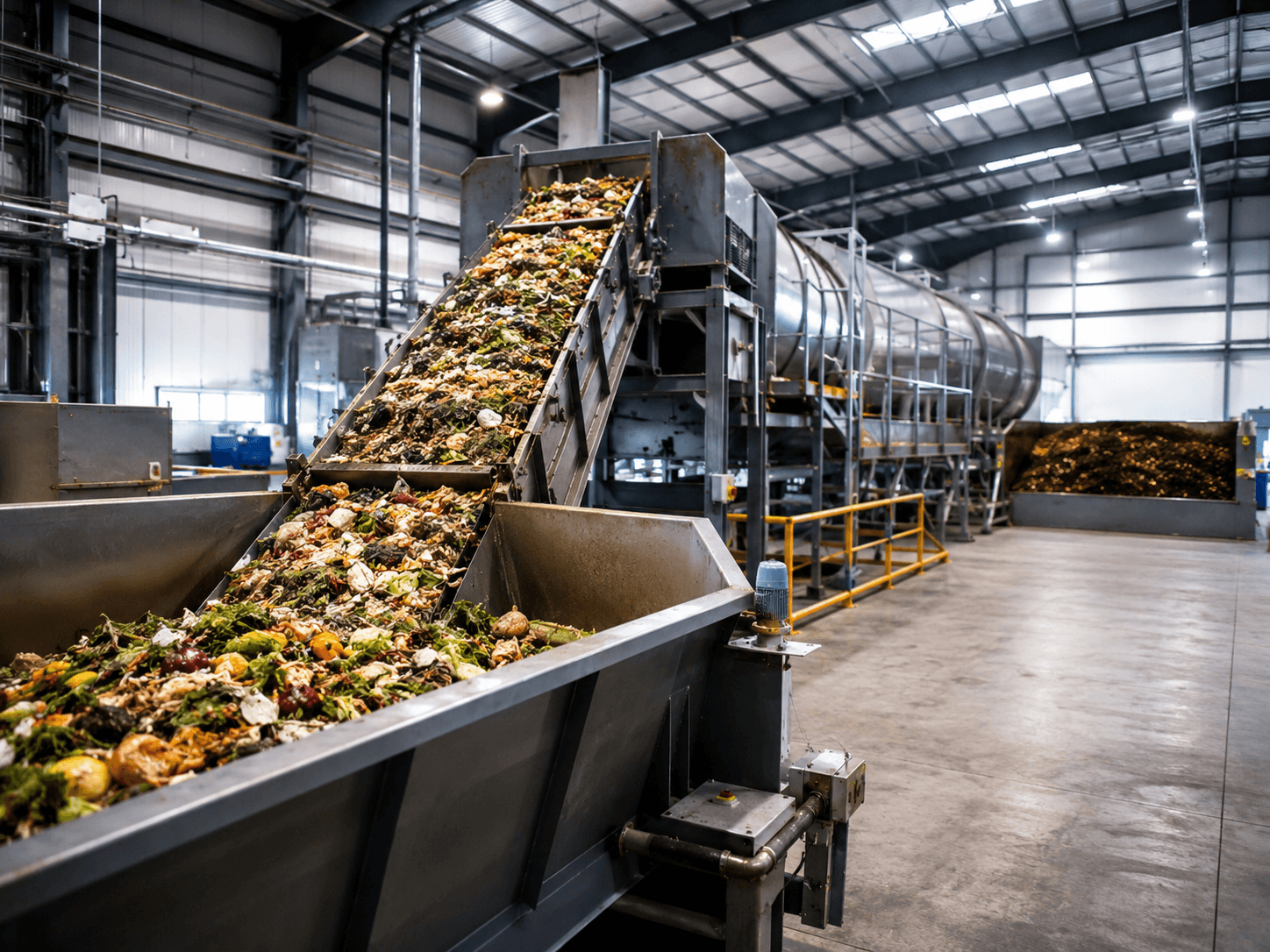
Food Waste Composting Flow
The flow is set up so that waste is processed without delay and excess moisture is removed before composting.
Step 1
Reception and waste definition
The source, packaging status and regulatory category of the waste are checked at reception.
Step 2
Depackaging and shredding
Packaged waste is separated and the food fraction is shredded.
Step 3
Removing excess water
Free water is separated over a screen to lower the moisture of the mix.
Step 4
Mixing with structure material
A porous mix is created with sawdust, pruning waste or compost oversize.
Step 5
Enclosed composting
The mix is composted under control in a drum or enclosed environment.
Step 6
Maturation and screening
Mature compost is screened; oversize returns as structure material.
Equipment Used in a Food Waste Compost Plant
Shredder Systems
Shredding food waste and the organic fraction after depackaging.
View MachineDewatering Screen
Separating free water from food waste before composting.
View MachineScrew Conveyor
Enclosed conveying of wet and sticky food waste.
View MachineMixing Drum
Homogeneous mixing of food waste with structure material.
View MachineCompost Drum
Intensive composting of the mix in an enclosed environment.
View MachineTrommel Screen
Screening mature compost and removing residual packaging.
View MachineFrequently Asked Questions About Food Waste Compost Plants
Can packaged food waste be composted?
Packaging must be removed first. With depackaging equipment and final screening the organic fraction can be composted; if the packaging share is high, the pre-treatment scope grows.
Why does food waste smell so quickly?
Easily degradable sugars and proteins acidify quickly and form odorous gases. Processing the waste without delay and enclosed processing reduce this risk.
Can cooked food waste be accepted?
Meat-containing and cooked waste may fall under animal by-product rules. Acceptance conditions and the required treatment steps are defined according to regulations.
Why is structure material added to food waste?
Food waste is wet and dense. Structure material provides porosity and supports aeration and a proper start of composting.
Is composting or biogas better for food waste?
It depends on waste quantity, energy goals and site conditions. Biogas produces energy, while compost directly yields a soil improver; both processes can also be planned together.
Quotation & Technical Consultation
Request a quote for your food waste compost plant
Share your waste sources, packaging status and daily quantity, and we will define pre-treatment and enclosed composting capacity together.