Household Waste Compost Plant
We build plants that turn the organic fraction of municipal and residential waste into usable compost free of foreign matter.
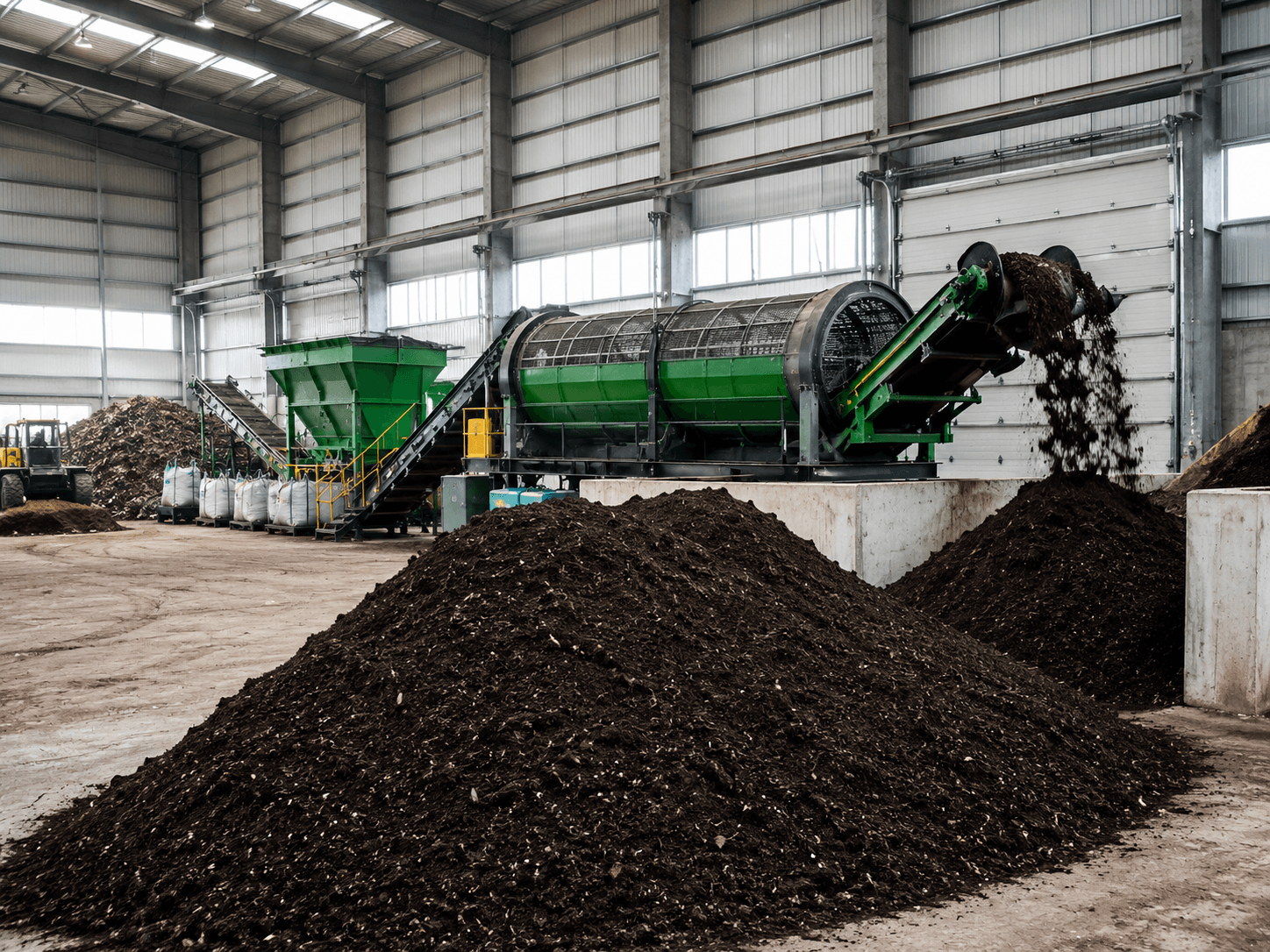
What Determines Compost Quality From Household Waste: Separation
In compost production from household waste, quality depends largely on whether the waste is separately collected at source. Source-separated kitchen and garden waste provides a cleaner input, while the organic fraction separated from mixed household waste contains plastics, glass, metals and textiles and requires more extensive pre-treatment.
In pre-treatment, bags are opened, waste is shredded and the organic fraction is separated by screening. Metal separation and manual sorting points are added according to the waste composition. Because household organic waste is wet and quickly becomes odorous, an enclosed reception area, leachate collection and exhaust air treatment are planned.
Composting can be carried out in drums, tunnels or controlled windrows. After intensive composting and maturation, final screening separates the fine compost, and the oversize can be returned to the process as structure material.
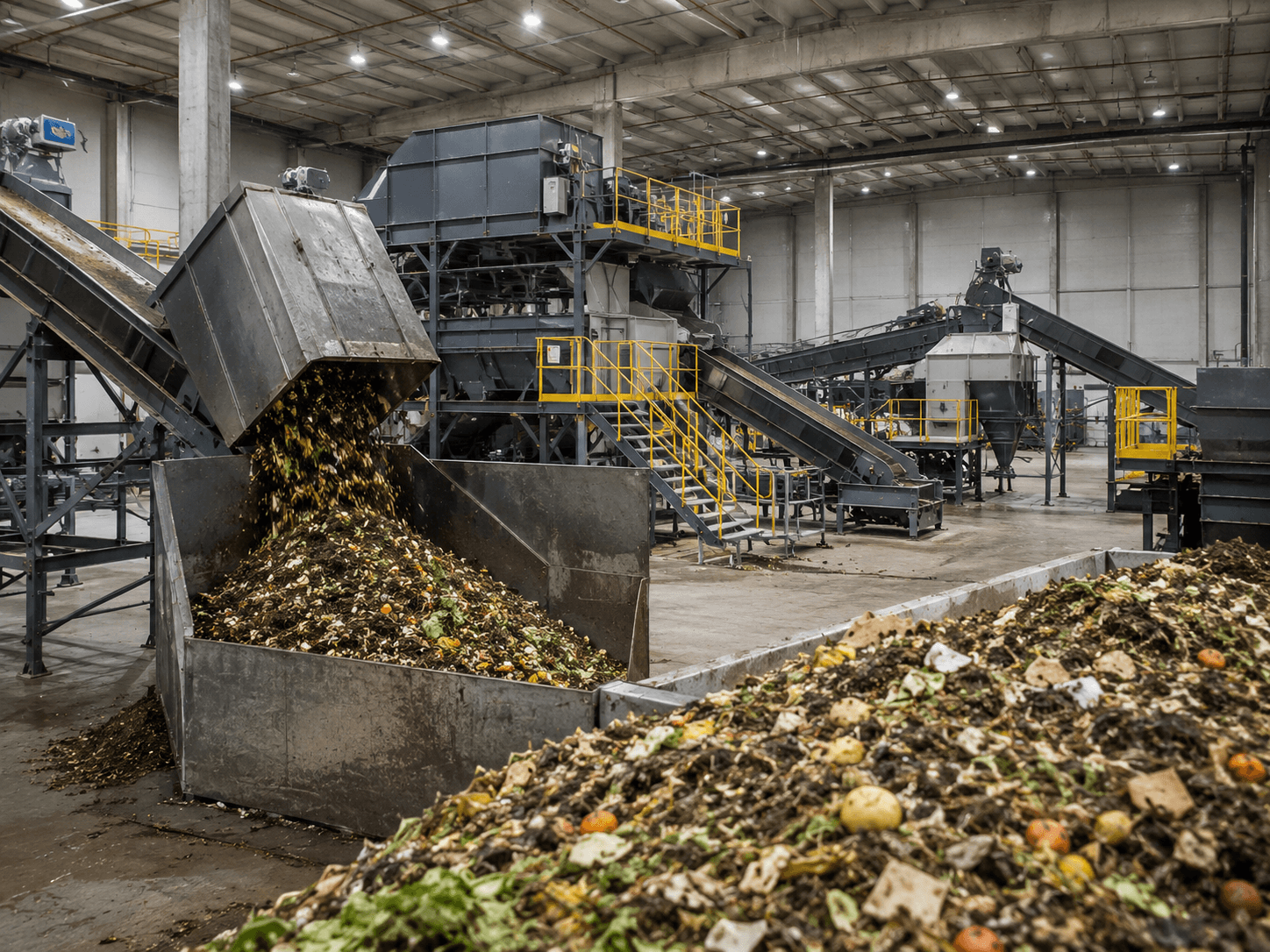
Household Waste Composting Flow
The focus of the flow is removing foreign matter before composting and in final screening.
Step 1
Enclosed reception
Waste is tipped in an enclosed reception area; leachate is collected and exhaust air is extracted.
Step 2
Bag opening and shredding
Bags are opened and waste is shredded to a size suitable for separating the organic fraction.
Step 3
Foreign matter separation
Plastics, glass and metals are removed with a trommel screen, metal separator and sorting points.
Step 4
Intensive composting
The organic fraction is composted in a drum or controlled environment after adjusting moisture and structure.
Step 5
Maturation
The material is held in the maturation area until it becomes stable.
Step 6
Final screening and packing
Fine compost is separated, oversize is recycled and the product is packed or shipped in bulk.
Equipment Used in a Household Waste Compost Plant
Shredder Systems
Bag opening and shredding household waste to a size suitable for organic separation.
View MachineTrommel Screen
Separating the organic fraction from foreign matter and screening the final product.
View MachineBelt Conveyor
Conveying waste between reception, sorting and composting areas.
View MachineCompost Drum
Intensive composting of the organic fraction in an enclosed environment.
View MachineWet Scrubber Systems
Scrubbing odorous air extracted from reception and process areas.
View MachineBig Bag Filling System
Filling screened compost into big bags.
View MachineFrequently Asked Questions About Household Waste Compost Plants
Can good compost be produced from mixed household waste?
The organic fraction separated from mixed waste contains more foreign matter. Compost can be produced with extensive pre-treatment, but product quality is generally more limited than with source-separated waste.
How is odor controlled in a household compost plant?
Reception and process areas are kept enclosed, indoor air is extracted and treated with a scrubber or biofilter, and leachate is collected separately.
How are plastic fragments reduced in compost?
Multi-stage separation is applied through bag opening, trommel screening, sorting and final screening; the most effective measure is separate collection at source.
Should drum composting or windrow composting be chosen?
The decision depends on site area, odor sensitivity, capacity and budget. A drum makes it easier to run the intensive phase enclosed and under control.
How is capacity determined at municipal scale?
Daily intake capacity is calculated by evaluating population, source separation rate, seasonal variation and waste moisture together.
Quotation & Technical Consultation
Request a quote for your household waste compost plant
Share how the waste is collected, the daily quantity and site conditions, and we will define pre-treatment and composting capacity together.