Park and Garden Waste Compost Plant
We turn pruning, leaf and grass waste from municipal parks, gardens and landscaped areas into compost and mulch products.
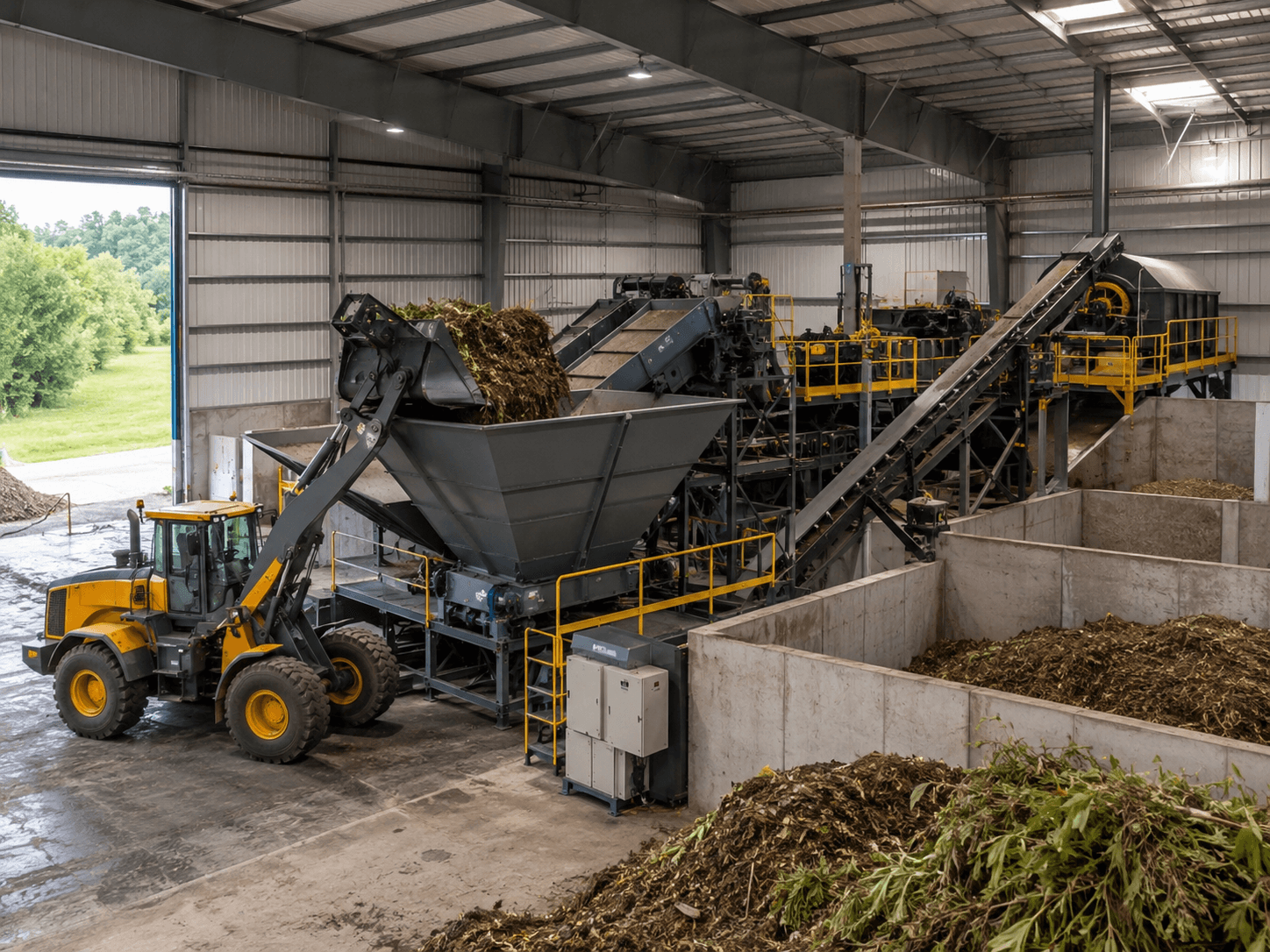
Balancing Pruning, Leaf and Grass Waste Correctly
Park and garden waste comes in three different forms: woody pruning branches, dry leaves and wet, nitrogen-rich grass clippings. The woody part does not compost without shredding, and grass clippings compact quickly and become odorous when piled on their own. The plant is therefore designed to turn the different wastes into a balanced mix.
Waste quantities change with the seasons: grass dominates in spring and summer, leaves in autumn and pruning waste in winter. Since municipal waste can also contain soil, stones and plastic bags, sorting is needed before shredding.
In screening after composting and maturation, fine compost is separated. The woody oversize can be reused as structure material or marketed as mulch.
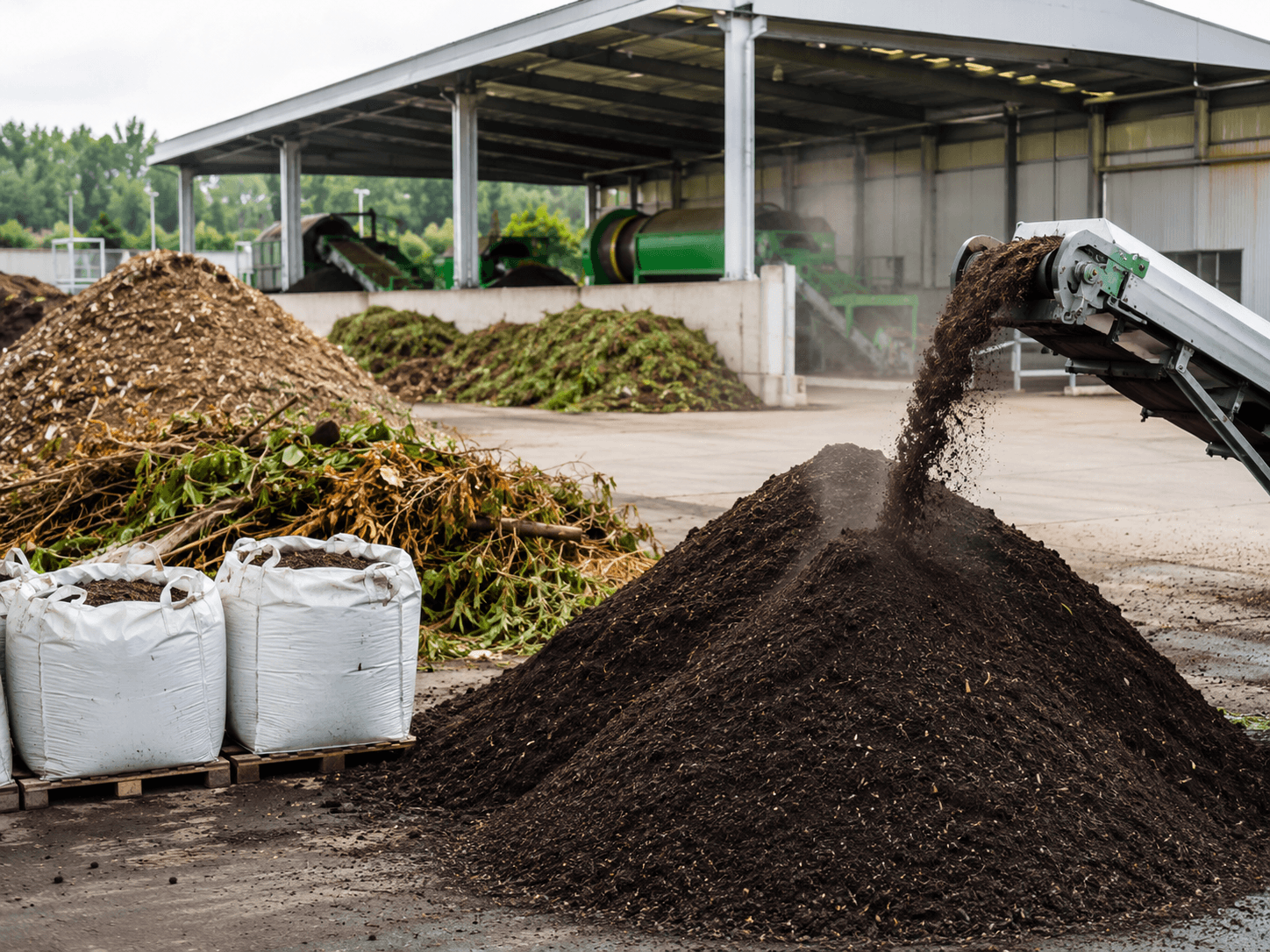
Park and Garden Waste Composting Flow
The flow is adjusted to the seasonal ratios of woody, leaf and grass waste.
Step 1
Reception and sorting
Waste is separated by type; foreign matter such as stones, soil and bags is sorted out.
Step 2
Shredding woody waste
Pruning branches are shredded to a size suitable for composting.
Step 3
Preparing the mix
Woody, leaf and grass waste are mixed for moisture and carbon-nitrogen balance.
Step 4
Composting
The mix is aerated and composted.
Step 5
Maturation
Compost is matured until it becomes stable.
Step 6
Screening: compost and mulch
Fine compost is separated; woody oversize is used as mulch or structure material.
Equipment Used in a Park and Garden Waste Compost Plant
Shredder Systems
Shredding pruning branches and woody waste.
View MachineHammer Crusher
Reducing shredded woody waste to a finer fraction.
View MachineTrommel Screen
Separating mature compost into fine product and woody oversize.
View MachineCompost Drum
Controlled intensive composting phase of the mix.
View MachineBelt Conveyor
Transfer between shredding, composting and screening areas.
View MachineBig Bag Filling System
Filling screened compost or mulch into big bags.
View MachineFrequently Asked Questions About Park and Garden Waste Compost Plants
Why shouldn't grass clippings be composted on their own?
Grass is wet and rich in nitrogen; when piled alone it compacts, becomes anaerobic and smells. It needs to be mixed with woody and leaf waste.
Do pruning branches compost?
Without shredding they compost very slowly. Shredded woody waste both composts and gives the mix structure and porosity.
What is the difference between mulch and compost?
Mulch consists of coarse woody pieces used to cover the soil surface. Compost is a mature, fine-structured soil improver.
How is foreign matter in municipal waste removed?
Sorting at reception, checks before shredding and separation in final screening are applied; stones and metals are removed in advance to protect the shredder.
Where is park and garden compost used?
It can be used as a soil improver in municipal landscaping, parks and gardens, and for tree planting.
Quotation & Technical Consultation
Request a quote for your park and garden waste compost plant
Share your waste types, seasonal quantities and target products, and we will define shredding and screening capacity together.